India's Sociology Pioneer Spent 40 Years Teaching Equality
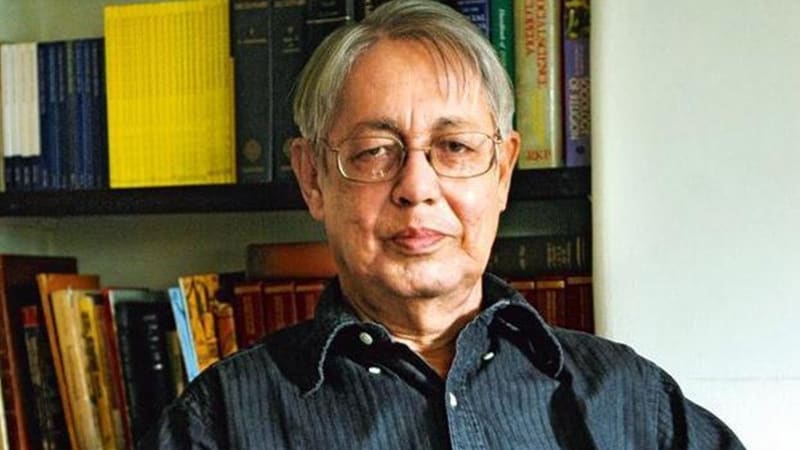
André Béteille, who helped build sociology as a discipline in India and championed equal access to education, passed away at 91 after decades of transforming how we understand caste and class. His legacy lives on through thousands of students who remember a teacher who treated everyone as equals.
For 40 years, André Béteille arrived at his Delhi School of Economics office by 8:30 every morning, sometimes climbing over railings to get there before the gates opened. The French-Indian scholar who reshaped how India studies inequality believed that teaching mattered more than awards or acclaim.
Béteille, who died Tuesday in New Delhi at 91, helped establish sociology as a serious academic field in India. When he joined Delhi School of Economics in 1959, the department had only one other professor—its founder, M N Srinivas.
Together, they built what became a national center for sociological thought. Béteille wrote groundbreaking books on caste, class, and power structures that students could actually understand, always choosing accessible language over academic jargon.
His former student Janaki Abraham, now a professor herself, remembers crystal-clear lectures and a teacher who was always available. "Whether you were a student or older, he treated you as an equal," she said.
That belief in equality wasn't just theoretical. When a scholarship committee had to choose between two equally qualified candidates, Béteille argued the student from a disadvantaged background deserved support.
He never missed classes during his four decades of teaching, except for occasional visiting fellowships abroad. Students remember how he'd read their work within days and invite them to discuss it, sharing his own writing with the same openness.
Why This Inspires
Béteille showed that intellectual excellence and genuine humility can coexist. He received India's Padma Bhushan award in 2005, served as Chancellor of Ashoka University, and wrote books that influenced generations of scholars. Yet he chose to spend his energy walking university corridors, talking with students, and making sure young people from all backgrounds had access to education.
His daughters remember a father who loved literature and poetry, who could whistle entire Tagore songs, and who treated children "like mini adults" during long walks through university gardens. They recall conversations that ranged from the solar system to soccer, from a man with infinite patience and curiosity.
Historian Ramachandra Guha called him "the Indian scholar I most admired" and "a moral and intellectual anchor." But perhaps Béteille's greatest impact came from those thousands of daily interactions—the early morning office hours, the careful reading of student papers, the belief that everyone deserved to be heard.
Born to a French father and Indian mother in West Bengal, Béteille spent his life navigating and bridging cultures. His work helped an entire nation better understand its own complex social structures, making the invisible visible and the academic accessible.
His legacy isn't just in the books he wrote or the awards he received—it's in every classroom where teachers show up early, listen carefully, and believe that education can create a more equal world.
Based on reporting by Indian Express
This story was written by BrightWire based on verified news reports.
Spread the positivity!
Share this good news with someone who needs it