Indonesian Women Become Coral Guardians on Gili Air
A nonprofit in Indonesia trains local women in diving and marine conservation, turning first-time swimmers into reef protectors. The nine-week program creates lasting careers while solving coral restoration's biggest problem: who takes care of reefs after experts leave.
When Gabriela Nathania dove underwater for the first time at 21, she didn't just discover a new world beneath the waves. She found her calling and four new sisters who would help her protect Indonesia's dying coral reefs.
Nathania joined Coral Catch in 2022, Indonesia's first marine conservation training program designed exclusively for women. The nonprofit launched on tiny Gili Air, one of three islands in an archipelago famous for stunning coral reefs that now desperately need help.
Founder Rose Huizenga noticed two problems happening at once. Indonesian women living near the ocean rarely got opportunities to swim, dive, or imagine careers in marine science. Meanwhile, coral restoration projects kept failing because nobody stuck around long enough to maintain them.
Coral reefs need years of careful attention to recover. Restoration structures require upkeep, coral nurseries need tending, and someone has to collect data season after season. But most projects rely on foreign experts, short grants, or volunteers who eventually move on.
Research shows 60 percent of coral restoration sites worldwide get monitored for less than 18 months. That's barely enough time for coral to take root, let alone thrive.
Huizenga, who came to Gili Air on sabbatical from the Netherlands and never left, saw the solution clearly. This wasn't just a conservation challenge but a workforce challenge that needed local women invested in their own waters.
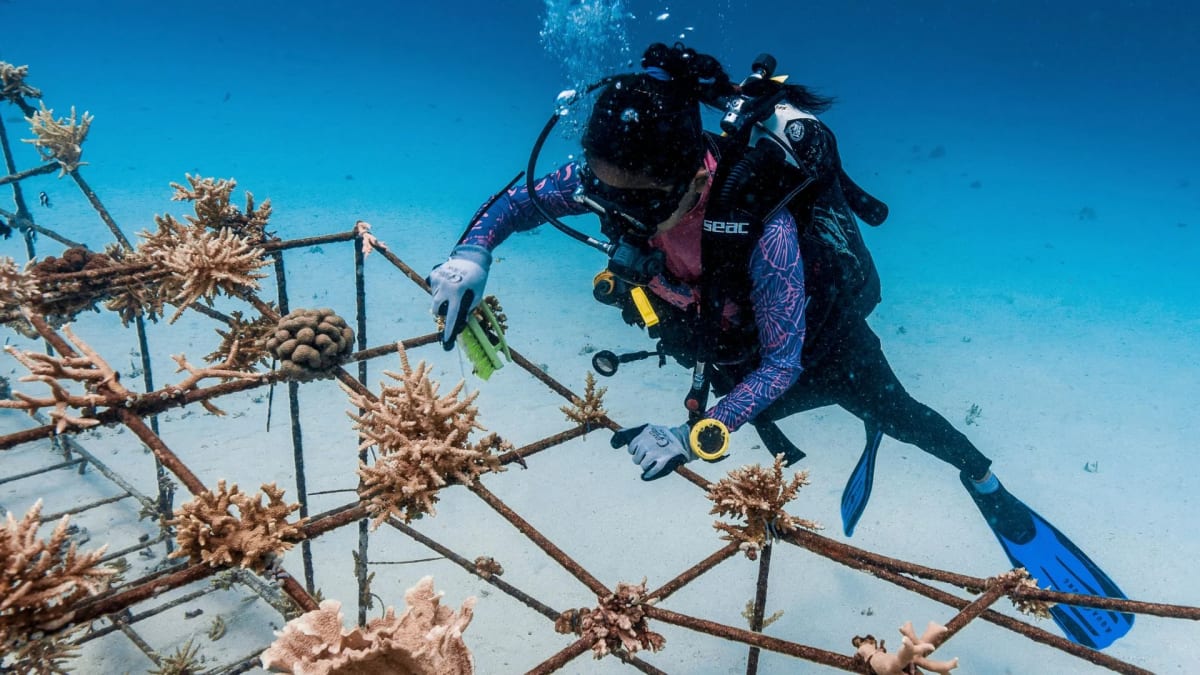
The nine-week scholarship program teaches everything from building reef structures with bent steel to organizing beach cleanups. Participants learn scientific monitoring, diving skills, and how to inspire local kids to care about ocean health.
Avicenna Wijayanto, 22, joined the same cohort as Nathania. She remembers that first dive making conservation work feel "much more real and achievable." The women came from different parts of Indonesia with different backgrounds, but underwater they became family.
The Ripple Effect
The program creates something rare in conservation work: permanent, passionate guardians who live where the reefs live. These women don't leave when funding cycles end or when the next project calls. They stay because protecting these reefs means protecting their home, their community, and their future careers.
Every woman in Nathania's cohort chose to pursue careers or degrees in conservation or diving after completing the program. They're now the experts, the monitors, and the teachers training the next generation.
Coral Catch proves that solving environmental problems works best when you also solve human problems. Give women opportunities they've never had before, and they'll protect ecosystems in ways outsiders never could.
The reefs around Gili Air now have something they've never had: daughters who know every coral head by heart and plan to stay for decades.
More Images

Based on reporting by Reasons to be Cheerful
This story was written by BrightWire based on verified news reports.
Spread the positivity!
Share this good news with someone who needs it