James Webb Finds Saturn-Sized Planet With Earth Temperatures
Scientists just discovered a rare giant planet 330 light-years away with surprisingly comfortable temperatures around 175°F. The methane-rich world could unlock secrets about how planets form and evolve across the universe.
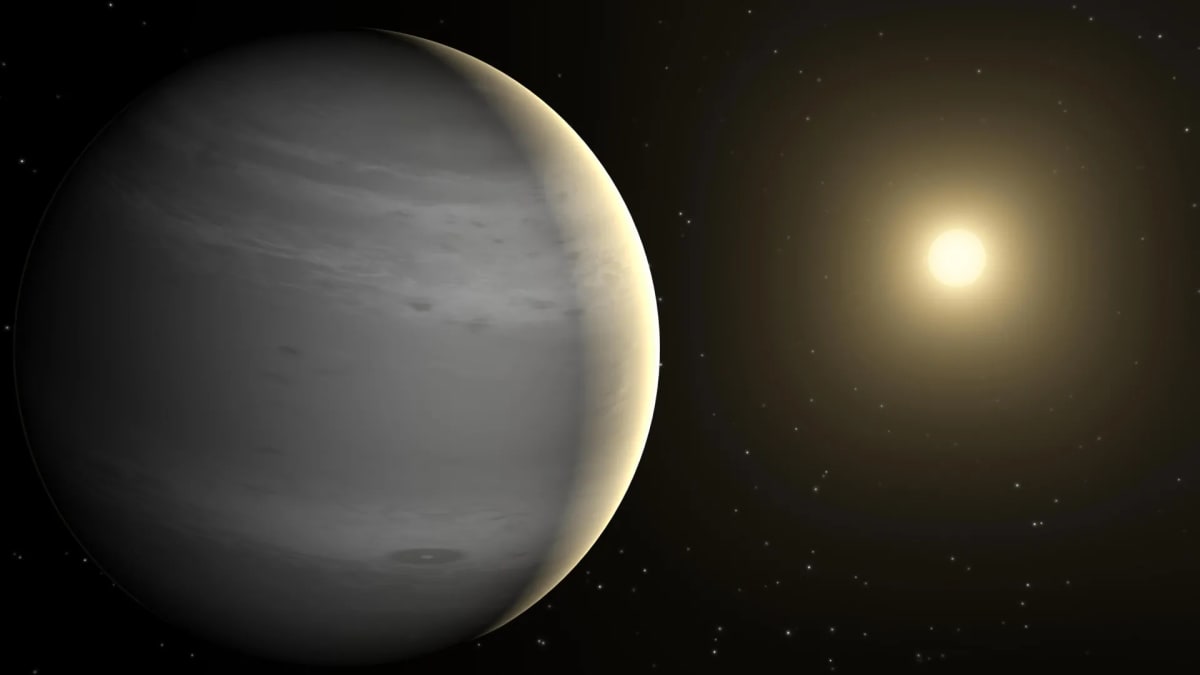
Astronomers using NASA's James Webb Space Telescope just found something remarkable: a Saturn-sized planet with temperatures more like Earth than any giant planet we've studied before.
The planet, called TOI-199b, sits 330 light-years from Earth and reaches about 175 degrees Fahrenheit. That's as hot as a parked car in summer, but incredibly mild compared to the thousands-degree infernos of typical giant planets or the frozen wastelands of Jupiter and Saturn.
Scientists from Penn State and NASA's Jet Propulsion Laboratory led the discovery, published May 20 in the Astronomical Journal. They used James Webb to peer into TOI-199b's atmosphere during a seven-hour journey across its star's face.
The telescope split starlight passing through the planet's atmosphere into a rainbow of wavelengths. Each gas absorbs specific colors, creating a unique fingerprint that reveals what's floating in the alien air.
The team found methane in TOI-199b's atmosphere, exactly what scientists predicted for temperate gas giants but had never confirmed until now. They also spotted hints of ammonia and carbon dioxide.
"One of the main advantages of studies of planets beyond our solar system is the ability to study many different types of planets, especially ones that we don't see in the solar system," said Renyu Hu, associate professor at Penn State who led the research team.
TOI-199b takes about 100 days to orbit its star, creating conditions scientists have rarely seen. Most discovered giant planets either hug their stars as blazing hot Jupiters or drift far away in deep freeze.
Why This Inspires
This discovery opens a new window into understanding how planets and atmospheres develop throughout the universe. By studying worlds dramatically different from our own, scientists can test their theories about planetary formation and evolution.
The research could eventually help us better understand Earth's own atmosphere by comparing it to diverse worlds across the galaxy. Since the first exoplanet discovery in 1992 by a team including Penn State's Aleksander Wolszczan, astronomers have found thousands of these distant worlds.
Aaron Bello-Arufe, the study's first author and JPL postdoctoral researcher, explained that confirming methane in this temperate giant validates years of atmospheric models and predictions.
The success of this first detailed study of a temperate gas giant atmosphere sets the stage for more discoveries about these rare, in-between worlds that challenge our understanding of what's possible in planetary systems.
Based on reporting by Google: NASA discovery
This story was written by BrightWire based on verified news reports.
Spread the positivity!
Share this good news with someone who needs it