James Webb Telescope Clears the Fog on Distant Planet
Scientists finally solved a 20-year puzzle about cloudy alien planets using the James Webb Space Telescope. The breakthrough reveals a dramatic weather system on a distant world that changes everything we thought we knew about planets beyond our solar system.
After two decades of squinting through cosmic fog, astronomers just got their clearest view yet of an alien world's weather system, and it's nothing like they expected.
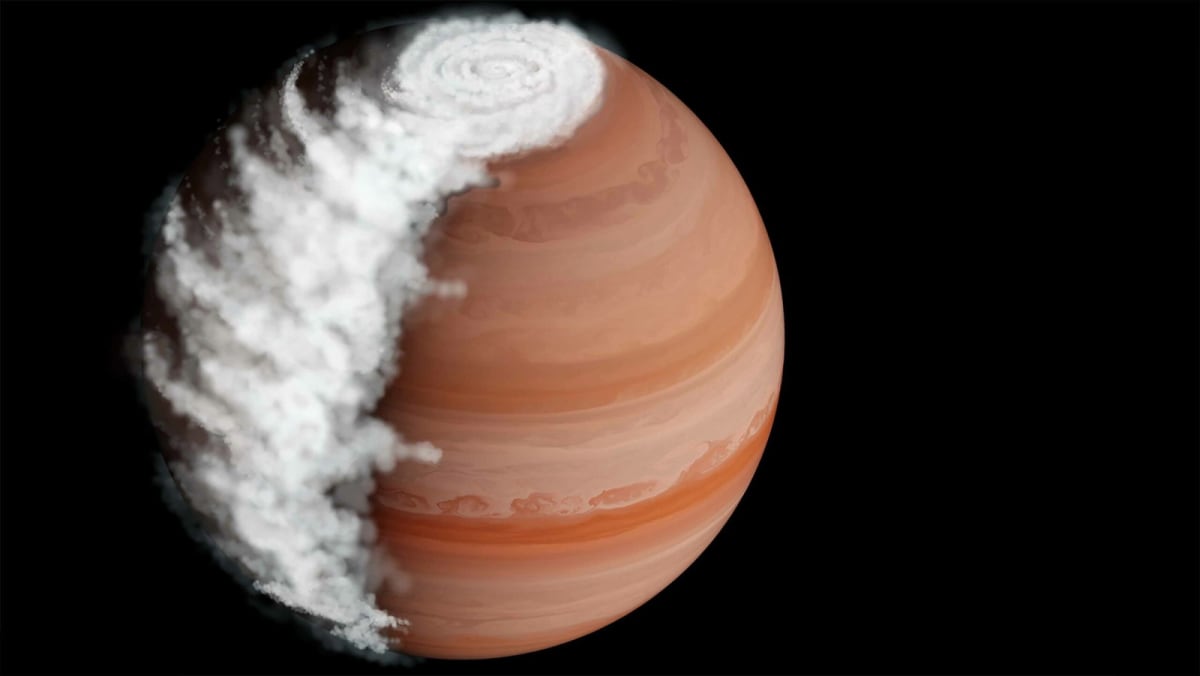
The James Webb Space Telescope pierced through the clouds of WASP-94A b, a gas giant planet 700 light years away, revealing a split personality that stunned researchers. One side of the planet is draped in thick mineral clouds while the other side stays mostly clear, creating a weather pattern so extreme it rewrote the textbooks.
The planet is what scientists call a hot Jupiter, locked in place with one side always facing its sun and the other in permanent night. Think of it like a cosmic rotisserie that never turns, creating an 800-degree temperature difference between hemispheres.
Here's where it gets fascinating. Clouds form on the cooler morning side of the planet, then get swept around by powerful winds before evaporating as they hit the scorching daytime temperatures. It's like watching morning fog burn off, except on a scale that makes Earth's weather look like a gentle breeze.
For years, cloudy skies on distant planets blocked scientists from understanding what these worlds were really made of. Previous telescopes could only see a blurry average, like trying to read a book through a steamed-up window. That led to some wild miscalculations.
The new detailed observations revealed the planet contains five times as much oxygen and carbon as Jupiter, not the hundreds of times more that earlier fuzzy data suggested. That's a massive correction that changes how scientists understand planet formation across the galaxy.
David Sing, a professor at Johns Hopkins University who led the program, put it simply: "We've known for quite a while that clouds are pervasive on hot Jupiter planets, which is annoying because it's like trying to look at the planet through a foggy window. Not only have we been able to clear the view, but we can finally pin down what the clouds are made of."
The team discovered something else unexpected. The night side atmosphere looks surprisingly similar to our own Jupiter's sky, suggesting these distant worlds might have more in common with our cosmic neighborhood than anyone imagined.
Why This Inspires
This breakthrough shows what happens when we build better tools to answer old questions. The same telescope technology that's clearing fog on distant planets is helping scientists understand how atmospheres work everywhere, including on worlds that might someday support life.
The research proves that assumptions can be dangerous in science. What looked like uniform cloud cover from afar turned out to be a dynamic, complex weather system that follows rules we're only beginning to understand.
Twenty years of frustration just turned into a flood of new discoveries, and scientists are already lining up eight other planets to study with this new approach.
The fog has lifted, and the view is spectacular.
Based on reporting by Google: James Webb telescope
This story was written by BrightWire based on verified news reports.
Spread the positivity!
Share this good news with someone who needs it