James Webb Telescope Finds Galaxies That Rewrote The Rules
The James Webb Space Telescope is discovering ancient galaxies that are forcing scientists to rethink how the early universe worked. These cosmic overachievers are revealing that our understanding of the first billion years after the Big Bang needs a major upgrade.
Scientists built a $10 billion telescope to test their theories about the early universe, and the universe just handed back a surprising answer: you got some things wrong, but in the most exciting way possible.
The James Webb Space Telescope has been peering back 13 billion years into cosmic history, and the galaxies it's finding shouldn't be there. Not because they're impossible, but because they're doing things way ahead of schedule according to the model scientists were using when Webb launched in 2021.
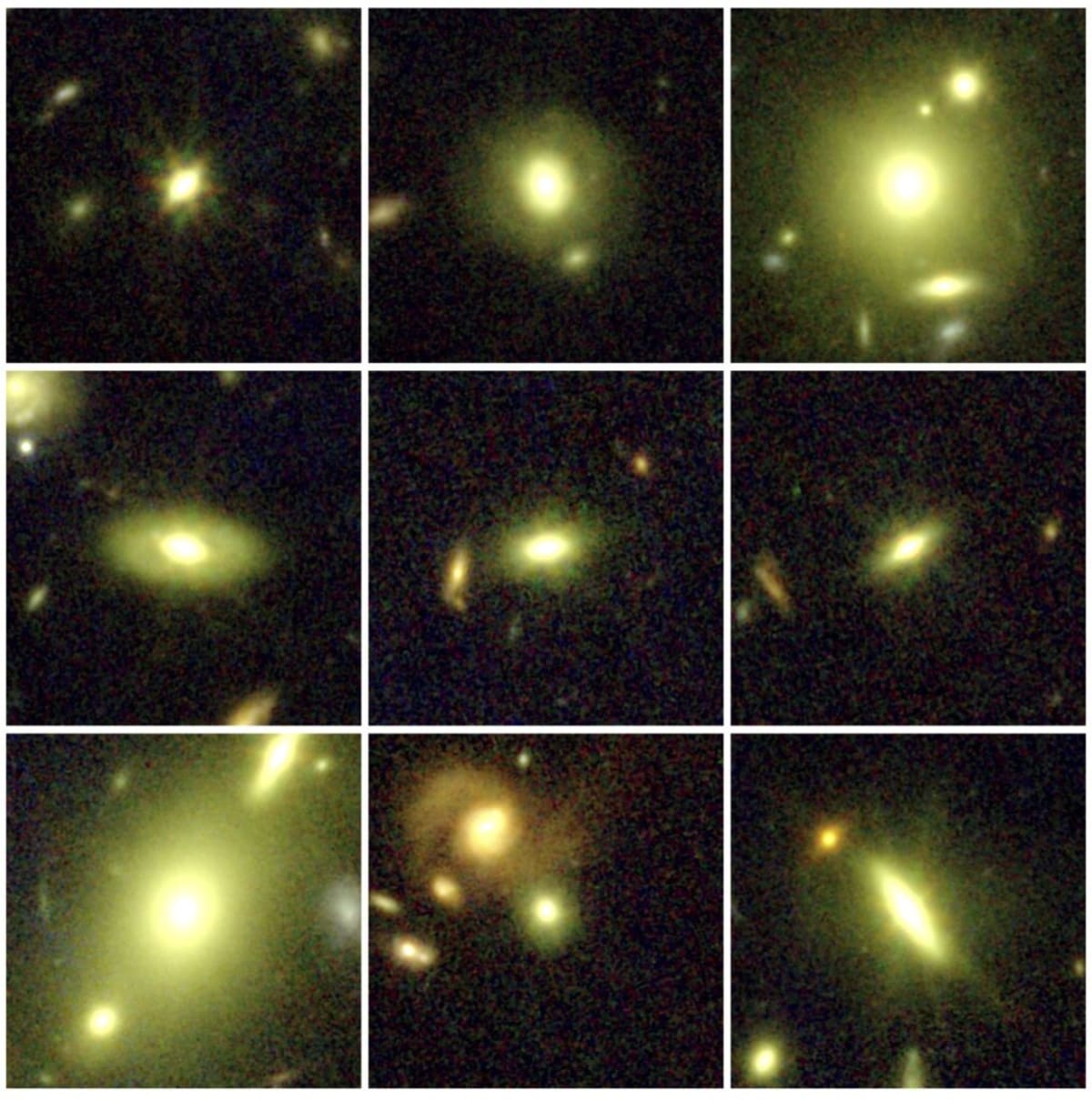
Take galaxy XMM-VID1-2075, observed when the universe was less than 2 billion years old. It's massive, it's not rotating, and it's already stopped making new stars. That kind of settled, mature behavior is supposed to take billions of years to develop, yet here it is acting like a cosmic retiree when it should still be a rowdy teenager.
Webb is finding multiple types of rule-breakers. Some galaxies are heavier than the standard model says they should be at that age, as if they packed on stellar mass impossibly fast. Others are dusty, which is a problem because dust comes from dead stars, and there shouldn't have been enough time for enough stars to live and die.
The weirdest part? Some early galaxies are more chaotic than predicted, while others are more settled. The universe's adolescence apparently didn't follow a single script.
Why This Inspires
This isn't a crisis for cosmology. It's science working exactly as it should. The Big Bang still happened 13.8 billion years ago, and the fundamental Lambda-CDM model that explains the universe's structure still holds up for everything we see in more recent cosmic time.
What's changing are the detailed assumptions about how the earliest galaxies formed. Scientists had set certain dials on their models based on their best guesses, and Webb is now showing them which dials need adjusting. Star formation might have been more efficient in the early universe than anyone thought. Or the first stars might have been heavier on average. Or dust corrections in the measurements need tweaking.
Each of these adjustments is scientifically survivable. The model isn't breaking; it's being refined in real time, in public, as a telescope delivers data that took two decades and nearly $10 billion to obtain.
The broader lesson here is genuinely hopeful: humanity built an instrument specifically designed to challenge our assumptions about the cosmos, placed it a million miles from Earth, and it's doing exactly that job. We asked the universe hard questions, and it's giving us answers that will make our understanding deeper and more accurate.
The phrase "shouldn't exist" keeps appearing in scientific papers and press releases, but what it really means is "we have more to learn." And there's nothing more exciting in science than discovering you were wrong in ways that make the universe even more interesting than you thought.
More Images
Based on reporting by Google: James Webb telescope
This story was written by BrightWire based on verified news reports.
Spread the positivity!
Share this good news with someone who needs it