MIT's Historic Radio Telescope Returns to the Stars
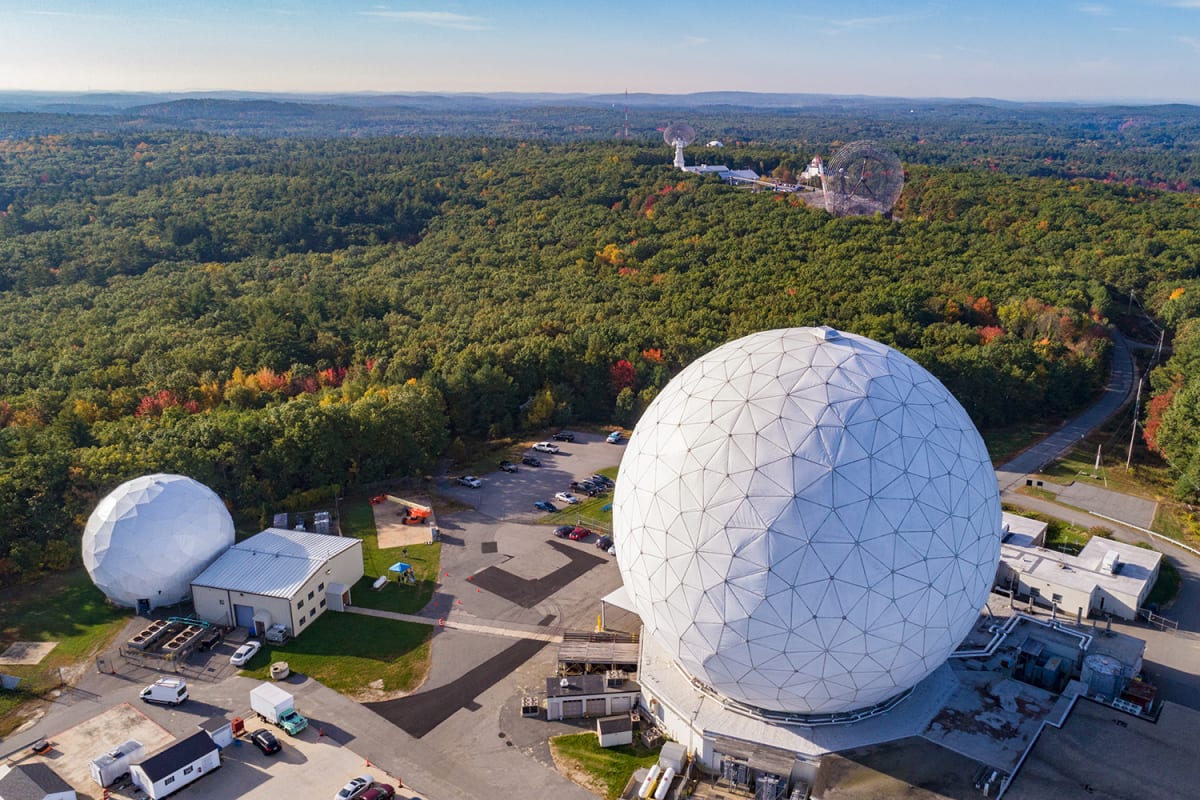
After years of upgrades, MIT's legendary Haystack 37m Telescope is back exploring the cosmos, capturing images of supermassive black holes and training the next generation of astronomers. The 60-year-old instrument that helped guide Apollo missions just made its triumphant return to cutting-edge science.
One of America's most storied radio telescopes is scanning the heavens again, and its first target was a supermassive black hole 53 million light years away.
The Haystack 37m Telescope in Westford, Massachusetts, recently observed the powerful jet streaming from the center of galaxy M87. This marked the historic instrument's return to front-line astronomical research after more than a decade focused primarily on upgrades and government radar work.
The telescope first opened its eye to the universe in 1964. Over four decades, it supported NASA's Apollo moon landings, mapped the surface of Venus, tested Einstein's theory of relativity, and made foundational discoveries about quasars and star formation.
On December 8, 2025, the upgraded instrument joined an international network of telescopes to study M87's central black hole. This monster is 6.5 billion times the mass of our sun and launches a jet of energy and matter thousands of light years into space.
"The Haystack 37m Telescope's exceptional sensitivity enables the intercontinental telescope array to detect faint emission from around the distant M87* black hole," says Paul Tiede, who leads the M87 study. The telescope is helping create the first multifrequency movies of the black hole's jet, revealing how these cosmic giants shape entire galaxies.
The upgraded telescope opens doors far beyond black holes. MIT researchers plan to use it for planetary defense by measuring asteroid sizes and shapes. Others will search for complex organic molecules in space, seeking clues about how the chemical building blocks of life form.
The Ripple Effect
The telescope's return means more than new discoveries. It creates something increasingly rare: a place where students can get hands-on training with a world-class research instrument.
"Hands-on training opportunities on world-class research telescopes have become exceptionally rare worldwide," says Jens Kauffmann, who leads the telescope's astronomy program. "Now we can offer this singular advanced workforce development program right here in Massachusetts."
Undergraduate interns at Haystack Observatory already helped develop the telescope's control systems and data analysis algorithms. They're contributing directly to front-line research while gaining practical experience that will shape their careers.
The return to science took sustained work spanning more than a decade. Major upgrades from 2010 to 2014 enhanced the telescope's ability to observe at millimeter wavelengths. National Science Foundation funding in 2015 modernized data analysis systems, and the first successful engineering experiments followed soon after.
After 60 years, this Massachusetts landmark is ready to explore the universe for generations to come.
Based on reporting by MIT News
This story was written by BrightWire based on verified news reports.
Spread the positivity!
Share this good news with someone who needs it