James Webb Telescope Finds Methane on Interstellar Comet
The James Webb Space Telescope just detected methane on a visitor from beyond our solar system for the first time. The discovery reveals that comet 3I/ATLAS formed in a completely different cosmic neighborhood with chemistry unlike anything in our own stellar backyard.
Scientists using the James Webb Space Telescope have captured the first chemical fingerprint of an interstellar comet, and it's telling a fascinating story about distant worlds.
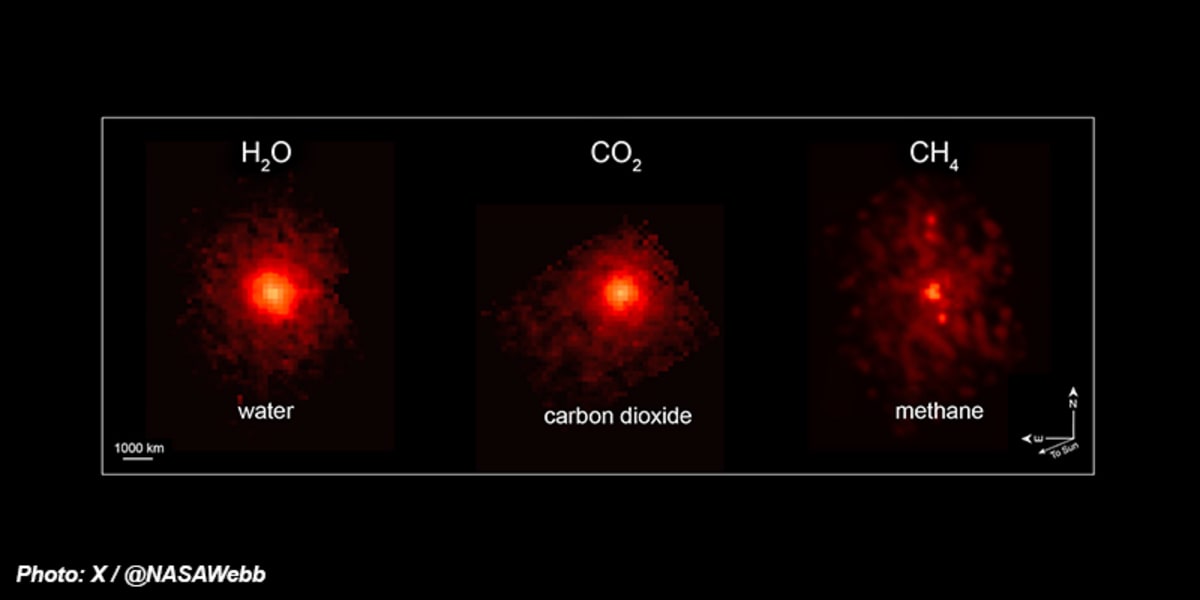
The telescope detected methane gas on comet 3I/ATLAS, marking the first time this molecule has been directly observed on an object from beyond our solar system. This visitor from another star system is revealing secrets about how different cosmic environments shape the building blocks of space.
Comet 3I/ATLAS is only the third known object from outside our solar system ever spotted passing through our celestial neighborhood. The ATLAS survey telescope in Chile first caught sight of it in July 2025, and scientists quickly realized its hyperbolic orbital path meant it came from somewhere far beyond the Sun's influence.
What makes this comet special isn't just where it came from but what it's made of. The methane Webb detected was hiding below the surface, protected until the Sun's heat during the comet's close pass warmed deeper layers and released the gas into space.
The chemical mix is strikingly unusual. The ratio of methane to water on 3I/ATLAS is surprisingly high, with few similar examples in our own solar system. The comet also releases far more carbon dioxide compared to water than typical comets formed near our Sun.
The Bright Side
These differences aren't just cosmic trivia. They're windows into how planetary systems form under completely different conditions across the galaxy. Every interstellar visitor that passes through our neighborhood brings data that would take thousands of years to collect by sending spacecraft to distant stars.
The Webb telescope used its MIRI instrument to capture the mid-infrared observations on two separate dates, published recently in The Astrophysical Journal Letters. Scientists worldwide continue studying the comet's size and physical properties as it travels through space.
The findings prove that our solar system's chemistry isn't universal. Somewhere out there, planets and comets formed in environments so different that their basic ingredients vary wildly from our own cosmic recipe book.
Each interstellar visitor teaches us more about the diversity of worlds beyond our Sun, bringing the universe a little closer to home.
Based on reporting by Google: James Webb telescope
This story was written by BrightWire based on verified news reports.
Spread the positivity!
Share this good news with someone who needs it