Judge Orders Columbia River Protection for Endangered Salmon
A federal judge rejected the Trump administration's withdrawal from a landmark salmon recovery plan, ordering immediate protections for seven species of salmon and steelhead on the brink of extinction. The ruling restores water flow levels and marks a crucial win for Native American tribes and conservation groups fighting to save fish populations that once made the Pacific Northwest the world's top salmon producer.
A federal judge in Oregon just handed endangered salmon populations a lifeline they desperately needed.
US District Judge Michael Simon ruled Wednesday that the federal government must maintain water operations designed to protect salmon and steelhead in the Columbia and Snake Rivers. His decision blocks the Trump administration's attempt to abandon a $1 billion recovery plan that took decades of legal battles to achieve.
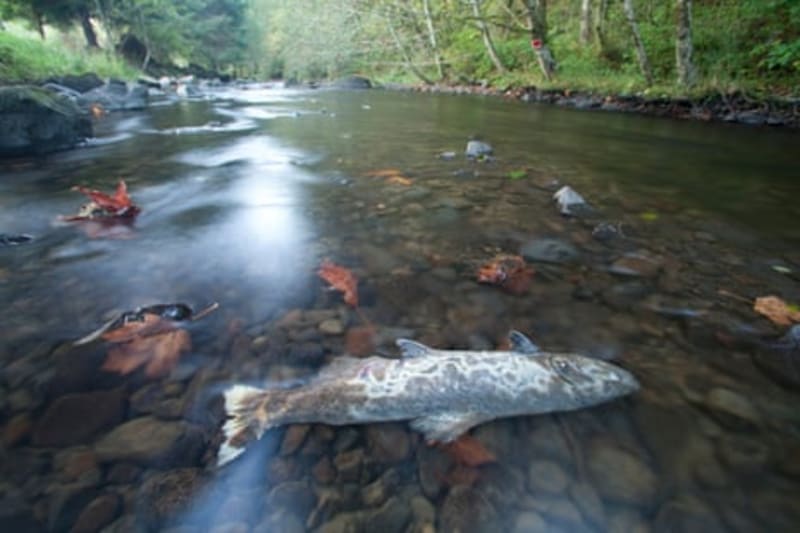
The Columbia River basin once produced more salmon than anywhere else on Earth. Today, seven of the region's 16 salmon and steelhead species are endangered, and four have already disappeared forever.
Eight massive dams built in the early 1900s transformed the river system into what Judge Simon called a deadly obstacle course. Salmon trying to return to their spawning grounds face giant turbines and warm artificial pools that block their journey home.
In 2023, the Biden administration brokered the Resilient Columbia Basin Agreement with Oregon, Washington, four Native American tribes, and conservation groups. The plan committed over $1 billion across ten years to restore salmon runs and invest in clean energy to replace hydropower from the dams.
But months into his second term, President Trump withdrew from the agreement, calling it "radical environmentalism." The administration also removed a 2024 Department of the Interior report from public access that documented how the dams devastated both salmon populations and the Native tribes who depend on them.
Judge Simon didn't mince words in his response. He criticized the administration's "disappointing history of government avoidance and manipulation" and noted that evidence presented for the lawsuit contradicted established scientific records.
The dams didn't just harm fish. When they were built, they flooded Native American villages and burial grounds, forcing tribal members from lands their families had occupied for generations and destroying cultural traditions tied to salmon fishing.
The Ripple Effect
This ruling protects more than just fish populations. Salmon are what scientists call a keystone species, meaning their health affects entire ecosystems across a region the size of Texas.
When salmon return to their rivers to spawn and die, their bodies deliver ocean nutrients to forests, feeding bears, eagles, and even trees hundreds of miles inland. Their decline has rippled through Pacific Northwest ecology, economy, and culture.
For Native American tribes with treaty-protected fishing rights, salmon represent food security, economic opportunity, and spiritual connection. The Resilient Columbia Basin Agreement recognized that restoring salmon means restoring tribal sovereignty and healing historical injustices.
Amanda Goodin, an attorney with Earthjustice who represented conservation groups, celebrated the decision as critical for preventing extinction. Mike Leahy of the National Wildlife Federation emphasized this is just the beginning, with long-term restoration still ahead.
Judge Simon's order returns water flow and reservoir levels to 2024 standards with small increases. While advocates acknowledge this maintains the status quo rather than solving all problems, they view it as essential breathing room for species on the edge.
The ruling proves that science, tribal rights, and decades of legal groundwork can still protect endangered species even when political winds shift.
More Images

Based on reporting by Guardian Environment
This story was written by BrightWire based on verified news reports.
Spread the positivity!
Share this good news with someone who needs it