Jupiter's Moon Io Creates Cold Spot in Auroral Footprint
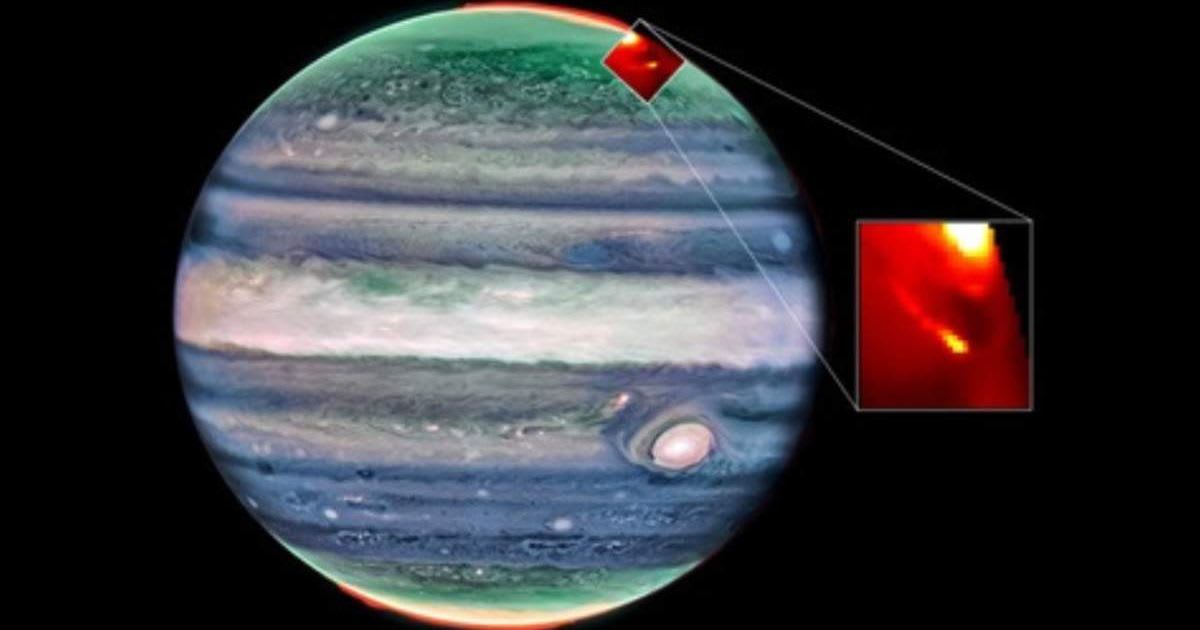
Scientists using the James Webb Space Telescope discovered a mysterious cold spot in the aurora created by Jupiter's volcanic moon Io. The finding reveals how rapidly conditions change in one of the solar system's most powerful light shows.
Scientists just spotted something strange in Jupiter's northern lights that changes everything we thought we knew about the giant planet's auroras.
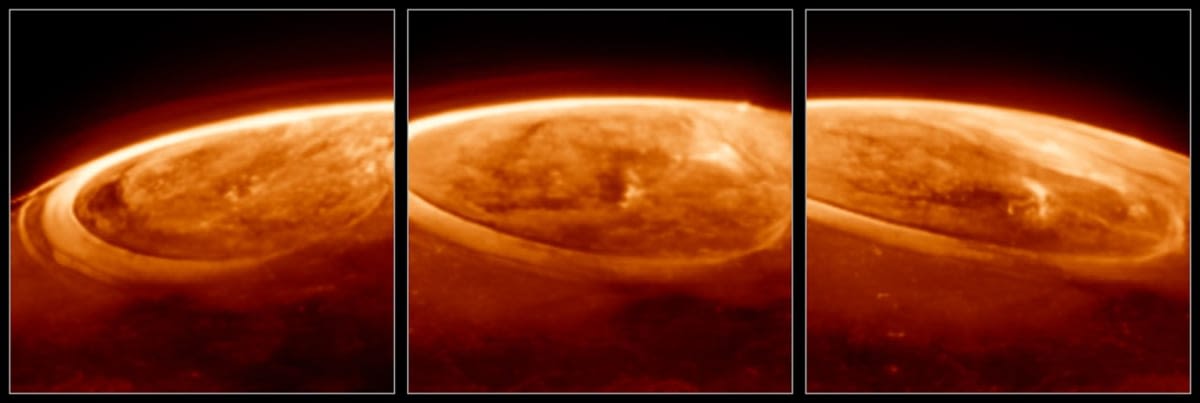
Using the James Webb Space Telescope, researchers captured the first detailed measurements of the glowing footprints that Jupiter's moons leave in its atmosphere. These auroral footprints work like cosmic signatures, created when the moons interact with Jupiter's powerful magnetic field.
Katie Knowles, a PhD researcher at Northumbria University, led the team that made the discovery in September 2023. What they found surprised everyone: while most of Jupiter's aurora blazed at a scorching 493°C, one spot in Io's footprint registered just 265°C.
That might still sound hot, but in Jupiter's atmosphere, it's remarkably cool. The cold spot also packed densities 45 times higher than surrounding areas, all changing within minutes.
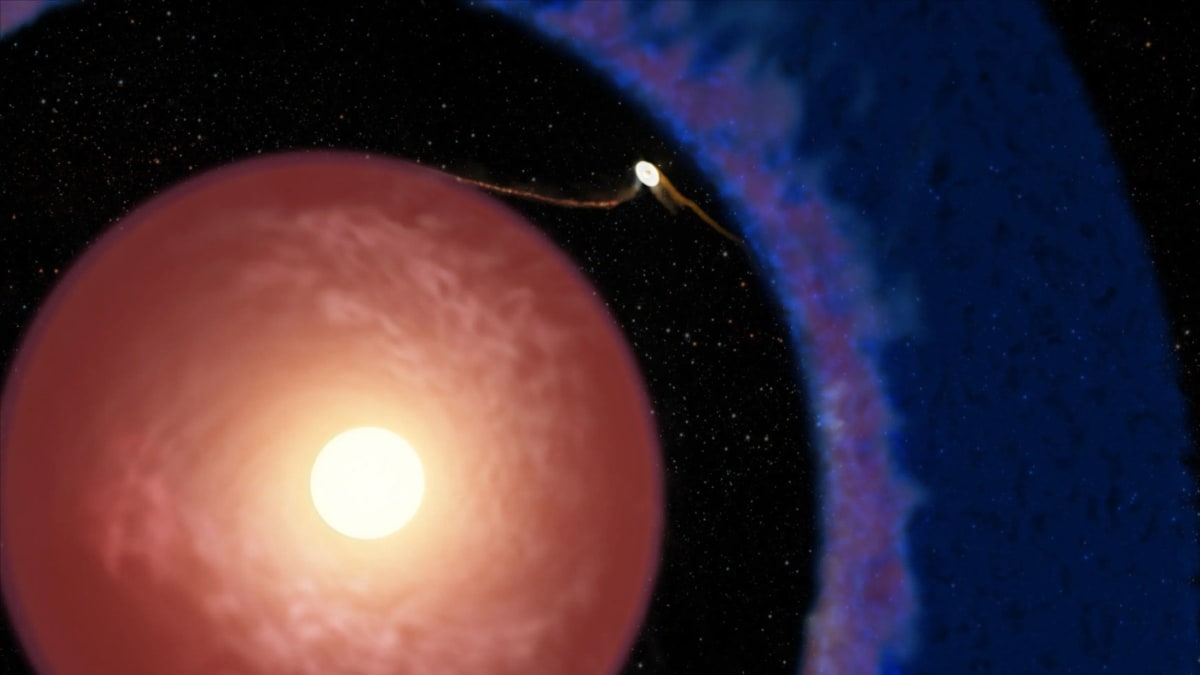
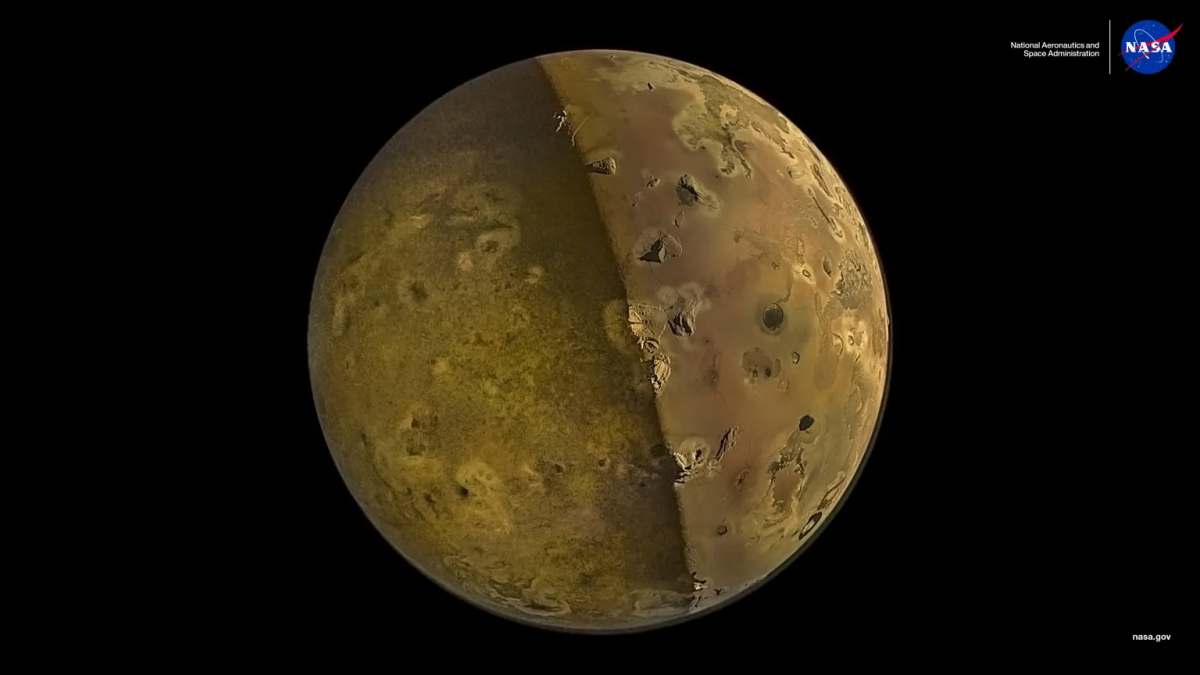
Io, the most volcanically active body in our solar system, shoots 1,000 kilograms of material into space every second. This material creates a glowing cloud around Jupiter called the Io plasma torus. As Io orbits through this cloud every 42.5 hours, it generates powerful electric currents that crash into Jupiter's atmosphere like cosmic lightning.
The team found that Io's auroral footprint contains three times more trihydrogen cation than Jupiter's main aurora. These densities fluctuate dramatically within the same small area, telling scientists that high-energy electrons are slamming into Jupiter's atmosphere in rapidly changing patterns.
The discovery represents the first time scientists have measured the physical properties of these moon footprints, including temperature and ion density. Previous observations only captured how brightly they shone, not what was actually happening in Jupiter's upper atmosphere.
Why This Inspires
This breakthrough shows how new technology continues revealing cosmic secrets hiding in plain sight. Jupiter's aurora has been observed for decades, but only now can we see the intricate details of how planets and their moons interact.
The findings could help scientists understand auroral patterns throughout the solar system. Saturn's moon Enceladus creates similar footprints on its planet, and these measurements provide a template for studying those distant light shows.
Knowles received over 32 hours of observation time with NASA's Infrared Telescope Facility in Hawaii for January 2026 to investigate further. Since the cold spot appeared in only one of five snapshots, the team wants to determine whether this phenomenon happens regularly or was a rare cosmic moment.
Every new detail we uncover about our solar system's spectacular light shows brings us closer to understanding the dynamic relationships between planets and their moons.
More Images
Based on reporting by Google: James Webb telescope
This story was written by BrightWire based on verified news reports.
Spread the positivity!
Share this good news with someone who needs it