James Webb Reveals Soccer Ball Molecules in Dying Star
The James Webb Space Telescope captured stunning new images of a planetary nebula 10,000 light-years away, revealing mysterious structures and billions of carbon molecules shaped like soccer balls. These "buckyballs" are helping scientists understand how dying stars fuel the chemistry of our universe.
Scientists just got their clearest view yet of how dying stars scatter the building blocks of life across space, and the images are absolutely breathtaking.
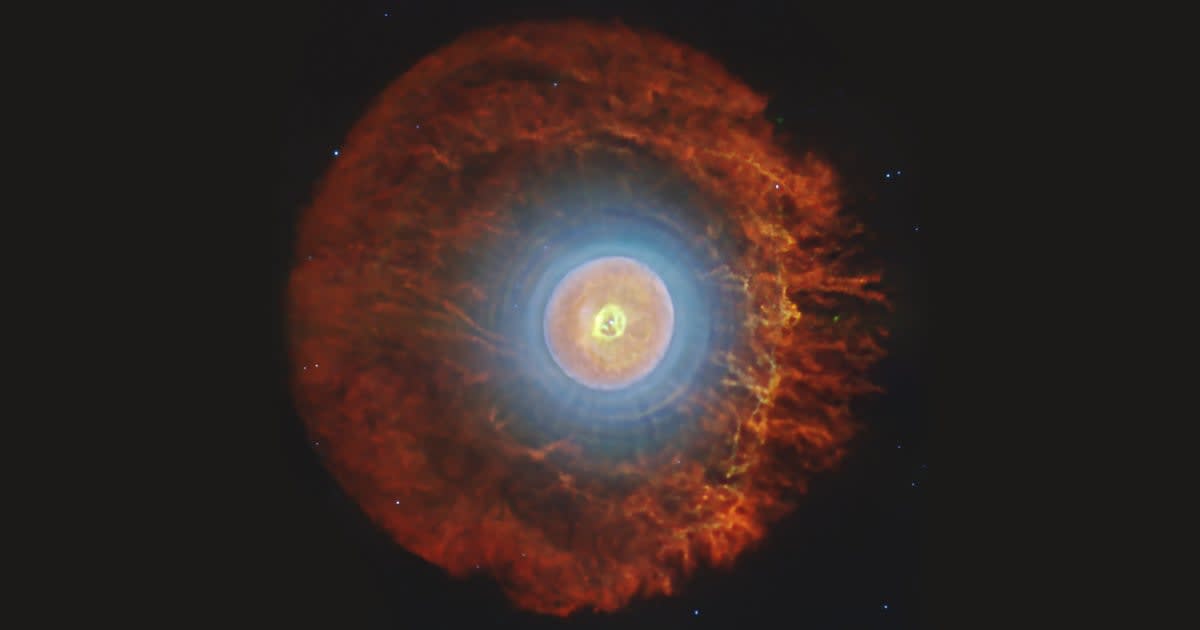
The James Webb Space Telescope captured new pictures of Tc 1, a planetary nebula located 10,000 light-years from Earth in the Ara constellation. At its heart sits a white dwarf, the collapsed core of a star that exhausted its fuel, surrounded by waves of colorful gas and mysterious structures including one that looks exactly like an upside-down question mark.
But the real stars of this cosmic show are invisible to our eyes: buckminsterfullerene molecules, nicknamed "buckyballs" for their resemblance to soccer balls. These molecules contain 60 carbon atoms arranged in a perfect sphere of hexagons and pentagons, and scientists confirmed they exist in space just 14 years ago when they first spotted them in this very nebula.
The new Webb images reveal something delightful: billions of these microscopic hollow spheres are arranged in the shape of one giant hollow sphere around the dying star. "Buckyballs arranged like one giant buckyball," said Morgan Giese, a Western University Ph.D. candidate who led the analysis.
Why This Inspires: This discovery represents more than beautiful space pictures. Understanding how dying stars distribute these carbon molecules helps explain how the raw materials for life spread throughout galaxies. The same chemistry happening in Tc 1 likely happened when our own sun's ancestors died billions of years ago, seeding the cosmos with the elements that eventually became planets and people.
"Tc 1 was already extraordinary, as it was the object that told us buckyballs exist in space, but this new image shows us we had only scratched the surface," said Jan Cami, the principal investigator who also led the original 2010 buckyball discovery. The structures visible now were completely invisible to previous telescopes, revealing fine details in shells, rays, and halos that scientists never knew existed.
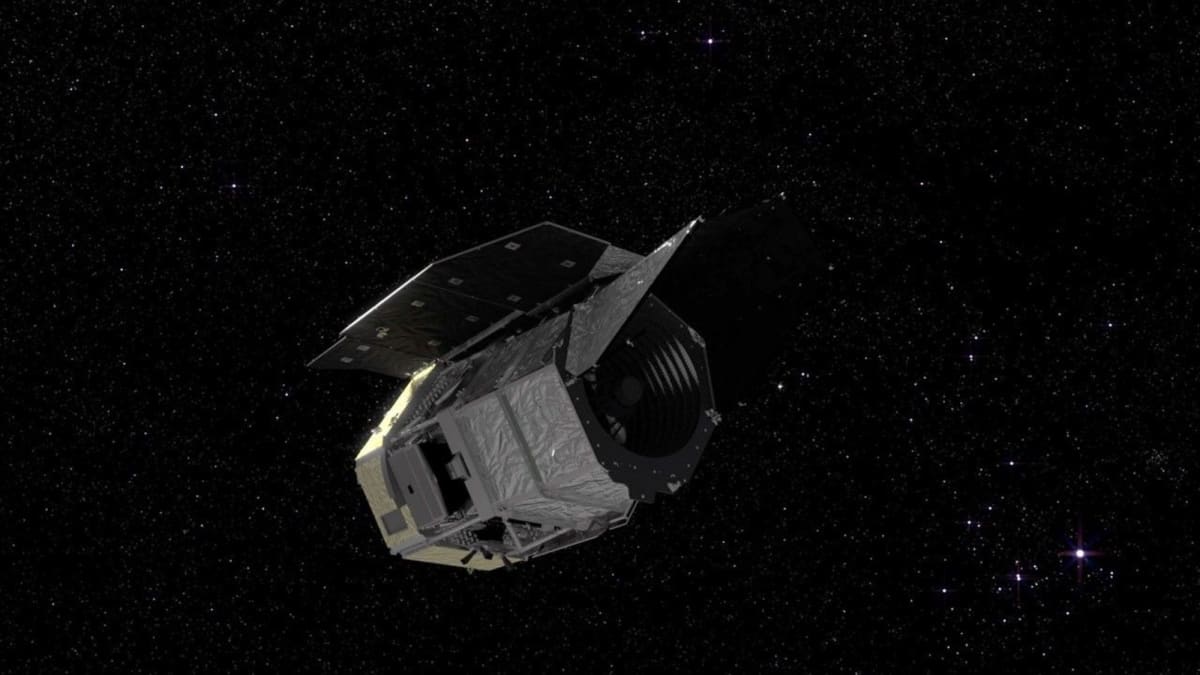
The Webb telescope's ability to see in infrared light lets astronomers map not just where these molecules are, but also track the temperature and movement of gas throughout the nebula. Hot gas appears blue in the processed images, while cooler material glows red, painting a picture of how energy flows through these cosmic clouds.
Every answer raises new questions, like why the buckyballs cluster where they do and what created that strange question mark shape. But that's exactly what makes great science: each discovery opens doors to understanding our universe a little better.
More Images

Based on reporting by Google: James Webb telescope
This story was written by BrightWire based on verified news reports.
Spread the positivity!
Share this good news with someone who needs it