James Webb Telescope May Have Spotted Universe's First Stars
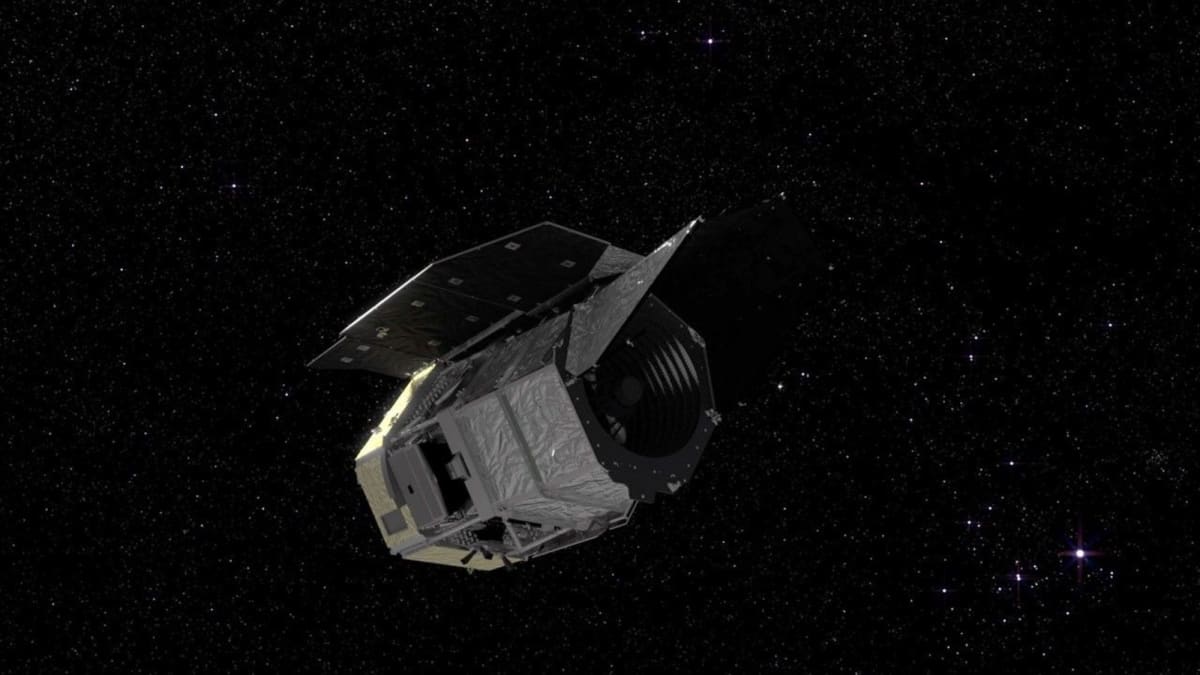
Scientists using NASA's James Webb Space Telescope believe they've found evidence of the very first generation of stars that formed just 400 million years after the Big Bang. These ancient stellar giants, made purely of hydrogen and helium, have never been directly observed before.
Astronomers may have just glimpsed the universe's original stars, the brilliant giants that lit up existence for the very first time.
Using the James Webb Space Telescope, researchers led by Roberto Maiolino at the University of Cambridge discovered a tiny cloud of gas they've nicknamed Hebe. The object sits 400 million years after the Big Bang, an era when the cosmos was still in its infancy.
What makes Hebe special is what it's missing. Unlike every star we've studied before, this gas cloud shows no signs of heavy elements like carbon or oxygen.
Instead, Webb's sensitive instruments detected only ionized helium and hydrogen, the primordial ingredients that filled the newborn universe. That chemical fingerprint points to something astronomers have searched for decades: Population III stars, the first generation that ever existed.
These stellar pioneers were massive and blazing hot, burning through their fuel in just a few million years before exploding as supernovas. When they died, they scattered heavier elements throughout space, seeding the raw materials that would eventually form planets and people.
Every star born after them, including our own sun, carries traces of those heavier atoms. But the first generation formed from the universe's original recipe of just hydrogen and helium.
The team can't see the stars themselves because their extreme ultraviolet light gets absorbed by gas between us and them. But the glowing cloud around them tells the story of what's hidden inside.
Simon Glover at the University of Heidelberg, who wasn't involved in the research, calls the Population III interpretation "probably the most plausible" but notes that extraordinary claims need extraordinary evidence. The field has seen promising discoveries fade with more data before.
Why This Inspires
Finding these cosmic ancestors helps us understand our own origins in a profound way. The atoms in our bodies were forged inside stars, but those stars needed a first generation to create the building blocks of everything we see today.
This discovery opens a window into a chapter of cosmic history we've never witnessed. By studying how the first stars formed and died, scientists can piece together how simple hydrogen transformed into the complex, element-rich universe where life could eventually emerge.
Maiolino and his colleagues remain confident, calling Hebe "one of the most convincing pieces of evidence" for these legendary first stars. Further observations will either confirm this cosmic breakthrough or send astronomers back to solve one of the universe's oldest mysteries.
We're watching science unfold in real time, getting closer to answering where everything truly began.
More Images


Based on reporting by Google: James Webb telescope
This story was written by BrightWire based on verified news reports.
Spread the positivity!
Share this good news with someone who needs it