JWST Reveals Stunning New Details of "Eye of God" Nebula
NASA's James Webb Space Telescope captured breathtaking new images of the Helix Nebula, revealing intricate details of dying stars creating the building blocks for future worlds. What once looked like hazy clouds now appears as a gorgeous tapestry of cosmic recycling in action.
The universe just got a stunning close-up, and astronomers can't stop marveling at what they're seeing.
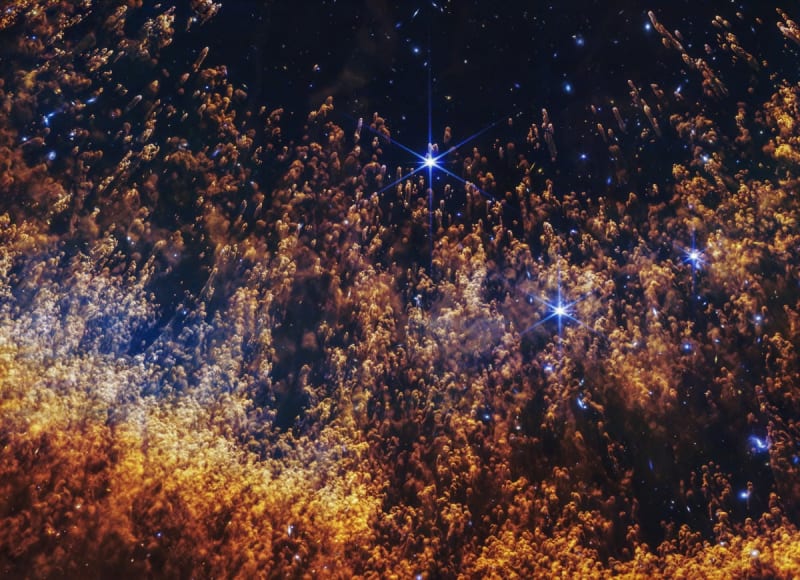
NASA's James Webb Space Telescope has captured extraordinary new images of the Helix Nebula, nicknamed the "Eye of God," revealing details that earlier telescopes could only hint at. Located 650 light-years away in the constellation Aquarius, this cosmic wonder looks so vivid that one Australian astrophysicist mistook it for lavender flowers at first glance.
The Helix Nebula represents something beautiful happening in space: death creating life. When sunlike stars die, they release clouds of hot gas and dust that drift through space. These materials eventually become the raw ingredients for brand new stars and planets.
Previous images from the Hubble and Spitzer space telescopes showed the nebula as an extended haze around a glowing center. But JWST's powerful infrared camera has sharpened that blur into stunning clarity, revealing a richly textured landscape of cosmic destruction and creation happening simultaneously.
The new images show why scientists call this the "Eye of God." A warm interior of recently ionized gas sits surrounded by cooler, older shells of dust ejected by the dying star. Where these two regions meet, hot gas punches through the dusty shell, creating knotty plumes that look remarkably like comets streaking through space.
JWST's unprecedented resolution transforms what used to look like haze into a gorgeous tapestry. Sparse tendrils of dust give way to billowing ripples of gas, forming countless fractal structures where, one day, new worlds may form.
Why This Inspires
This isn't just a pretty picture. It's a reminder that endings in space aren't really endings at all. The same materials that make up dying stars will eventually coalesce into new solar systems, possibly even planets that could support life.
JWST continues proving that no matter how long we've studied the cosmos, there's always something new and wonderful to discover. The telescope's ability to capture far-distant galaxies in practically every observation means each image contains layers upon layers of cosmic history.
For astronomers who have spent careers studying these objects, JWST's images still have the power to delight and amaze. The universe keeps reminding us that beauty and renewal exist even in places we thought we already understood.
More Images


Based on reporting by Scientific American
This story was written by BrightWire based on verified news reports.
Spread the positivity!
Share this good news with someone who needs it