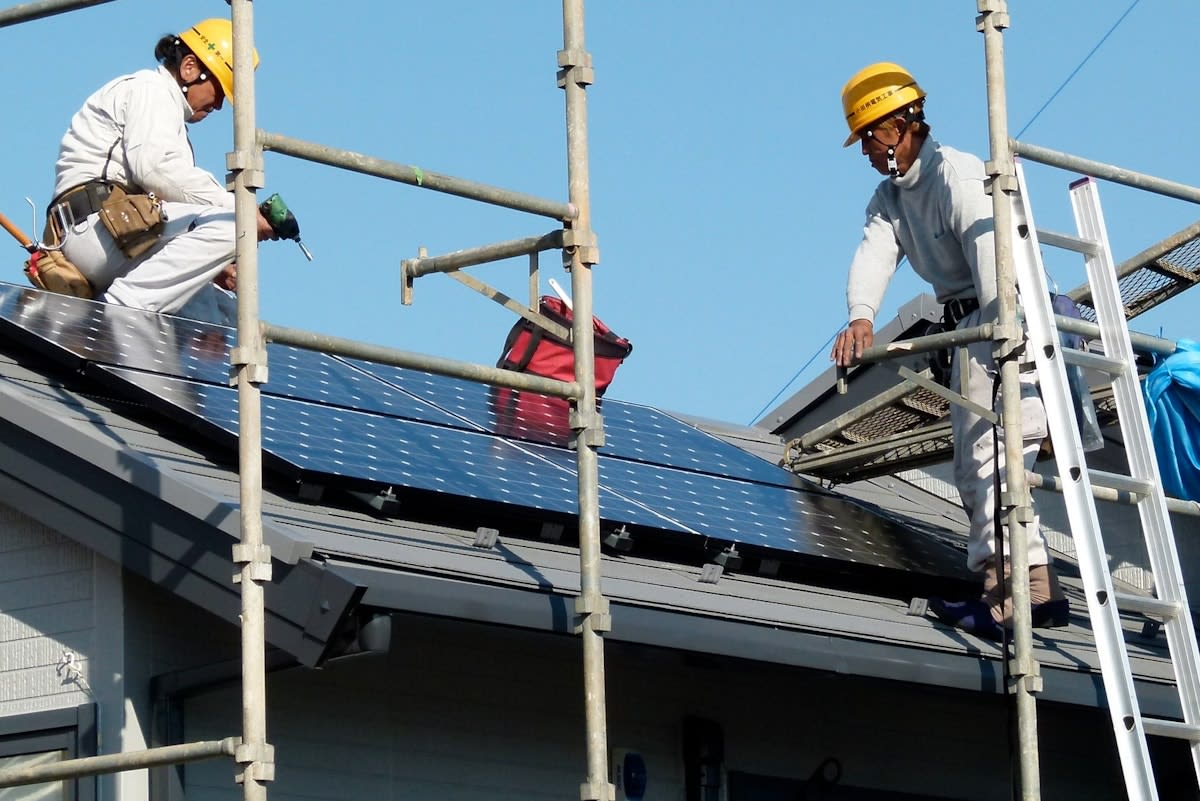
Kenya's Solar Model Shows Path to Clean Energy for Millions
Kenya built Africa's best off-grid solar market using local money and mobile payments, proving communities don't need to wait for foreign investment. Now 50,000 households have affordable solar power through a pay-as-you-go system.
Across rural Africa, millions of families live without electricity, but Kenya found a way to change that without waiting for international help.
The country created a complete local financing system for home solar power that's now the most successful in Africa. Using Kenya's popular M-Pesa mobile payment service, solar companies offer a pay-as-you-go plan that turns one large purchase into small, manageable payments.
Here's how it works. A family pays a small deposit to receive a solar system with a smart meter connected to the internet. Then they make tiny daily or weekly payments through their phone using M-Pesa. If payments stop, the system locks remotely. Once fully paid off, the family owns it outright and the power stays on forever.
This simple innovation solved two huge problems at once. Rural families who could never afford hundreds of dollars upfront can now access clean electricity. And solar companies get predictable cash flow from customers who might live hours from the nearest road.
The model spreads far beyond just electricity access. Families don't just get power for lights and phone charging. They also build an ownership stake in a real asset while creating payment histories that help them access other financial services later.
Kenya's success came from mobilizing its own capital markets rather than relying on foreign development money. While many African countries keep pension funds and institutional money in safe government bonds, Kenya showed that local financing can work for community energy projects when structured creatively.
The lesson matters because China exported $29 billion in affordable solar equipment last year, with sales to developing countries growing fast. The manufacturing capacity exists to bring clean energy to remote communities worldwide. The missing piece isn't equipment or foreign investment but local financing systems that make solar affordable for families earning just dollars a day.
The Ripple Effect
Kenya's approach is already inspiring similar programs across Africa. When communities control their own clean energy financing, they guide their own development instead of waiting for outside help. Africa's institutional investors manage around $4 trillion in assets, but less than 3% goes to infrastructure and productive projects. If even a fraction shifted toward community solar using Kenya's model, millions more families could gain electricity access within years.
One family's solar system becomes a neighborhood's inspiration, then a region's transformation.
More Images

Based on reporting by Google: clean energy investment
This story was written by BrightWire based on verified news reports.
Spread the positivity!
Share this good news with someone who needs it

%2Ffile%2Fattachments%2F2996%2FConversationrivers_569896.png)