Kerala Physicist Met Oppenheimer, Broke Barriers in 1960s
A village girl from Kerala who studied under kerosene lamps became one of the first Indian women invited by J. Robert Oppenheimer to Princeton. T.K. Radha's journey from rural India to the world's top physics institution shows how brilliance transcends borders.
In the late 1930s, nobody in the small village of Thayyur, Kerala, could have imagined that the couple's third daughter would one day sit across from the father of the atomic bomb. But T.K. Radha wasn't an ordinary student.
Studying by kerosene lamp in her village home, Radha excelled so dramatically that her sisters convinced their parents to send her to intermediate school. At Stella Maris College in Chennai, she scored a perfect 100% in mathematics and 98% in physics.
Despite societal concerns about co-education, she pursued physics honors at Presidency College. She graduated with flying colors and a gold medal, then dove into a master's degree in nuclear physics at Madras University.
The 1960s brought unprecedented opportunities. Radha completed her PhD and attended a particle physics summer school in Trieste, Italy. Her brilliance caught the attention of leading physicists worldwide, earning her post-doctoral fellowship offers from Stanford and Rochester.
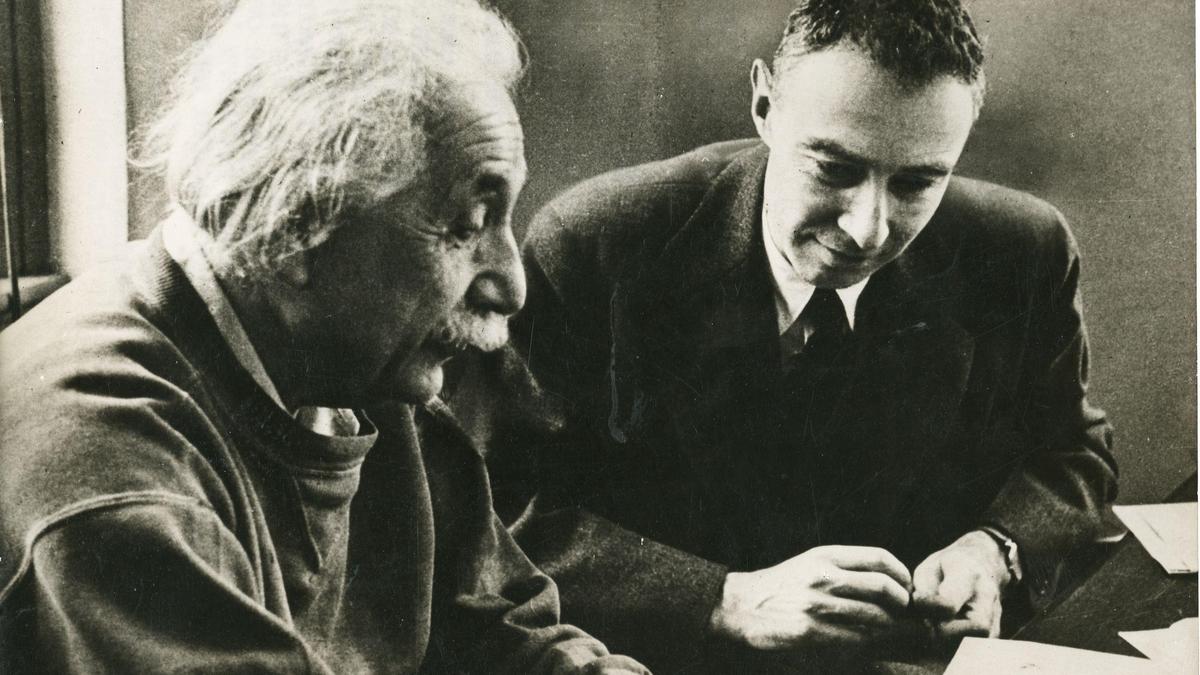
Then came the letter that changed everything. In 1965, J. Robert Oppenheimer himself invited her to spend an academic year at Princeton's Institute for Advanced Studies.
"He was a very kind man," Radha later recalled in an interview. When Oppenheimer learned she had paid her own airfare to New York, he immediately wrote her a check for the full amount. They discussed her research work whenever she had the opportunity to meet with him.
After her transformative year at Princeton, Radha prepared to return to India in 1966. But at a seminar in Edmonton, Canada, she met Dr. Vembu Gourishankar, an electrical engineering professor who would become her husband.
Life took unexpected turns. After marriage and motherhood, Radha faced universities unwilling to hire women with working husbands. But she refused to let barriers stop her scientific journey.
She retrained herself in computer science and worked as a computer analyst at the University of Alberta's Physics Department for over a decade. Her unique expertise in both physics and computing made her invaluable, and she continued publishing papers while collaborating with professors across disciplines.
Why This Inspires
Radha's story matters because it shows how talent finds its path, even through obstacles. She navigated a male-dominated field in an era when women scientists faced enormous barriers, yet she kept contributing to knowledge on her own terms.
From kerosene lamps in Kerala to Princeton's elite halls, she proved that brilliance recognizes no boundaries of gender, geography, or circumstance.
Today, Radha Gourishankar remains an inspiring mentor for physicists worldwide, a reminder that determination and excellence can overcome any barrier.
Based on reporting by The Hindu
This story was written by BrightWire based on verified news reports.
Spread the positivity!
Share this good news with someone who needs it