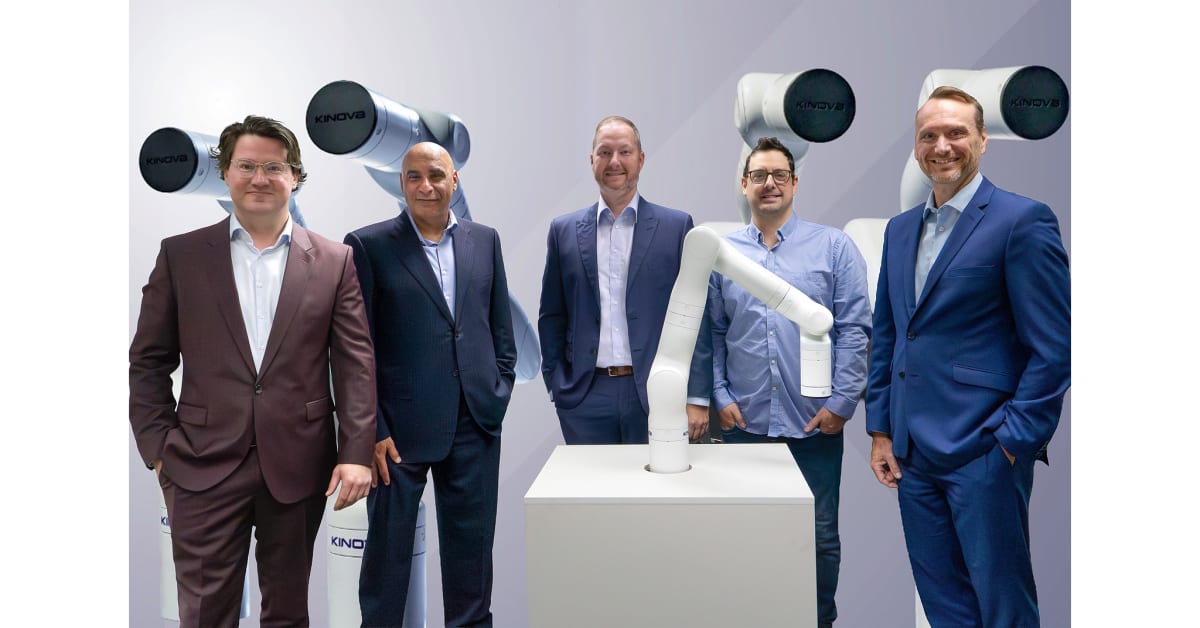
Kinova Unveils KIMA: 20 Years of Robotics for Healthcare
A Canadian robotics company just launched a medical robotic arm designed specifically for operating rooms, not adapted from factory robots. After two decades of helping people achieve more through technology, Kinova is bringing precision robotics to surgeons and patients.
A lightweight robotic arm built from scratch for hospitals is set to transform how doctors perform delicate procedures. Kinova, a Quebec-based robotics leader, celebrated its 20th anniversary by unveiling KIMA at the Society of Robotic Surgery's 2026 Annual Meeting.
The timing couldn't be better. Healthcare systems worldwide are searching for tools that help medical teams work with greater precision while reducing patient risk.
KIMA weighs less than 13 kilograms but can handle payloads up to 3 kilograms, making it nimble enough for everything from diagnostic procedures like endoscopy to complex surgical interventions. Unlike industrial robots retrofitted for medical use, KIMA was designed specifically for clinical environments from day one.
That difference matters more than it sounds. The robotic arm natively integrates the highest medical software and safety standards, including IEC 62304 Class C certification and ISO 14971 compliance.
"KIMA represents a shift in how medical robotics should be built," said François Boucher, Vice President at Kinova. "We designed this robotic arm specifically for clinical realities, applying absolute quality manufacturing standards to pave the way for technologies better aligned with the needs of patients and practitioners."
The company's journey started in 2006 with a clear mission: design technology that expands what people can achieve. For years, Kinova focused on assistive robotics, helping people with mobility challenges regain independence through robotic arms they could control themselves.
Now that same human-centric philosophy is entering operating rooms. KIMA's advanced kinematic architecture adapts to demanding clinical workflows, giving surgeons a responsive tool that moves naturally alongside their expertise.
The Ripple Effect
Medical device manufacturers from startups to global leaders can now build next-generation clinical systems faster than ever. KIMA comes supported by a robust network of premier technology partners, including QNX, RTI, and MedAcuity, that streamline the integration process.
That modular approach means innovators can focus on solving clinical problems rather than reinventing robotic foundations. The result could be a wave of specialized medical tools reaching hospitals sooner, each tailored to specific procedures and patient needs.
Every component is designed, developed, and assembled in Canada, reflecting Kinova's commitment to quality across medical, professional, and assistive applications.
"The important thing is not the size of the steps we take, but the willingness to keep moving forward, one step at a time, in the same direction," said Charles Deguire, CEO and Co-founder of Kinova. Two decades of steady innovation just brought precision robotics within reach for healthcare teams worldwide.
More Images


Based on reporting by Google: robotics innovation
This story was written by BrightWire based on verified news reports.
Spread the positivity!
Share this good news with someone who needs it