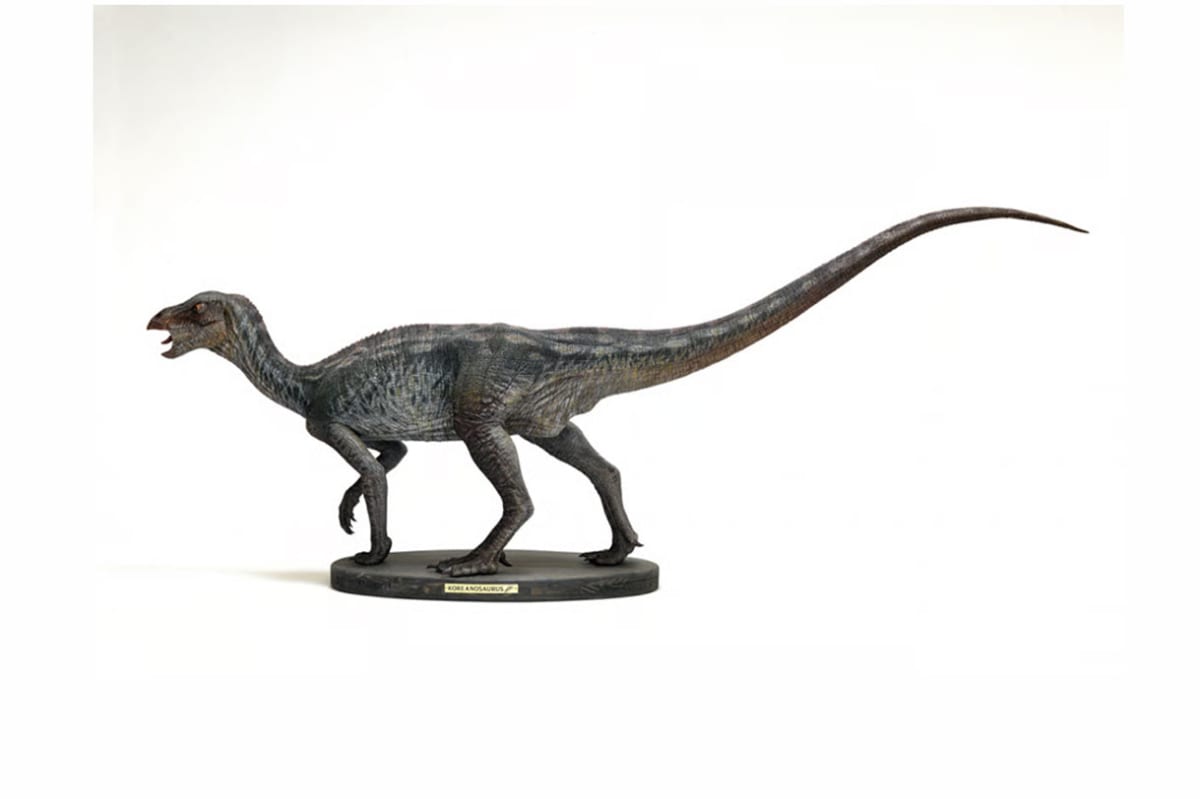
Korea Names First Indigenous Dinosaur a Natural Monument
A nearly complete dinosaur fossil bearing Korea's name will receive the country's highest protection as a natural monument. The rare 75-million-year-old Koreanosaurus discovery rewrites what scientists know about ancient dinosaur migration.
South Korea just gave one of its most precious paleontological treasures the recognition it deserves.
The Korea Heritage Service announced plans to designate the Koreanosaurus boseongensis as a natural monument, granting the fossil legal protection as nationally significant heritage. This marks the first time a dinosaur discovered in Korea carries the country's name in its scientific classification.
Researchers unearthed the fossil between 2000 and 2004 in Boseong, South Jeolla Province, at a site already famous for dinosaur eggs. What they found exceeded all expectations: a nearly complete skeleton preserving most of the upper and lower body and limb bones.
"Most dinosaur fossils discovered in Korea are fragmentary and incomplete," said Kim Min-guk, a researcher at the Korea Dinosaur Research Center at Chonnam National University. The Koreanosaurus stood out as an exceptional find with only its skull missing.
The small herbivore lived during the Late Cretaceous period about 75 million years ago. Standing just two feet tall and stretching six feet long, it walked on birdlike limbs and left distinctive blunt, three-toed footprints across ancient mudflats.
Koreanosaurus belonged to Orodrominae, a dinosaur subfamily rarely identified in Asia. This placement tells scientists something remarkable: dinosaurs migrated between North America and Asia during that period, challenging previous assumptions about how isolated these ancient populations were.
The fossil revealed an unusual feature that puzzled researchers. Its forelimbs were unusually thick and robust compared to other members of its subfamily, suggesting powerful muscles and ligaments. Scientists believe Koreanosaurus adapted these strong arms to dig burrows, possibly to escape predators or extreme weather.
Why This Inspires
This discovery shows how patient, methodical research can rewrite our understanding of the ancient world. Three separate fossils have now been registered as Koreanosaurus, and their similar shapes and sizes suggest they all came from a single individual, making the find even more remarkable.
The formal description appeared in Germany's prestigious Journal of Geology and Palaeontology in 2010, cementing Korea's place in global paleontology. Natural monument status will now ensure this treasure receives proper funding for preservation and ongoing research.
Every great discovery starts with someone looking closely at what others might overlook, and Koreanosaurus proves there are still ancient secrets waiting in the ground.
Based on reporting by Google: fossil discovery
This story was written by BrightWire based on verified news reports.
Spread the positivity!
Share this good news with someone who needs it