Antarctica's First Dinosaur Bone Sat in Drawer for 40 Years
A fossil collected in Antarctica in 1985 has been confirmed as the continent's first dinosaur bone discovery after spending four decades in storage. The titanosaur vertebra is rewriting what scientists know about how these massive creatures spread across the southern continents.
Sometimes the biggest discoveries are hiding in plain sight, waiting decades for someone to recognize their importance.
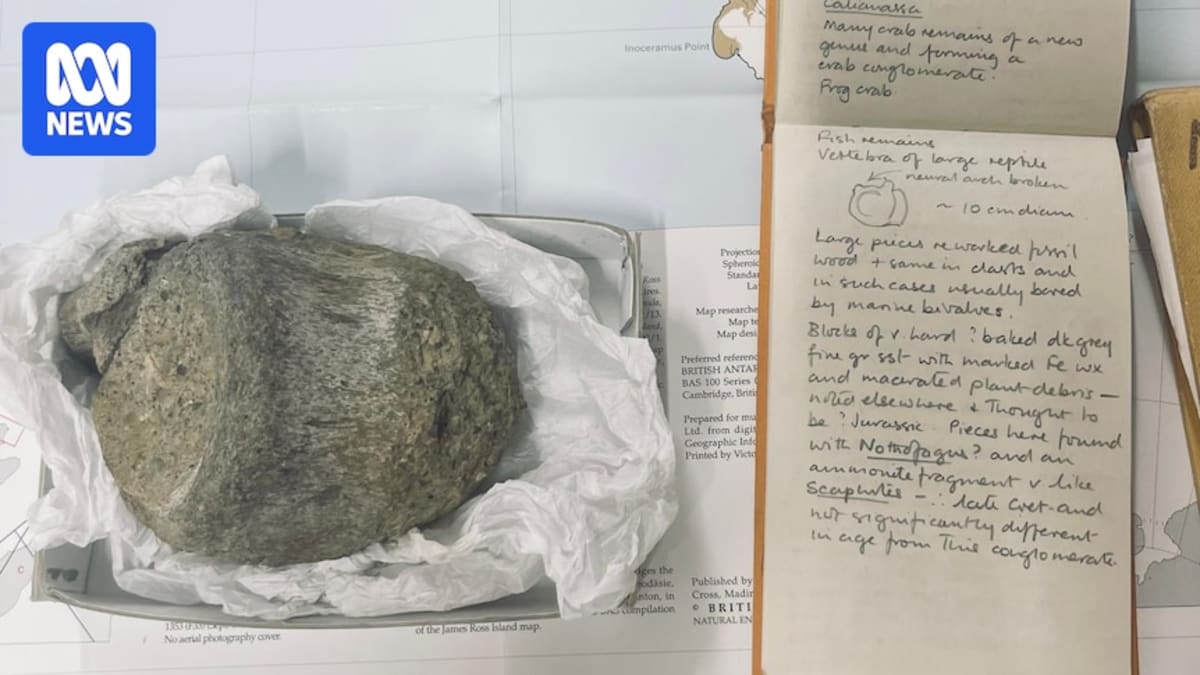
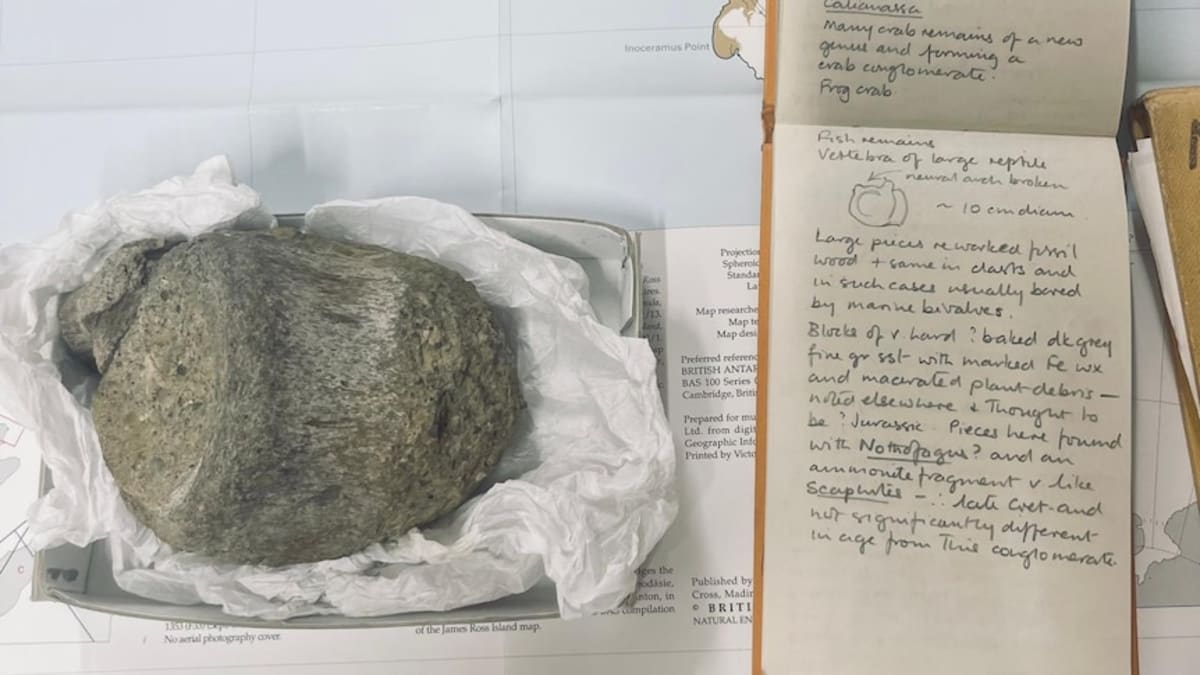
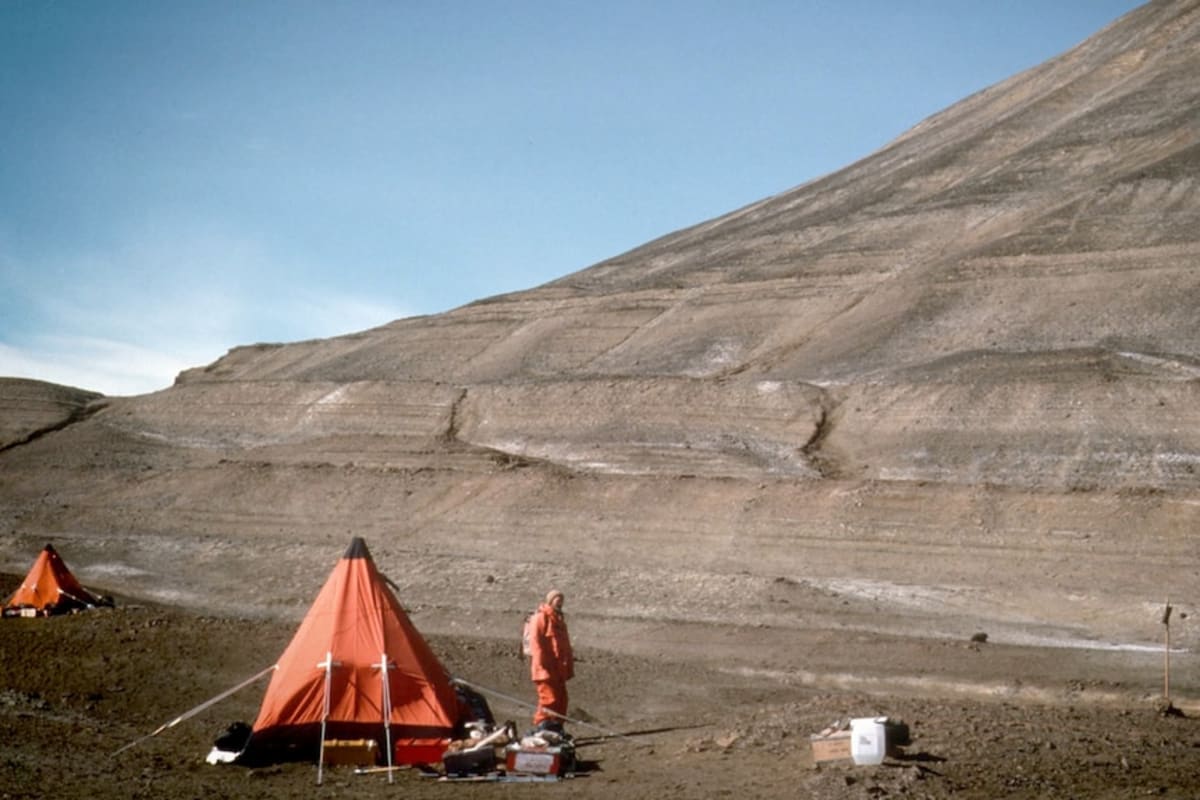
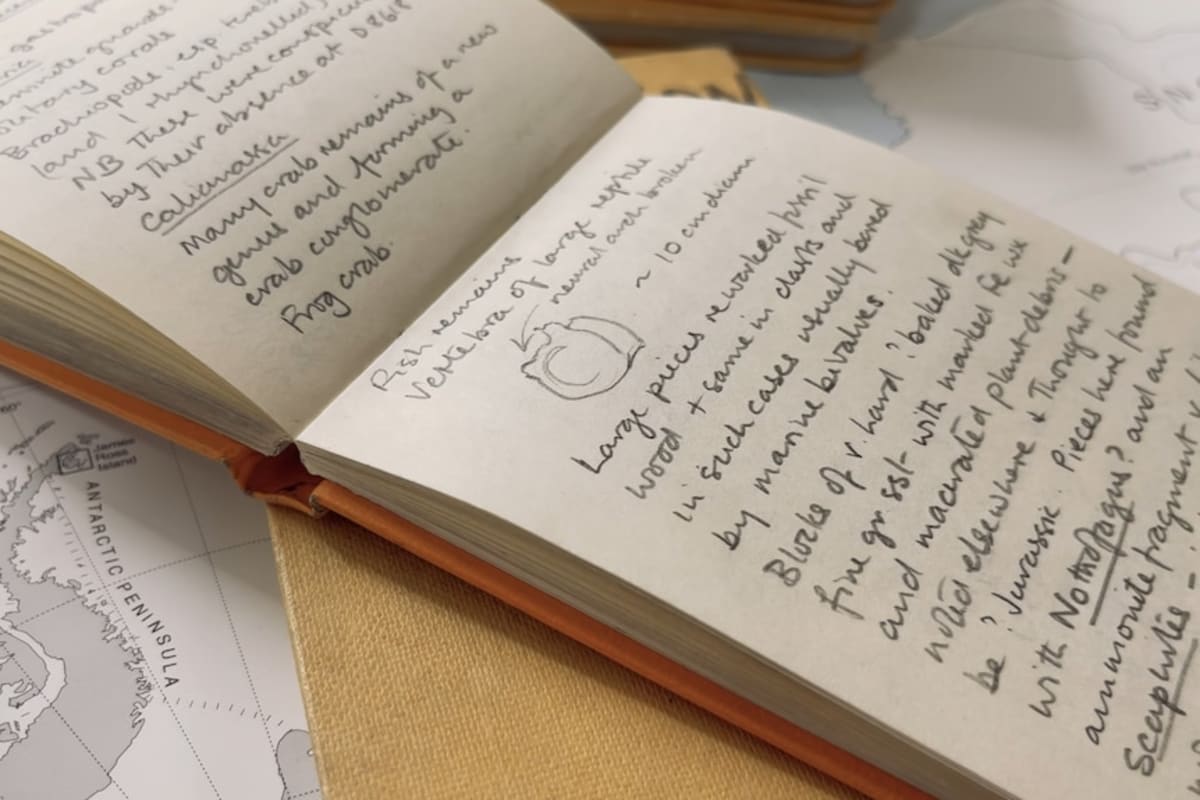
In December 1985, British geologist Dr. Mike Thomson was mapping rock layers on Antarctica's James Ross Island when he spotted something unusual. He carefully excavated a 10-centimeter-wide bone and sketched it in his field diary, noting it looked like a vertebra from a large reptile.
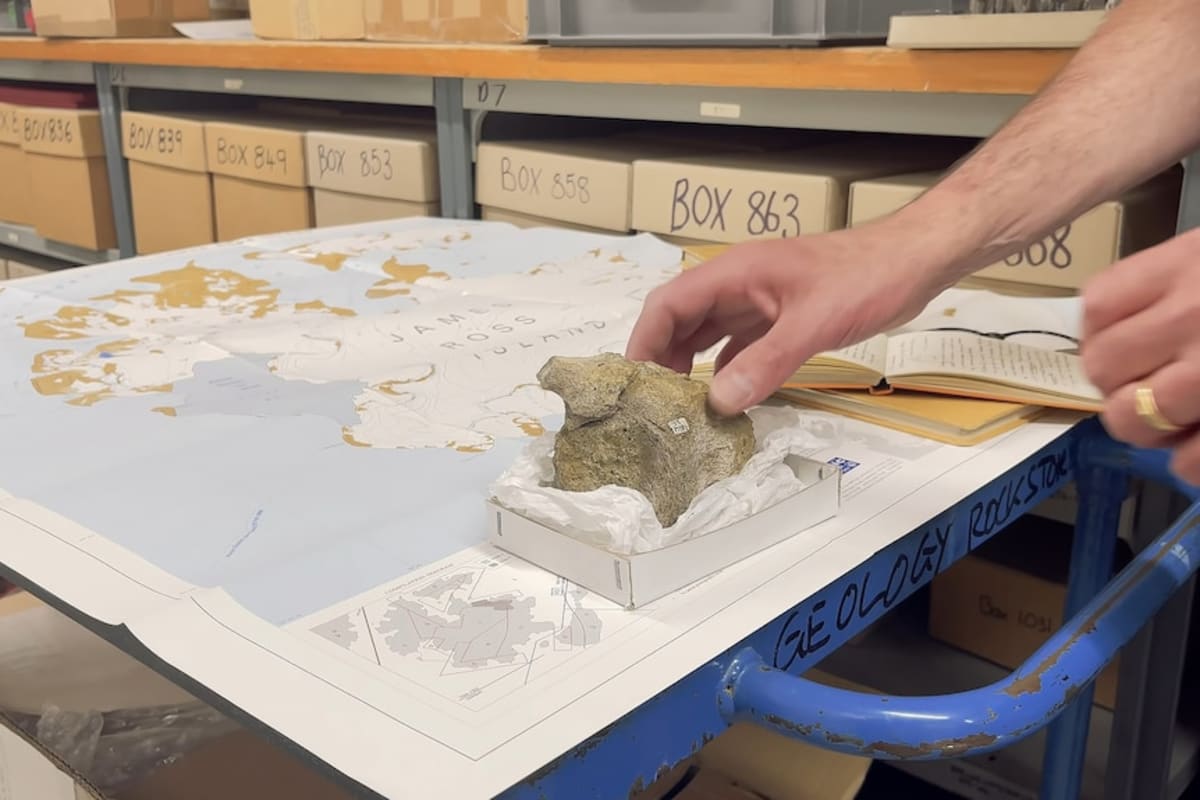
The fossil was shipped to the British Antarctic Survey's geology collection in England, where it sat tucked inside a drawer for nearly 40 years. Thousands of specimens came and went, but this particular bone remained unidentified and largely forgotten.
Everything changed when Dr. Mark Evans, the survey's collections manager, decided to take a closer look at the facility's older specimens. His background in vertebrate paleontology helped him recognize something special about the bone's distinctive shape.
"When I first spotted this bone in our collections a few years ago, I suspected it was a dinosaur," Evans said. His instinct was right. The vertebra belonged to a titanosaur, the largest type of dinosaur to ever walk on land.
The confirmation means Thomson's 1985 discovery was actually Antarctica's first dinosaur bone find, predating all other dinosaur fossils discovered on the continent. Dinosaur remains are extremely rare in Antarctica because the massive ice sheets covering the continent make fossil hunting nearly impossible.
The bone came from a relatively small titanosaur, about 6 or 7 meters long. Some titanosaurs grew to more than 35 meters in length and weighed over 15 tonnes, making them true giants of the ancient world.
The fossil dates back roughly 82 million years, to a time when Antarctica looked nothing like today's frozen wasteland. Back then, the continent was warm, heavily forested, and teeming with life.
Scientists believe the dinosaur died near the coast and its body floated out to sea, eventually sinking to the seabed where it was buried and fossilized in marine rock layers.
Why This Inspires
This discovery proves that patience and careful attention to existing collections can be just as valuable as new expeditions. Dr. Evans honored his colleague's original instinct by confirming what Thomson suspected four decades earlier.
The find also helps scientists understand how titanosaurs spread across the southern continents. No titanosaur fossils have been found in Australia, and only limited evidence exists in New Zealand. Confirming their presence in Antarctica suggests these massive creatures traveled between all three regions when they were still connected as part of the ancient supercontinent.
Professor Paul Barrett from London's Natural History Museum calls it an important piece of the puzzle. As Antarctica's ice continues to retreat, researchers believe more dinosaur fossils will emerge, revealing secrets about life on Earth millions of years ago.
Thomson's meticulous note-taking in 1985 made this confirmation possible, showing how scientific curiosity today can validate observations made generations ago.
More Images
Based on reporting by Google: fossil discovery
This story was written by BrightWire based on verified news reports.
Spread the positivity!
Share this good news with someone who needs it