Korean Team Breaks Solar Cell Efficiency World Record at 26.7%
South Korean researchers just achieved a world-record 26.7% efficiency in next-generation solar cells, proving the technology can capture more sunlight than ever before. The breakthrough could power everything from buildings to satellites with lighter, more flexible panels.
Scientists at the Korea Institute of Energy Research just shattered the world record for solar cell efficiency, opening the door to lighter, more powerful renewable energy for Earth and space.
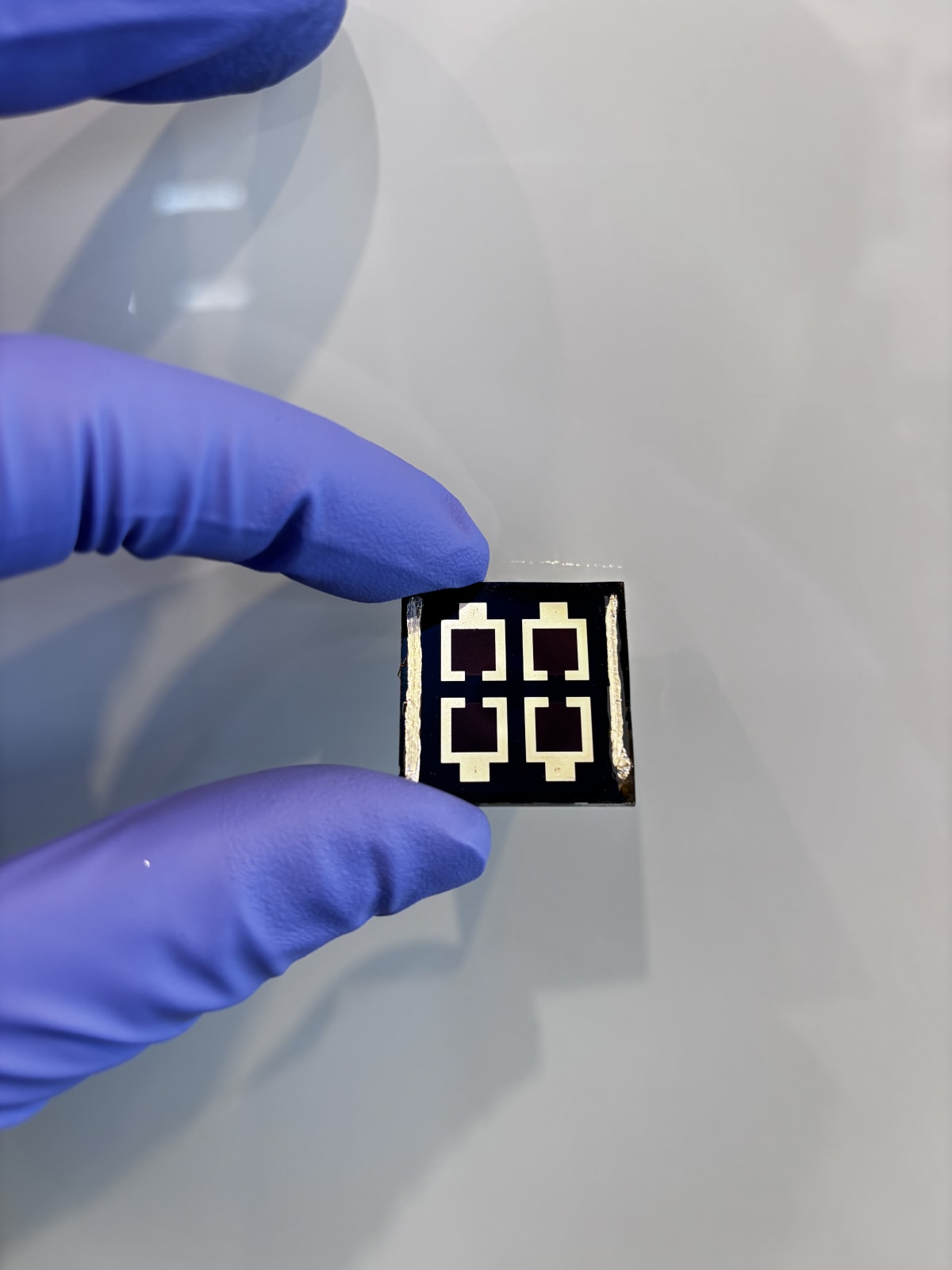
The team achieved a certified 26.7% efficiency rating with their innovative perovskite/CIGS tandem solar cells. Germany's Fraunhofer Institute officially verified the achievement, which now appears on the prestigious Best Research-Cell Efficiencies Chart maintained by the US National Laboratory of the Rockies.
This marks the second consecutive year that a Korean research team has broken the world record in this category. Last year, a joint team from Seoul National University and the Korea Institute of Science and Technology held the title at 26.3%.
The breakthrough matters because traditional silicon solar cells have nearly reached their physical limits for improvement. These new tandem cells work differently by stacking two types of solar materials that each capture different wavelengths of sunlight, squeezing more energy from the same amount of sunshine.
The KIER team placed a perovskite cell on top and a CIGS cell on the bottom, allowing both layers to absorb different parts of the light spectrum simultaneously. Both materials work perfectly for thin-film processing, making the final product lightweight and flexible without sacrificing power.
Getting there wasn't simple. Combining the two cell types can damage the delicate perovskite layer, and some layers can accidentally absorb light meant for other parts of the system.
The researchers solved these problems by developing new interfacial layer materials that protect the perovskite during assembly. They also redesigned the transparent top electrode and charge transport layer to minimize unwanted light absorption.
The Ripple Effect
This technology could transform where and how we generate solar power. The lightweight, flexible design makes these cells perfect for curved surfaces like car roofs and building facades where traditional rigid panels won't work.
The implications extend beyond Earth. Space agencies are watching closely because these cells offer high efficiency without the weight penalties that make launching traditional solar panels so expensive. Future satellites and space-based data centers could run on this technology.
Senior researcher Inyoung Jeong emphasized that the achievement proves both efficiency and stability can improve together. The official certification from a world-renowned institute confirms Korea's leadership in next-generation solar technology.
The team now faces the challenge of scaling up from small laboratory devices to large commercial panels without losing efficiency. They're already talking with industry partners about mass production and technology transfer.
Looking further ahead, they plan to adapt the technology specifically for space applications where reliability, weight, and efficiency are all critical. The cells that work in orbit today might power the green buildings of tomorrow.
Based on reporting by Google News - World Record
This story was written by BrightWire based on verified news reports.
Spread the positivity!
Share this good news with someone who needs it