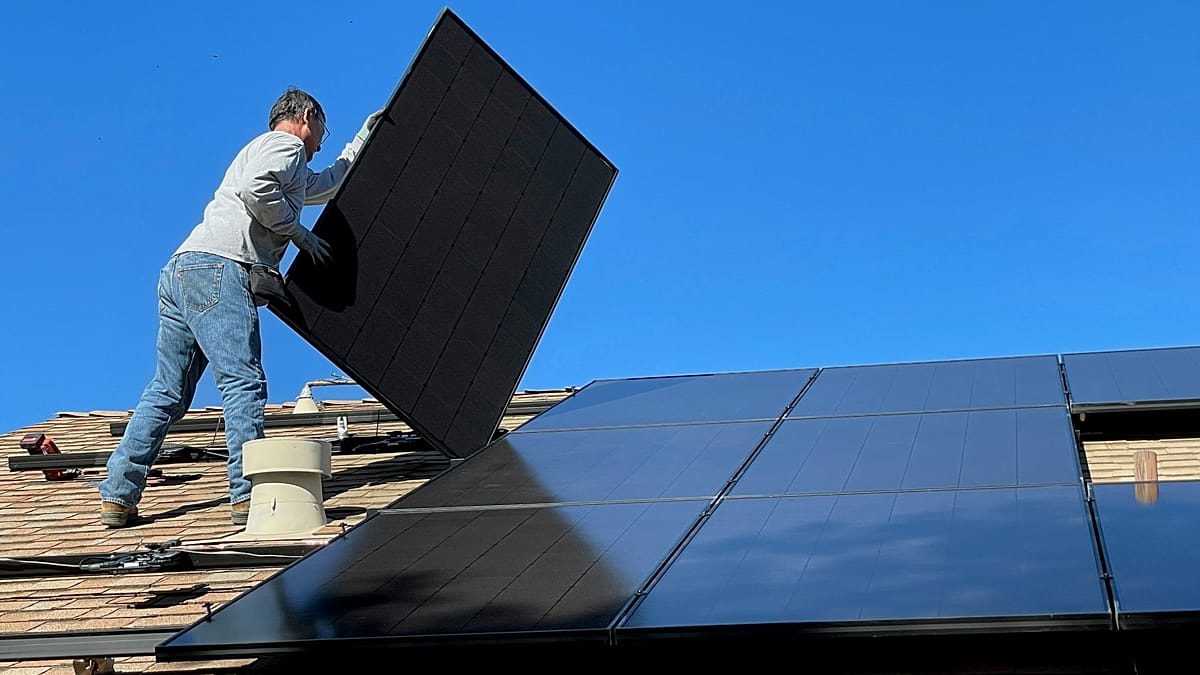
Solar Bonds Could Cut Energy Bills With Zero Upfront Cost
A new financing scheme could put solar panels on every suitable roof without credit checks or upfront costs. Homeowners would save money from day one, even while repaying the loan through their energy bills.
Imagine getting solar panels installed on your roof today without paying a penny upfront or filling out a single credit application. That future could be closer than you think.
Researchers at Oxford's Environmental Change Institute have proposed a government-backed "Solar Bond" scheme that would make rooftop solar accessible to every household with a suitable roof. The program would eliminate the biggest barrier keeping families from going solar: those hefty installation costs that can run anywhere from $8,000 to $35,000.
Here's how it works. The government would cover the upfront installation costs, and households would repay the loan over 25 years through their regular energy bills. The monthly repayment would be less than the money saved on electricity, meaning families would see net savings from day one.
The proposal comes as rooftop solar could supply 40 percent of Europe's electricity by 2050, according to research published in Nature Energy. Right now, only 10 percent of European buildings have solar panels installed.
Dr. Donal Brown, who led the research, found that even after accounting for loan repayments, households would save at least $110 annually. Families who add battery storage could save nearly double that amount.
The scheme includes a clever twist that solves another common problem. The loan stays with the property, not the homeowner. If you move, the solar panels and remaining payments simply transfer to the next occupant. No hassle, no penalty, no barrier to selling your home.
Current government subsidies help, but they haven't solved the access problem. Ireland offers grants up to $2,100, while Hungary covers two-thirds of costs for eligible homeowners. Germany and the Netherlands eliminated sales tax on solar installations. Yet the upfront costs still force many families to take out high-interest loans or skip solar entirely.
The Ripple Effect
Beyond slashing energy bills, the Solar Bond program could create over 42,000 new jobs by 2030, according to the Solar Trade Association. These jobs would spread across communities nationwide, from installers to electricians to customer service roles.
The timing couldn't be better. Fossil fuel prices have been climbing, pushing more families to seek energy independence. Solar panels typically take a decade to pay for themselves under current financing options. This new approach cuts that timeline dramatically while opening access to renters and lower-income families often locked out of green energy transitions.
The proposal represents a fundamental shift in how we think about clean energy access. Instead of solar being a luxury for those with capital, it becomes a right for anyone with a roof and a utility bill.
A future where clean energy saves you money from day one is no longer just a dream.
More Images



Based on reporting by Euronews
This story was written by BrightWire based on verified news reports.
Spread the positivity!
Share this good news with someone who needs it