
Korean Tech Solves Chip Manufacturing Roadblock for AI
A South Korean company just cracked one of the toughest puzzles in next-generation chip making. Their breakthrough could help power the AI revolution with faster, more reliable processors.
The tiny holes inside tomorrow's computer chips just got a whole lot easier to build, thanks to a clever innovation from South Korea.
Kools, a semiconductor packaging company, unveiled a technology called Self-Propagating Electrode Architecture that solves a stubborn problem in advanced chip manufacturing. The company announced the breakthrough on August 21, 2026, and plans to present it at an upcoming seminar in Suwon.
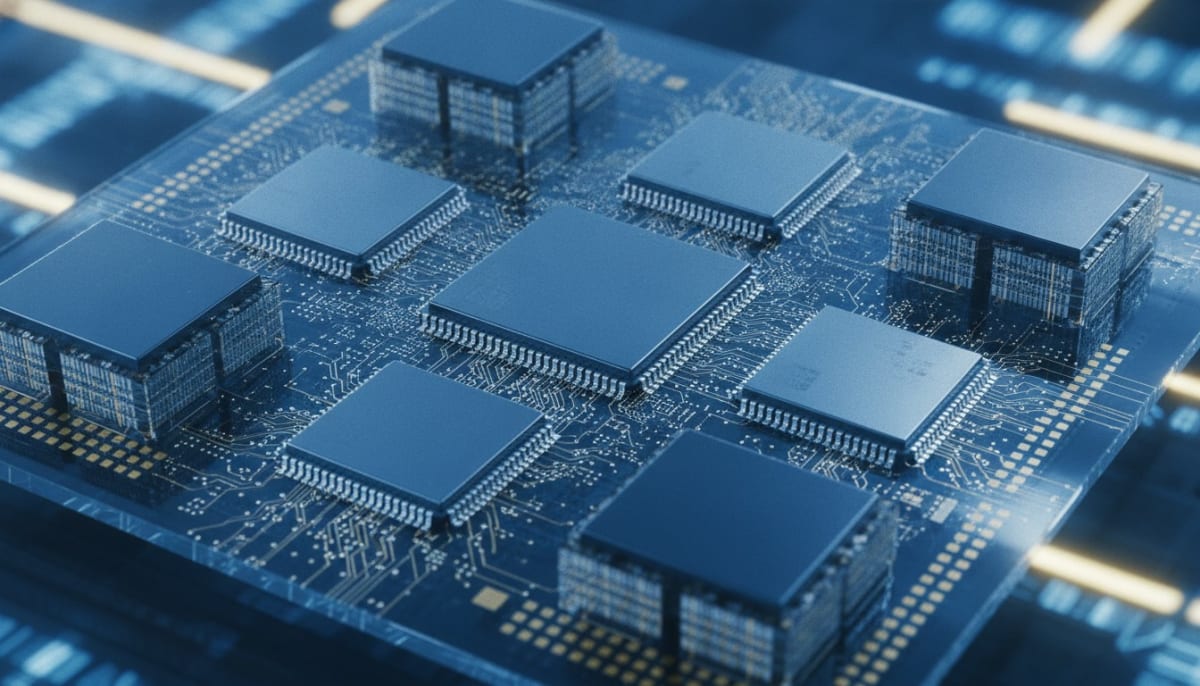
Here's why it matters: As artificial intelligence systems grow more powerful, they need bigger, more complex chips. Engineers are turning to glass substrates, thin panels of specialized glass that can handle more connections and run cooler than traditional materials. But there's been a catch.
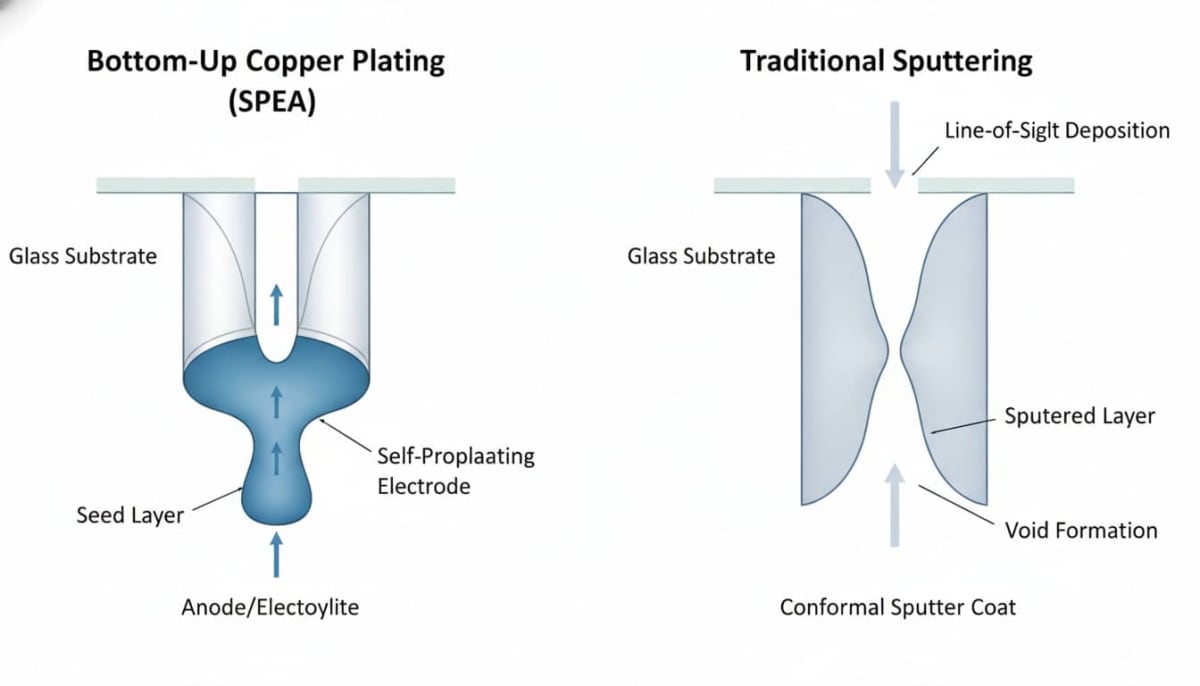
These glass panels need microscopic holes called through-glass vias to connect the different layers of chips together. Filling those tiny holes with metal has been incredibly difficult. Traditional methods leave gaps, create weak spots, or accidentally block the entrance entirely.
Kools figured out how to fill these holes from the bottom up, like filling a straw with liquid instead of coating the inside. Their system creates an initial metal seed point at the bottom of the hole, then that metal itself becomes an electrode that attracts more metal. The hole fills sequentially upward, avoiding the blockages and voids that plague other methods.
The timing couldn't be better. Intel has already demonstrated glass core substrates publicly, while Samsung Electronics and SK Absolics are racing to develop their own versions. The demand for advanced chip packaging has never been higher, driven by data centers hungry for more AI processing power.
The Ripple Effect
This breakthrough arrives when the world needs it most. Glass substrates offer superior flatness, lower signal loss, and better thermal management than organic materials. They can pack more connections into the same space, which means AI systems can process information faster and more efficiently.
The technology also addresses a manufacturing bottleneck that's been holding back the entire industry. When one company solves a problem this fundamental, it opens doors for competitors and collaborators alike. Better chips mean more capable AI tools for healthcare, climate research, and countless applications we haven't imagined yet.
What started as a metallization challenge in a Korean lab could ripple outward to touch every corner of the digital world. Glass substrates might soon become the foundation supporting the next generation of technology that helps us work, learn, and solve problems together.
The future of computing just got a little clearer, one microscopic hole at a time.
More Images


Based on reporting by Google News - South Korea Breakthrough
This story was written by BrightWire based on verified news reports.
Spread the positivity!
Share this good news with someone who needs it