Lab Simulates Nuclear Fireball to Improve Safety Models
Scientists recreated the extreme conditions inside a nuclear fireball and discovered that our safety models have been missing key chemical reactions. Their findings could make nuclear event predictions far more accurate.
Scientists just made nuclear safety predictions more reliable by recreating one of the most extreme environments on Earth in a controlled laboratory setting.
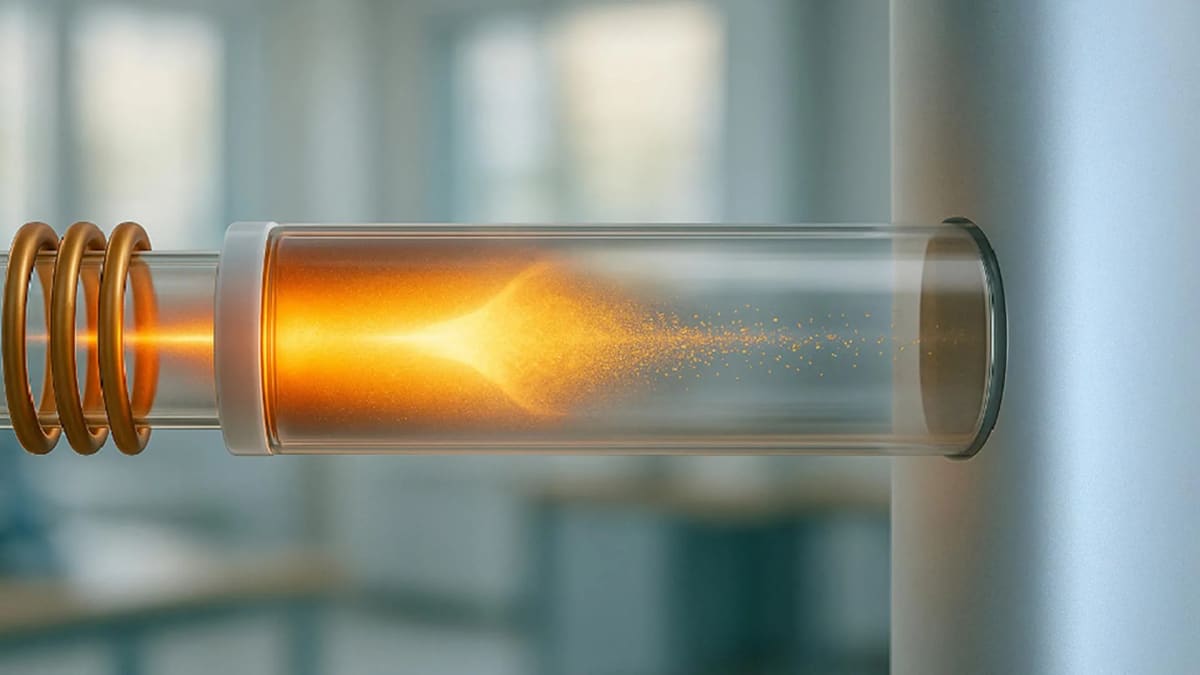
Researchers at Lawrence Livermore National Laboratory built a plasma flow reactor that mimics the intense heat and chaos inside a nuclear fireball. By studying how vaporized materials cool and form fallout particles, they discovered something important: the cooling process itself dramatically changes how dangerous radioactive elements behave.
The team focused on three elements that react differently to extreme heat. Uranium and cerium condensed early, while cesium, a highly volatile element, condensed much later. Here's the surprise: when materials stayed hot longer before cooling, cesium mixed far more extensively with the other elements than anyone expected.
"These particles preserve a record of how they formed," said LLNL scientist Rakia Dhaoui. "By studying these processes in a controlled system, we can replace assumptions with measurements."
The discovery matters because many existing fallout models treat elements as if they behave independently. In reality, they chemically interact with each other as temperatures drop, creating particles that look and behave very differently than predicted.
The Bright Side
Better models mean better safety. When nuclear events occur, whether from weapons tests or reactor accidents, scientists analyze fallout particles to understand what happened and predict how contamination will spread.
The new research, published in Analytical Chemistry, gives safety officials more accurate tools for making critical decisions during emergencies. Instead of relying on simplified assumptions from decades ago, they can now account for the complex chemical reactions that actually occur.
The plasma reactor allowed researchers to collect samples at multiple points during particle formation, like taking snapshots of the cooling process. This level of detail was previously impossible to achieve.
The team is already planning to expand their work by testing more realistic mixtures of materials. Each experiment brings fallout models closer to reality, improving our ability to protect communities and respond effectively when nuclear events occur.
What started as a scientific puzzle about particle chemistry has become a pathway to safer, smarter emergency response.
Based on reporting by Science Daily
This story was written by BrightWire based on verified news reports.
Spread the positivity!
Share this good news with someone who needs it