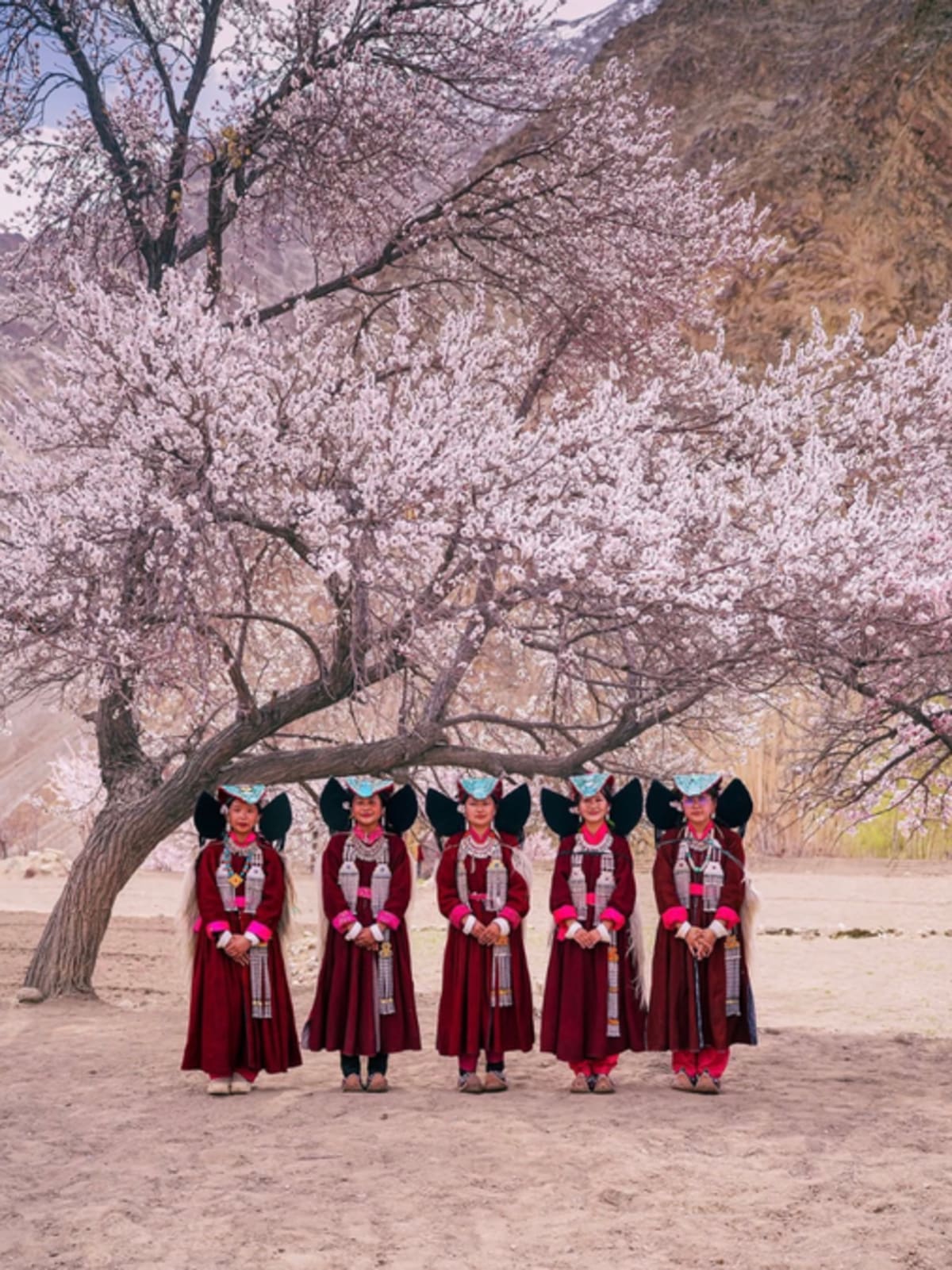
Ladakh's Apricot Festival Brings Income to Remote Villages
Villages across Ladakh are turning apricot blossom season into a sustainable tourism festival that puts money directly into local pockets. Running April 8-16, the celebration spreads visitors across lesser-known communities while protecting the region's fragile environment.
When apricot blossoms blanket Ladakh's mountain valleys each spring, remote villages transform into welcoming destinations where tourists sleep in local homes, learn traditional farming, and taste food made from centuries-old recipes. The annual Apricot Festival, happening now through April 16, is doing something remarkable: showing how tourism can help communities instead of overwhelming them.
The festival unfolds across villages like Turtuk, Tyakshi, and Skurbuchan in the Leh and Kargil regions. Instead of funneling all visitors to popular spots, it encourages travelers to explore lesser-known landscapes where tourism dollars go directly to those who need them most.
Local farmers, artisans, and homestay owners run the entire event. They open their homes and orchards to visitors who want to experience authentic Ladakhi life, not a performance staged for cameras.
The timing follows nature's calendar. Held between late March and early May, the festival tracks the apricot bloom as it moves across regions, shifting with altitude, climate, and the pace of spring itself.
Visitors learn how farmers grow crops in one of Earth's harshest climates, where water is precious and growing seasons are short. Workshop participants discover techniques perfected over generations in a place where summer lasts just a few months.
The food tells Ladakh's story through taste. Villages showcase apricot-based products like Chuli (dried apricots), jams, juices, and apricot kernel oil. Traditional dishes include Khambir bread, Paba, Skyu, and butter tea, all made with locally grown ingredients that reflect the region's resourcefulness.
Cultural programs feature village-led folk performances like Jabro and Shalshab dances. Visitors watch archery demonstrations, see traditional attire up close, and browse craft stalls selling woollens and products carved from apricot wood.
The Ripple Effect
This festival is rewriting tourism's playbook in a region struggling with too many visitors in too few places. By spreading footfall across multiple villages, it takes pressure off Ladakh's most fragile ecosystems while ensuring that tourism income reaches families who previously saw little benefit from the region's popularity.
The model supports livelihoods without asking communities to abandon their traditions or speed up their rhythms of life. When tourists learn traditional farming methods or taste apricot kernel oil pressed the same way for centuries, they're participating in cultural preservation that pays.
Other mountain regions facing similar challenges are watching closely. Ladakh is proving that tourism can be both profitable and protective when communities lead the way.
Apricot blossoms last only weeks, but the festival's impact blooms year-round in villages building sustainable futures on their own terms.
Based on reporting by The Better India
This story was written by BrightWire based on verified news reports.
Spread the positivity!
Share this good news with someone who needs it