Madrid Hospital's 3D Bone Saves Man's Leg From Amputation
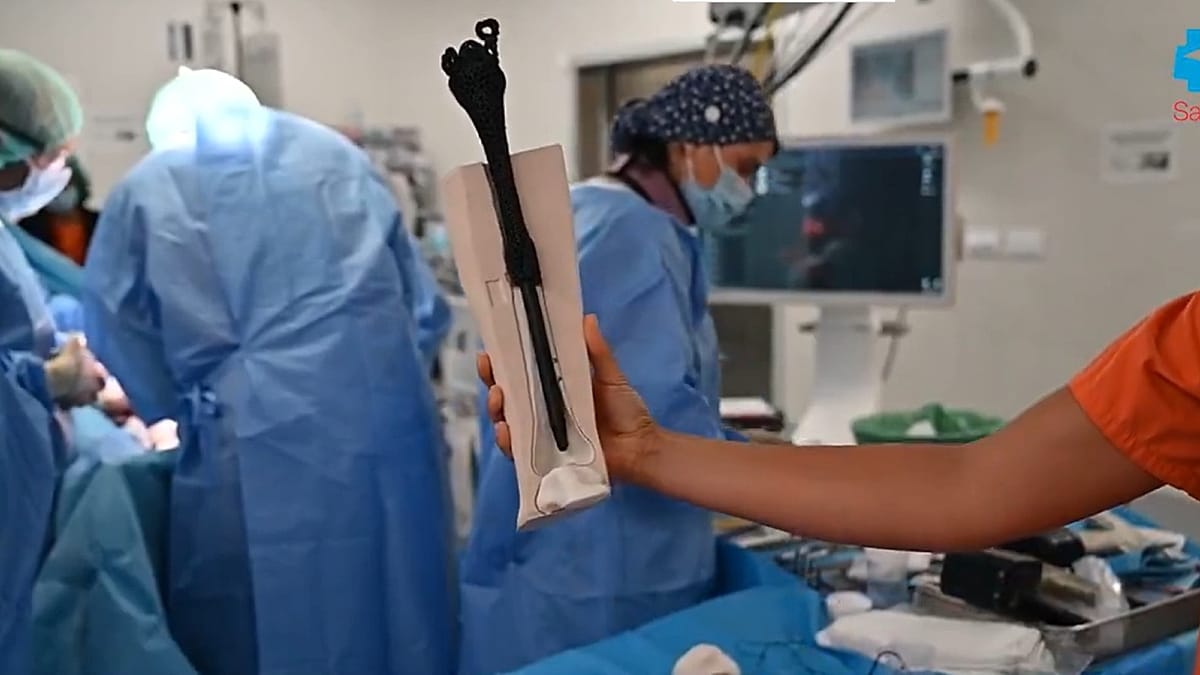
A 38-year-old cancer patient kept his leg thanks to the world's first metamaterial bone prosthesis, a lightweight titanium implant that mimics real bone. The breakthrough technology could transform limb-saving surgery worldwide.
Pierre Chazel faced a devastating choice: lose his leg to bone cancer, or risk a revolutionary surgery no one had ever tried before.
The 38-year-old had a high-grade sarcoma eating away at his tibia. After infection destroyed his bone density, conventional prostheses couldn't hold. Amputation seemed inevitable until doctors at Madrid's Gregorio Marañón Hospital proposed something extraordinary.
They would build him a new bone from scratch.
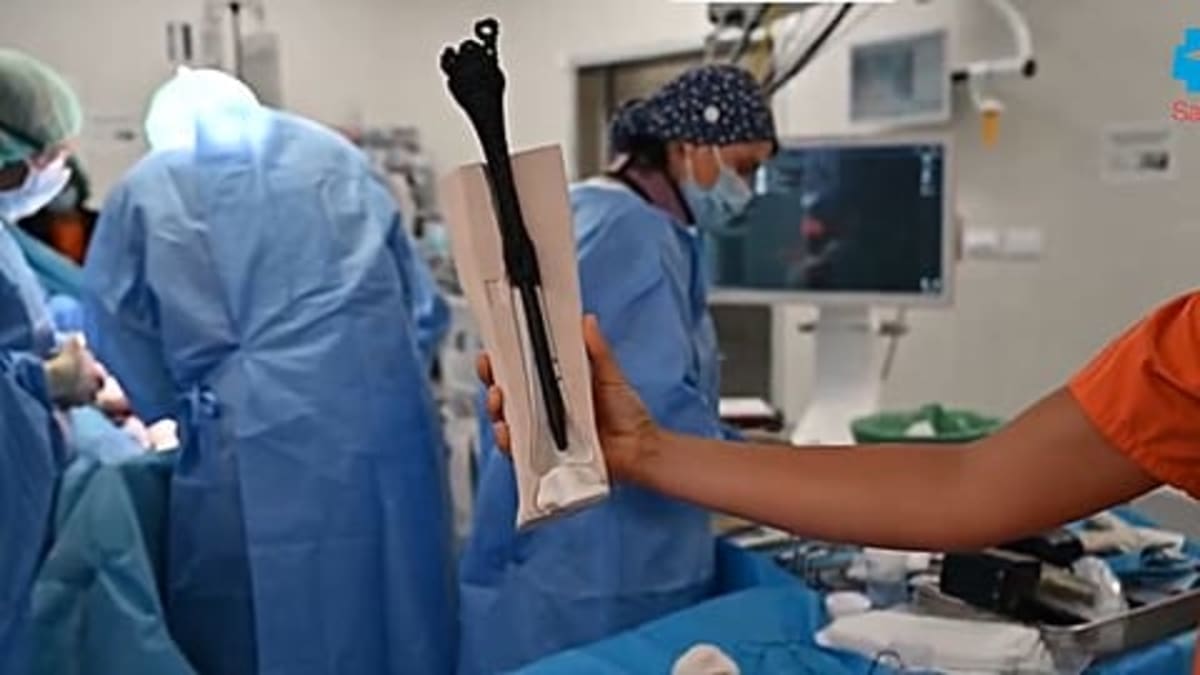
Working with engineers from the Polytechnic University of Madrid, the medical team created the world's first personalized metamaterial bone prosthesis. Unlike traditional solid implants, this one mimics the actual structure of bone using a network of fine titanium rods arranged in patterns originally developed for aerospace engineering.
The results sound almost impossible. The implant weighs just 300 grams but can withstand over 500 kilos of force. Traditional prostheses weigh several kilos yet can only bear 100 to 150 kilos.
The team started by creating a digital twin of Chazel's healthy leg using his medical scans. They simulated every stress his tibia would face while walking, climbing stairs, even stumbling. Then they 3D-printed a titanium structure that distributes weight exactly like real bone tissue.
The custom design let surgeons place screws in the strongest remaining bone areas with millimeter precision. Operating time dropped by nearly half compared to conventional procedures.
Why This Inspires
This isn't just about saving one leg. It's about rethinking what's possible when medicine gets personal.
The metamaterial design encourages the patient's own bone to grow into and around the prosthesis, reducing rejection risk and complications. Because each implant perfectly matches the patient's anatomy, recovery becomes more predictable and successful.
One year after surgery, Chazel is walking again. After nearly two years unable to put weight on his leg, he's finally regaining his mobility.
The hospital has already completed a second metamaterial bone implant and is preparing two more for a wrist and a sternum. The team's goal is ambitious but clear: make hyper-personalized implants standard care within Spain's public health system.
For patients facing limb loss, this technology offers something beyond hope. It offers a future where keeping your own body parts becomes the expectation, not the exception.
More Images
Based on reporting by Euronews
This story was written by BrightWire based on verified news reports.
Spread the positivity!
Share this good news with someone who needs it