Mars Changes in Decades as Ancient Volcanic Ash Spreads
New images from a spacecraft orbiting Mars show volcanic ash spreading across an ancient sea bed over just 50 years, proving the Red Planet is far more alive than scientists once thought. The discovery turns Mars from a frozen museum into a world that's actively reshaping itself.
Mars is changing right before our eyes, and new images prove it's happening faster than anyone imagined.
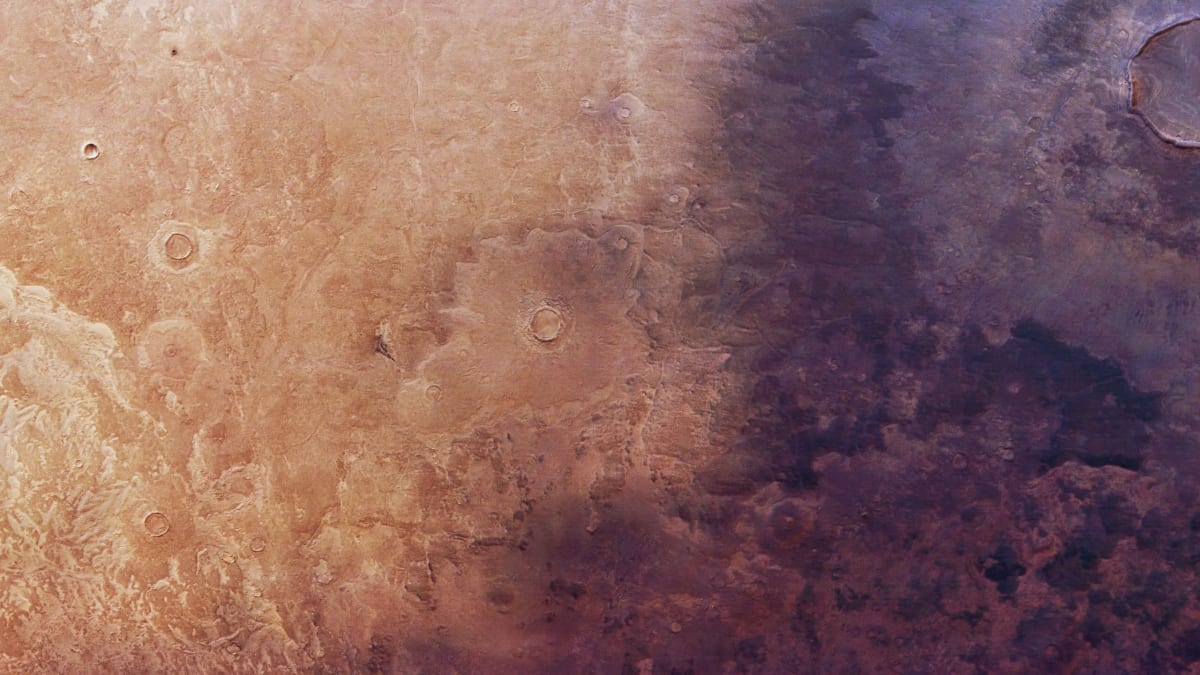
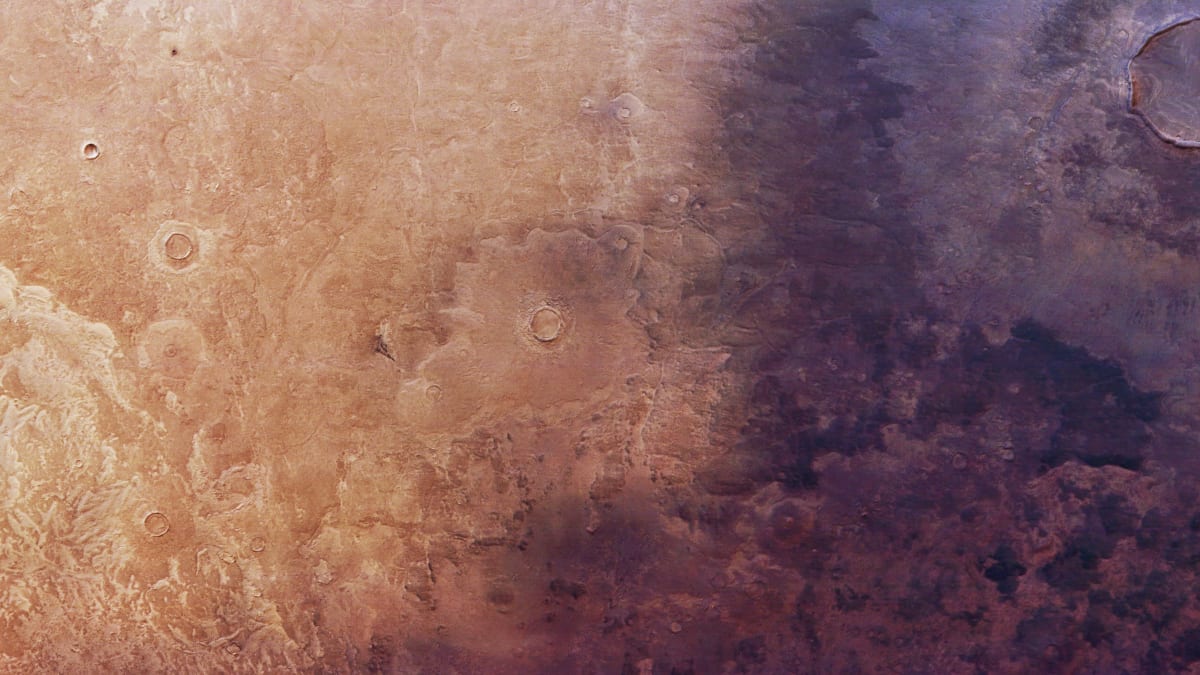
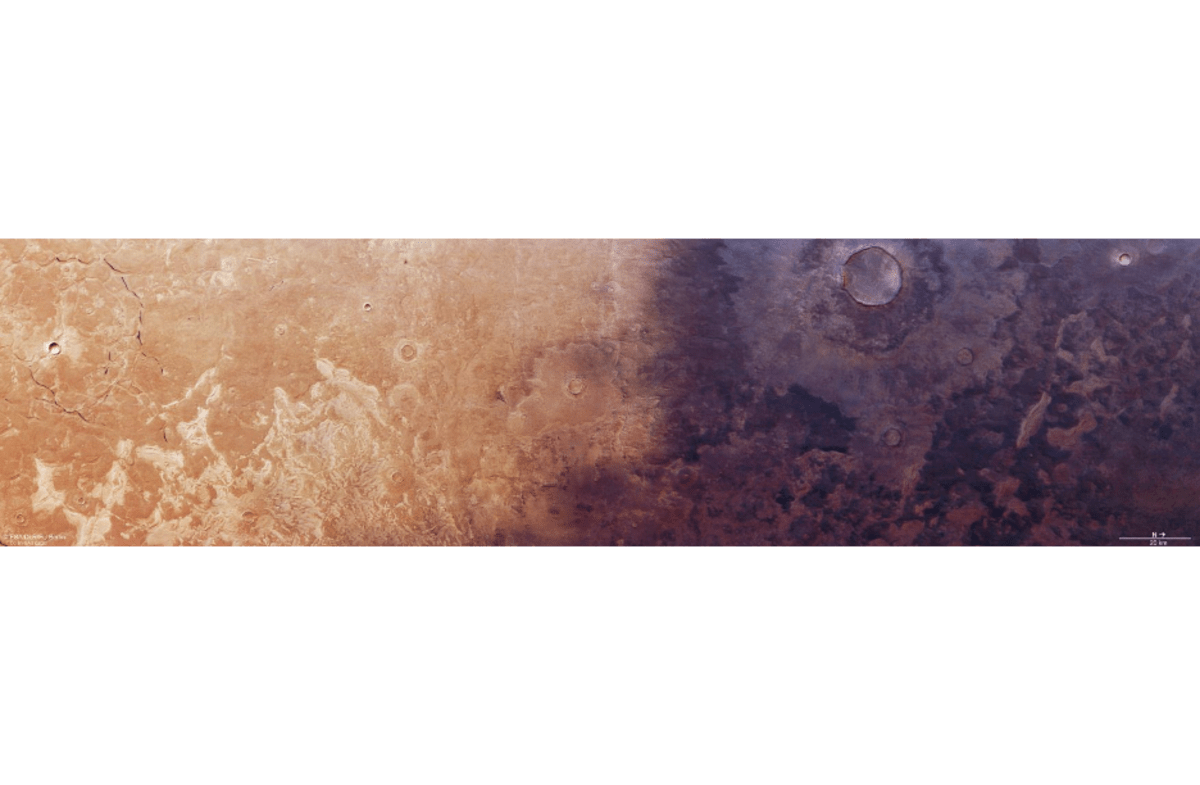
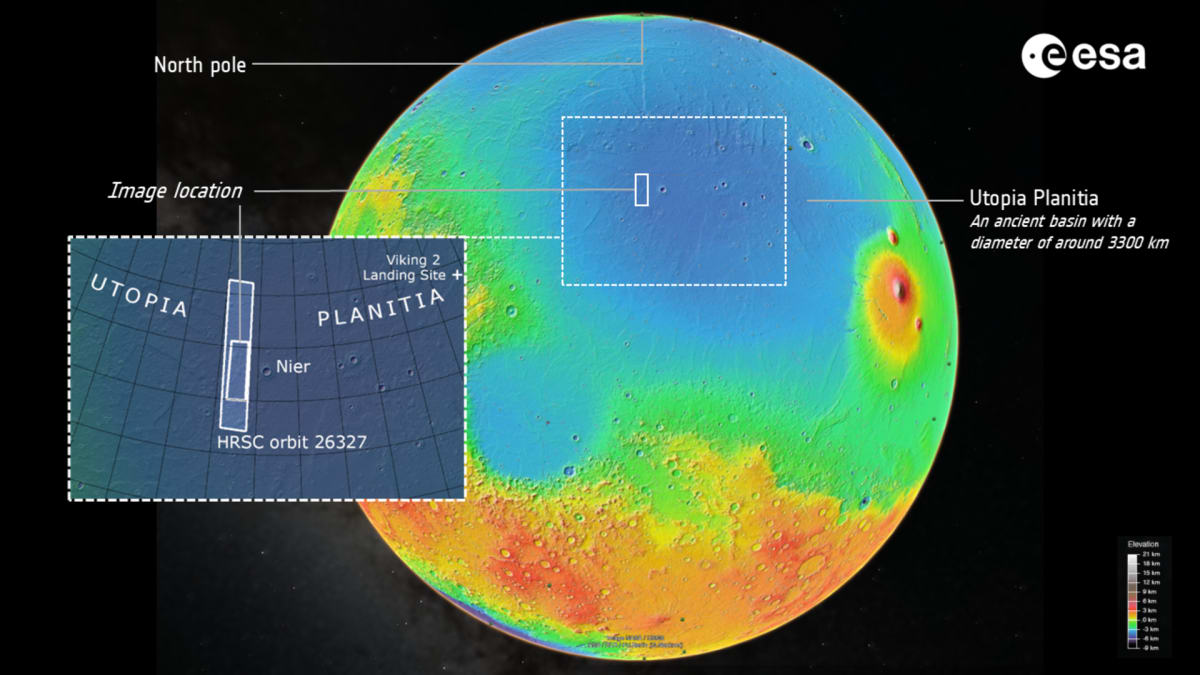
Europe's Mars Express orbiter just captured stunning views of Utopia Planitia, a vast plain that once held enough water to rival Earth's largest seas. The spacecraft revealed something remarkable: dark volcanic ash has spread across huge areas of the plain since the 1970s, transforming the landscape in less than a human lifetime.
The plain itself tells an ancient story. Scientists believe it formed when a small dwarf planet slammed into Mars between 4.1 and 4.3 billion years ago, leaving a bruise 2,100 miles wide.
In 2021, China's Zhurong rover found evidence of ancient coastal sediments there, confirming that a gigantic sea once filled the basin. Today, ice still hides beneath the surface with enough water to fill Lake Superior.
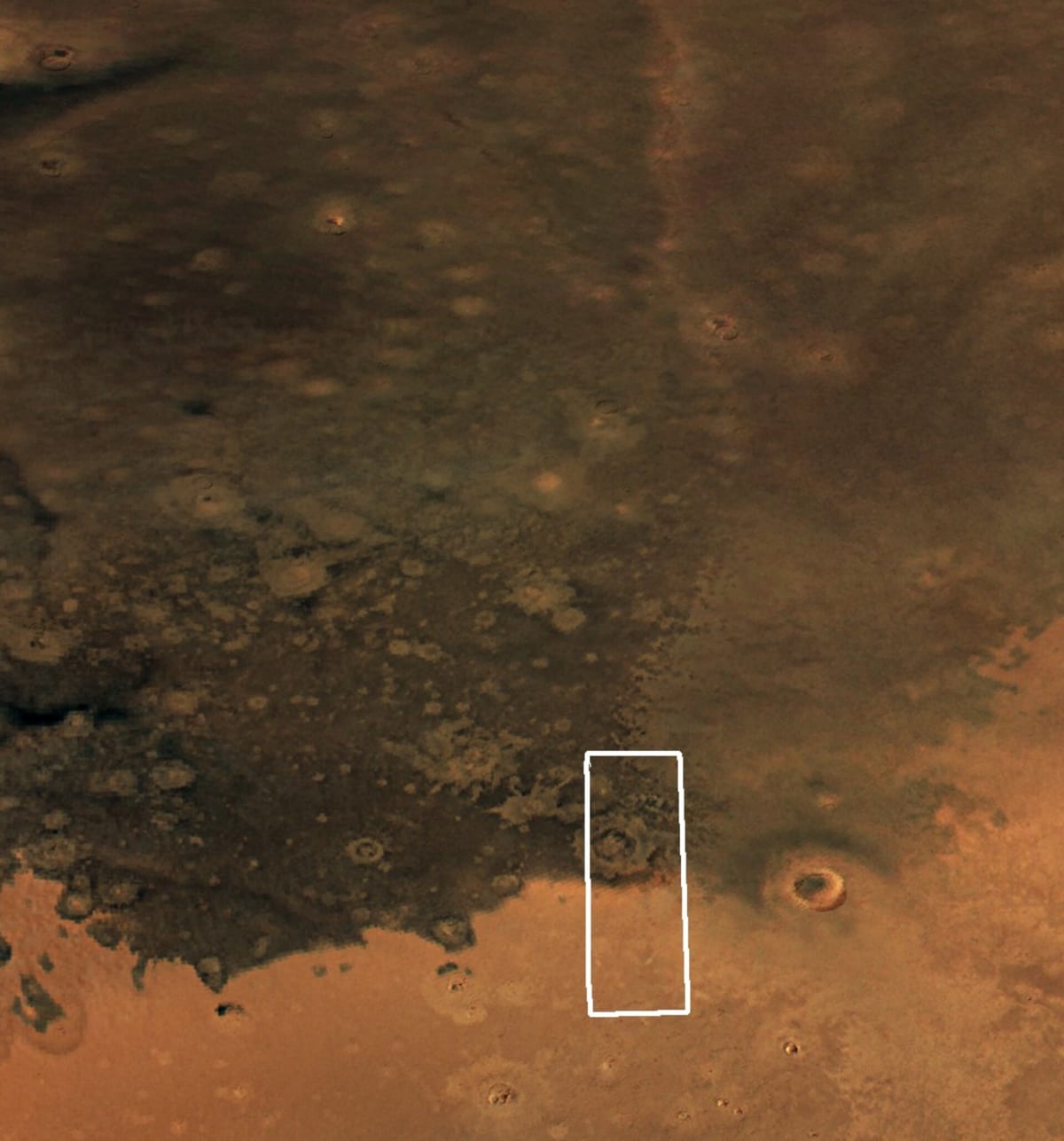
But it's the recent changes that have scientists excited. When NASA's Viking orbiters photographed the region in the late 1970s, they saw small patches of dark volcanic ash contrasting with Mars' signature reddish surface. The new Mars Express images from November 2024 show that dark material has spread dramatically.
Scientists think Martian winds are either blowing the ancient ash across the plain or scouring away lighter material to expose the dark volcanic minerals beneath. Either way, Mars is actively reshaping its face.
The images also reveal scalloped depressions where hidden ice is slowly sublimating away. As the ice vanishes into the thin Martian atmosphere, the ground above collapses into pits with ribbed edges. These pits merge into larger depressions, their floors covered in geometric patterns created by freezing and thawing cycles across the ages.
The spacecraft captured something else remarkable: dark crevasses stretching up to 12 miles long called grabens. These form when sections of ground slip down between fault lines, creating a maze-like network across the plain. Some could date back more than four billion years to when the ancient sea disappeared.
Why This Inspires
Mars Express launched all the way back in 2003, making it a veteran explorer. Yet it's still revealing new secrets about our neighboring world, proving that patient observation pays off. The fact that we can watch Mars transform over mere decades reminds us that planetary change doesn't always take millions of years.
These discoveries show Mars is far more geologically alive than Earth's unchanging Moon, making it an endlessly fascinating world to study and perhaps one day explore in person.
More Images
Based on reporting by Space.com
This story was written by BrightWire based on verified news reports.
Spread the positivity!
Share this good news with someone who needs it