Mars Rover Finds 3.5 Billion-Year-Old Organic Molecules
NASA's Curiosity rover discovered diverse organic molecules on Mars that have been preserved for 3.5 billion years, offering the strongest evidence yet that the Red Planet could have once supported life. While not definitive proof, the finding marks a major breakthrough in humanity's search for ancient life beyond Earth.
Scientists just found chemicals on Mars that are closely linked to how life began on Earth, and they've been sitting there for 3.5 billion years.
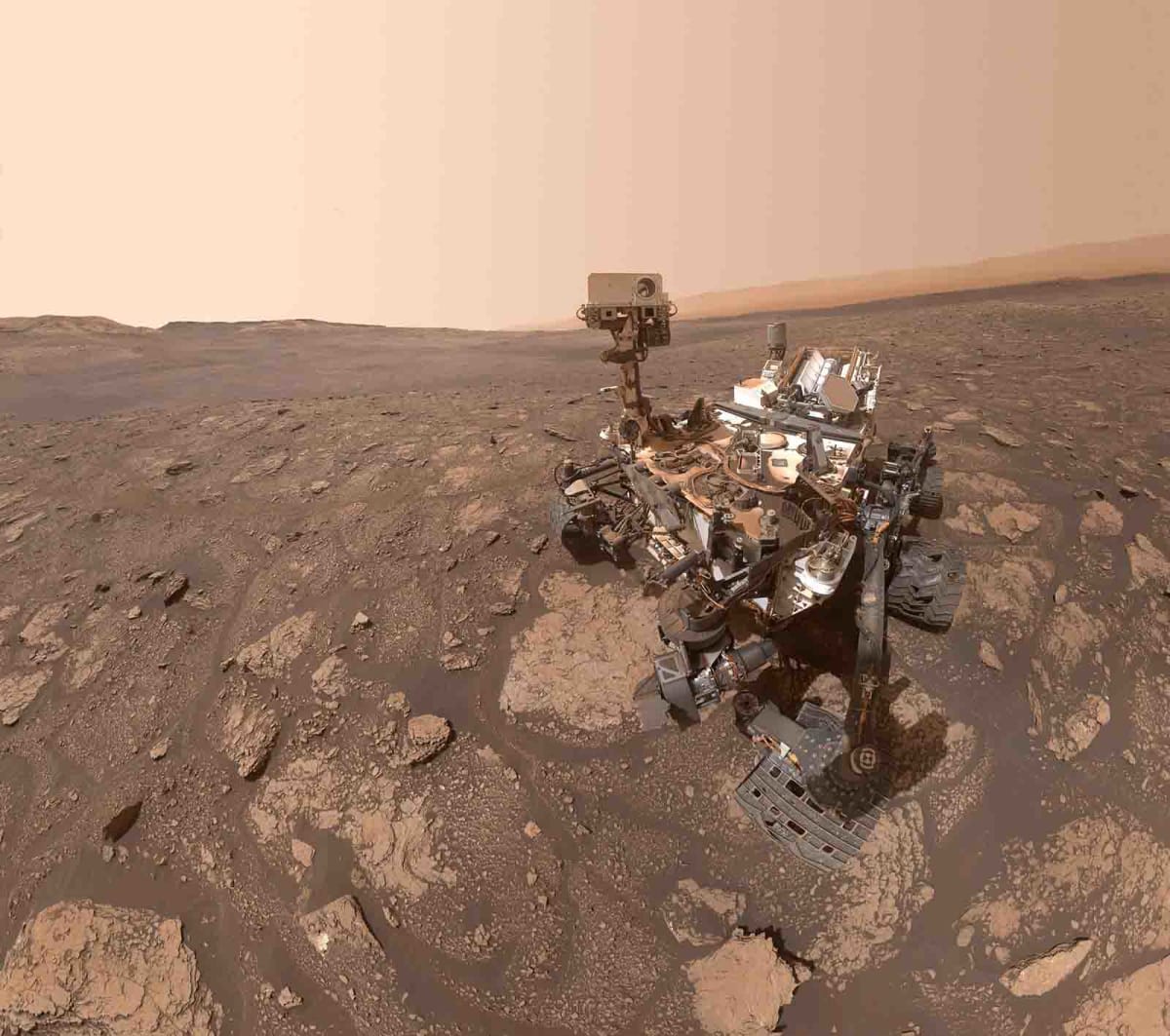
NASA's Curiosity rover made the discovery in 2020 using a precious chemical called TMAH to break down Martian clay samples. The rover only carried two cups of this chemical for its entire mission, so researchers had to choose their moment carefully.
What they found was worth the wait. Among the organic molecules was a nitrogen-bearing compound whose structure resembles DNA building blocks. This particular chemical had never been detected on Mars before, suggesting complex organic matter could be hiding across the planet's surface.
"We think we're looking at organic matter that's been preserved on Mars for 3.5 billion years," said lead author Amy Williams, a professor at the University of Florida. "It's really useful to have evidence that ancient organic matter is preserved."
The rover conducted its experiment in Gale Crater's Glen Torridon region, an ancient lakebed rich in clay minerals. Clay is nature's perfect filing cabinet for organic chemicals, making it ideal for preserving signs of ancient life.
Scientists also found benzothiophene, a sulfur-containing chemical commonly delivered to planets by meteorites. The same building blocks that rained down on Mars also arrived on Earth, potentially jump-starting life on both worlds.
Why This Inspires
This discovery proves that Mars can preserve complex organic molecules for billions of years. If life ever existed on the Red Planet, the evidence might still be there waiting for us to find it.
The breakthrough opens doors for future missions. Both the Rosalind Franklin Mars mission and the Dragonfly expedition to Saturn's moon Titan plan to use the same TMAH testing method that proved so successful.
While the findings don't confirm Mars once had life, they show the planet was capable of supporting it. The chemicals discovered are the same ones that helped life emerge on Earth billions of years ago.
"We now know that there are big complex organics preserved in the shallow subsurface of Mars," Williams said. Only bringing samples back to Earth for detailed lab analysis will provide the final answer about whether life once called Mars home.
For now, knowing that the building blocks of life survived on another world for billions of years brings us one giant step closer to answering humanity's oldest question: are we alone in the universe?
Based on reporting by Google: Mars rover discovery
This story was written by BrightWire based on verified news reports.
Spread the positivity!
Share this good news with someone who needs it