Mars Rover Finds Ancient Carbon in Dried River Valley
NASA's Perseverance rover discovered complex carbon molecules in rocks formed by an ancient Martian river, bringing scientists closer to answering whether life once existed beyond Earth. The organic compounds were found alongside minerals that only form in water.
Scientists just found some of the strongest hints yet that Mars might have once hosted life.
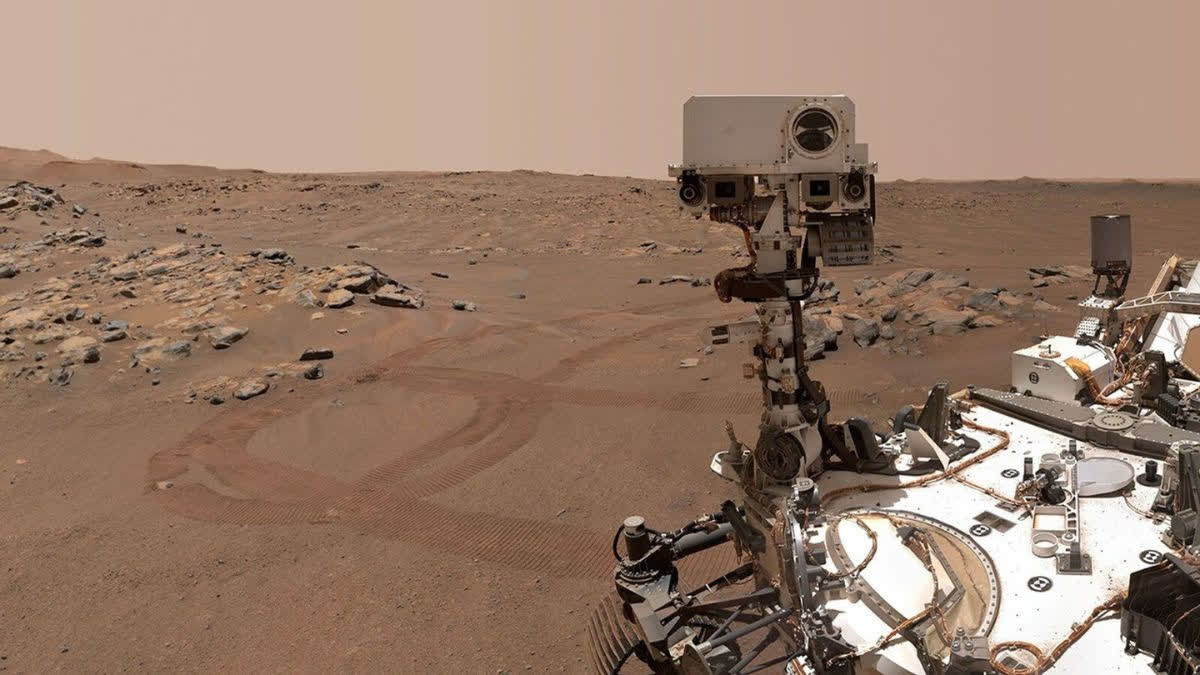
NASA's Perseverance rover detected complex carbon-based molecules preserved in 3-billion-year-old rocks within a dried river channel on Mars. The discovery happened at a site called Bright Angel, located in Neretva Vallis, a river valley that once flowed into Jezero Crater.
The rover used an instrument called SHERLOC, mounted on its robotic arm, to scan the ancient mudstones. What made scientists especially excited was finding organic carbon alongside iron-phosphate and sulfide minerals, both of which form through chemical reactions involving water.
Carbon is a fundamental building block of life on Earth. But finding it on Mars doesn't automatically mean life existed there, since carbon compounds can also form through geological processes or arrive via meteorites.
What makes this discovery stand out is the combination. The organic molecules appeared within the same rock structures as these water-related minerals, all preserved in what was once a flowing river system.
One rock formation nicknamed Cheyava Falls caught particular attention. NASA scientists described it as containing what might be a biosignature, a feature that could have biological origins.
Why This Inspires
This discovery represents years of patient exploration paying off. Perseverance traveled millions of miles and spent months carefully analyzing rocks to find this ancient riverbed, one of the most promising spots for past Martian life.
The rover's instruments can't yet determine whether these carbon compounds came from living organisms or purely chemical processes. But the find strengthens the case for bringing Martian rock samples back to Earth, where advanced laboratory equipment could examine them in far greater detail.
Scientists remain appropriately cautious while also genuinely excited. The research team concluded that the organic material underwent low-temperature chemical reactions after the rocks formed, preserving valuable clues about Mars' ancient environment.
Sample return missions are now considered the best opportunity to solve this cosmic mystery. Those missions would allow scientists to use technology too sophisticated to send to Mars, potentially answering one of humanity's biggest questions.
The discovery doesn't prove life existed on Mars, but it keeps that possibility very much alive and adds urgency to continuing the search in this ancient river valley where water once flowed.
More Images




Based on reporting by Google: NASA discovery
This story was written by BrightWire based on verified news reports.
Spread the positivity!
Share this good news with someone who needs it