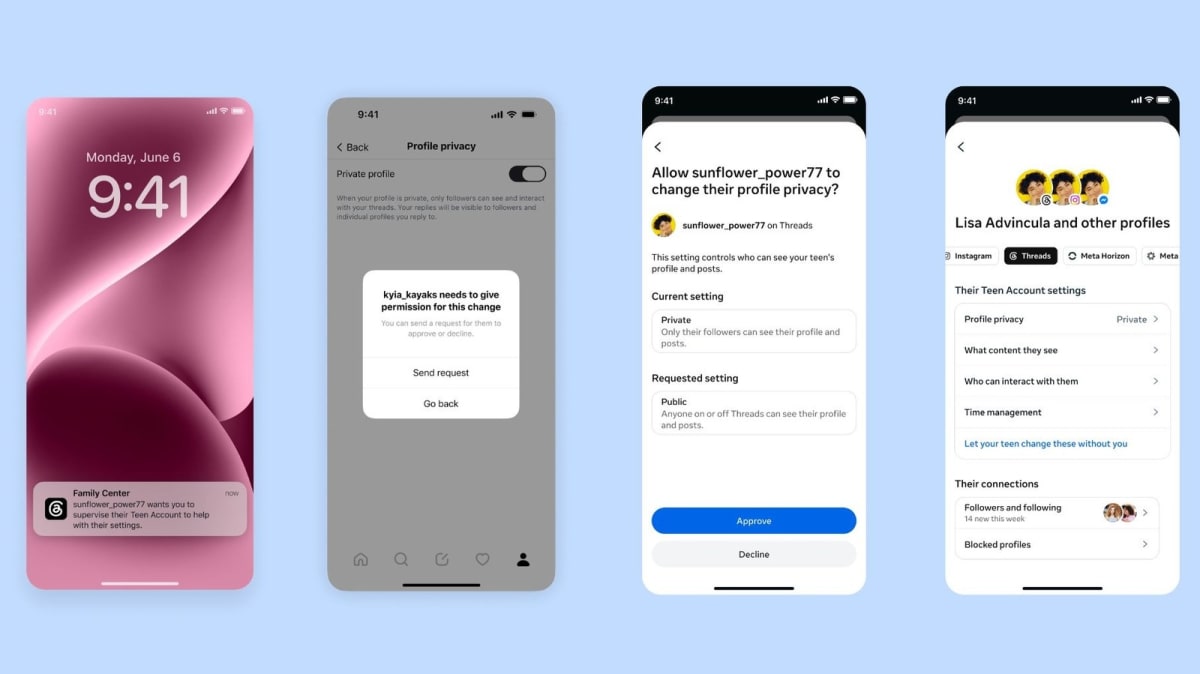
Meta's $17B Settlement Brings New Safety Tools for Teens
Meta will pay $17 billion and implement sweeping new protections for young users on Instagram and Facebook, including daily time limits and enhanced parental controls. The landmark settlement with 52 state attorneys general aims to protect kids' mental health after allegations the company knowingly designed addictive products.
Parents of teenagers may soon have powerful new tools to help manage their kids' social media use, thanks to a groundbreaking settlement that puts child safety first.
Meta agreed Wednesday to pay $17 billion and overhaul how Facebook and Instagram work for users under 18. The settlement resolves a massive lawsuit from attorneys general in all 52 U.S. states and territories who alleged the tech giant knowingly created features that harmed and addicted young users.
"It's the highest amount of money ever paid in a case like this," California Attorney General Rob Bonta told CNBC. But the real victory isn't the money, he emphasized. It's the business practices Meta must change for the next decade.
Starting within six months, Instagram and Facebook will automatically limit teens to two hours of combined daily use. Kids can only turn off this limit with explicit parental permission, and the restriction doesn't apply to messaging with friends and family.
A new "night mode" will lock teens out of feeds, stories, and reels between midnight and 6 a.m., though messaging remains available. Parents and teens can also disable autoplay, requiring an intentional tap or swipe to see more content instead of endless scrolling.
The platforms will strip away like and reaction counts on all posts for young users. Teens can also choose a simpler, non-algorithmic feed that only shows content from accounts they actually follow, rather than AI-recommended posts designed to maximize engagement.
Studies have found connections between heavy social media use and declining mental health in teenagers. About half of U.S. teens spend at least four hours daily on social platforms, according to Gallup research.
The Ripple Effect
Laura Edelson, a computer science professor at Northeastern University who studies social media safety, calls many of the new features "promising." Her research found that nearly 60 percent of existing social media safety tools across the industry failed to effectively protect young users.
The ability to disable autoplay stands out as particularly helpful, Edelson notes, since autoplay features are specifically designed to increase how long people stay on platforms. Giving parents control over these attention-grabbing mechanisms could genuinely reduce screen time.
Meta will distribute the settlement payments annually over ten years, funding youth online safety initiatives across participating states. The company, valued at $1.47 trillion, must keep most protections in place for the full decade.
Stronger age verification technology will also work to keep children under 13 off the platforms entirely while ensuring teenagers access age-appropriate versions of the apps.
A future where social media serves young people without exploiting them just moved closer to reality.
Based on reporting by Google News - Business
This story was written by BrightWire based on verified news reports.
Spread the positivity!
Share this good news with someone who needs it