Meteorite Crashes Through NJ Roof With Life's Building Blocks
A meteorite that punched through a New Jersey bedroom ceiling is giving scientists new clues about how space rocks delivered the ingredients for life to early Earth. The rare space visitor contains ancient salty chemistry and organic compounds never before seen in this type of meteorite.
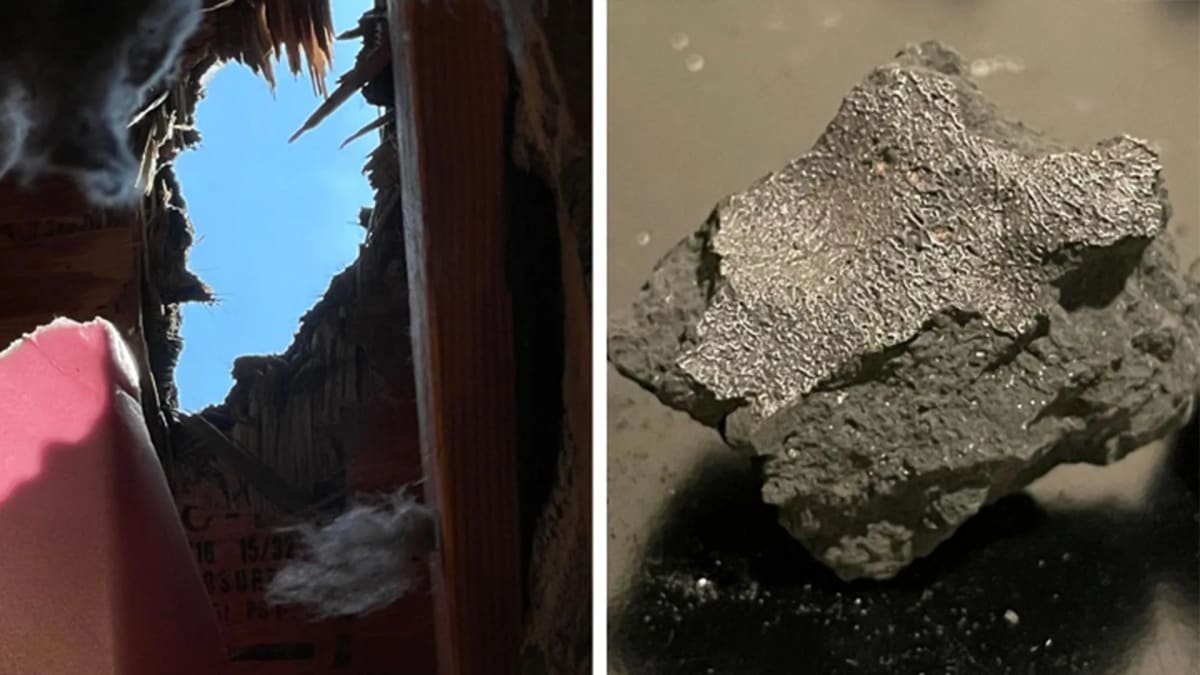
A homeowner in Hillsborough, New Jersey, heard a loud crash and discovered a hole in his bedroom ceiling, black dust covering his bed, and fragments of a meteorite that had traveled 32,000 miles per hour before smashing into his house. That dramatic arrival on July 16, 2024 brought scientists an extraordinary gift: one of the rarest meteorites ever recovered.
The rock belongs to an exceptionally rare family called CM1/2 carbonaceous chondrites. Out of thousands of meteorites studied, this is only the second witnessed fall of this type ever recorded.
What makes this space rock special goes far beyond its rarity. Scientists analyzing the fragments discovered something unexpected: preserved pockets of ancient salty fluids from the meteorite's parent asteroid, along with organic compounds and amino acids.
"Thanks to the homeowner's quick reaction, these are the most pristine CM1/2 meteorites we know of," said lead researcher Peter Jenniskens of the SETI Institute. The homeowner wore gloves, carefully collected every fragment in aluminum foil, and stored them in glass jars to prevent contamination.
Cameras across the Northeast tracked the meteor's fiery path back to the asteroid belt between Mars and Jupiter. Weather radar at Newark Airport even caught the cloud of falling pebbles as the rock broke apart over Staten Island and New Jersey.
Why This Inspires
This accidental delivery is helping scientists understand one of life's biggest mysteries: where did the building blocks for life on Earth come from? The salty chemistry preserved in these fragments shows how water and minerals interacted on ancient asteroids billions of years ago.
Those concentrated brines could reveal chemical conditions that helped create molecules essential for life. Highly salty solutions can keep important nutrients like phosphate dissolved and promote reactions between organic compounds and minerals.
Researchers are now comparing the Hillsborough meteorite's salt minerals with samples that space missions brought back directly from asteroids Ryugu and Bennu. The similarities they're finding suggest that salty fluids were common on primitive asteroids throughout the early solar system.
Scientists have studied meteorites for centuries, but witnessed falls of pristine material remain incredibly rare. Most space rocks land in remote areas or oceans where they're never found, or they sit exposed to Earth's environment for years before discovery.
This bedroom visitor arrived at the perfect moment, landing where someone could immediately protect it and delivering chemistry that spent billions of years waiting to tell its story. A hole in the ceiling became a window into how life's ingredients traveled through space.
Based on reporting by Science Daily
This story was written by BrightWire based on verified news reports.
Spread the positivity!
Share this good news with someone who needs it