Mexican Scientists to Build Key Detector for Big Bang Study
Mexico will build a major particle detector for CERN's Large Hadron Collider, marking the first time a Mexican scientist will lead a strategic subsystem for the world-renowned physics facility. The device will help scientists understand the universe's first moments after the Big Bang. #
A Mexican physicist is leading one of the most ambitious scientific projects his country has ever tackled: building a particle detector that will help unlock secrets of the universe's birth.
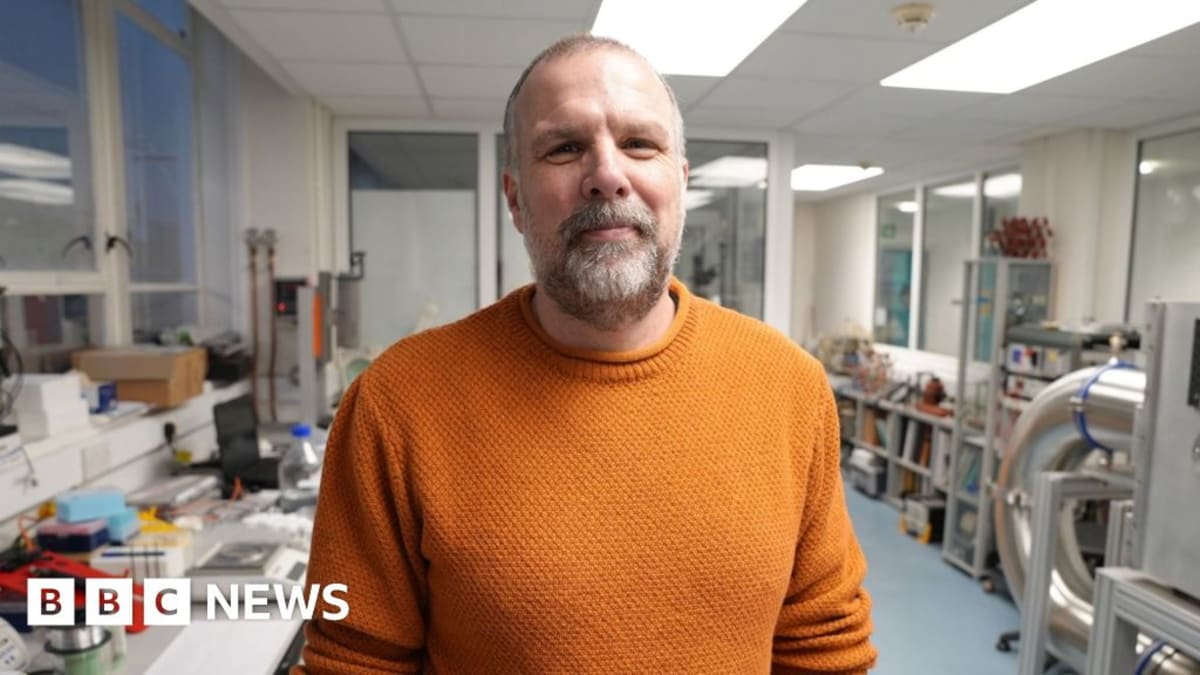
Antonio Ortiz Velásquez, a researcher at the National Autonomous University of Mexico (UNAM), was chosen to head development of the Muon Identifier Detector for CERN, home of the famous Large Hadron Collider beneath the French-Swiss border. He's the first Mexican scientist selected to direct a strategic subsystem for the facility's ALICE experiment.
The detector would be entirely built in Mexico and shipped to Europe for installation. If successful, it represents a major milestone for Mexican science on the global stage.
CERN's collider is essentially a 17-mile underground racetrack where particles zoom at 671 million miles per hour before smashing into each other. These collisions recreate conditions from moments after the Big Bang, when the universe was less than a microsecond old.
The Mexican detector will track tiny particles called muons that shoot through the equipment after collisions. These traces help scientists study a superheated state of matter that existed in the universe's earliest moments.
"We are recreating tiny droplets from the early universe and studying them through the traces they leave in particle detectors," Ortiz explained.
Mexico isn't new to CERN. Mexican scientists have helped build detector equipment and analyze collision data for years. But this project goes much further, giving Mexican institutions responsibility for a central piece of the puzzle.
The team includes researchers from five Mexican universities and partners from the United States, Hungary, the Czech Republic and Pakistan. They're aiming to start construction in 2028, with operations beginning in 2036.
The Ripple Effect
The project still faces hurdles. The team must secure funding, complete the design and pass rigorous technical reviews before the detector reaches CERN. But the opportunity alone signals growing recognition of Mexico's scientific capabilities.
For young Mexican scientists, the message is clear: their country can compete at the highest levels of global research. The project will train a new generation of physicists and engineers in cutting-edge detector technology.
Mexico's contribution will help answer fundamental questions about matter, energy and the forces that shaped our universe. From a lab in Mexico to the world's most powerful particle collider, Mexican ingenuity is reaching for the stars.
#
Based on reporting by Mexico News Daily
This story was written by BrightWire based on verified news reports.
Spread the positivity!
Share this good news with someone who needs it