Chile Builds World's Largest Telescope to Search for Life
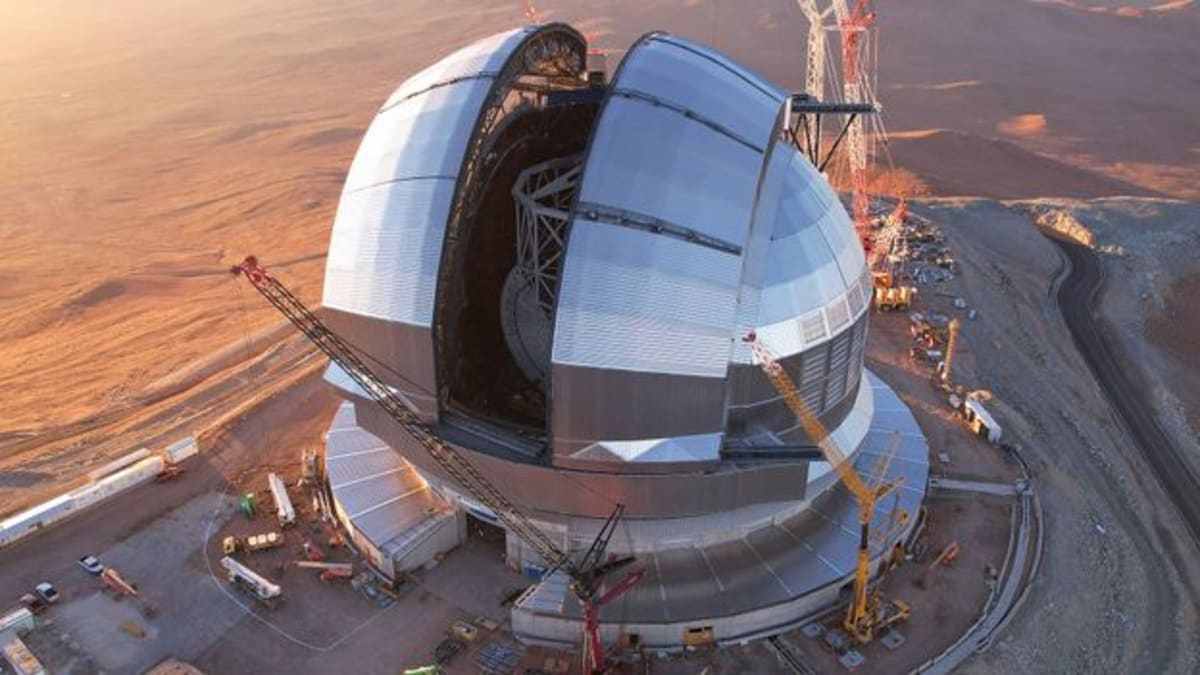
In Chile's Atacama Desert, engineers are completing the Extremely Large Telescope, a cathedral-sized marvel that could answer humanity's oldest question: are we alone? By 2030, this 260-foot dome housing a 128-foot mirror will peer deeper into space than ever before.
High on a remote Chilean mountaintop, where rain falls once a century and the air burns your skin, the world's most ambitious telescope is taking shape.
The Extremely Large Telescope lives up to its name. Its dome stands 260 feet tall, roughly the height of a 26-story building. The mirror inside stretches 128 feet wide, made of 798 precisely engineered segments that will work together as one giant eye on the universe.
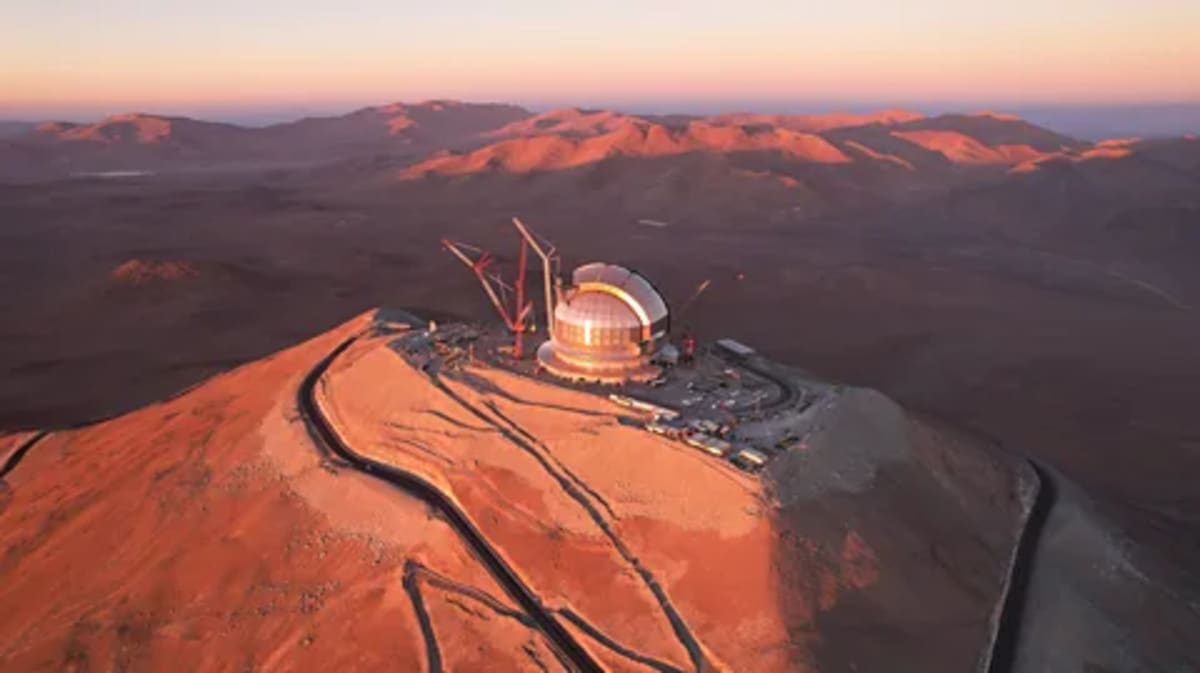
Engineers work in eight-day shifts on Cerro Armazones, a volcanic peak in the Atacama Desert, before traveling hundreds of miles home. Every piece of construction material makes an hours-long journey from the nearest city. The isolation is brutal, with dehydration a constant danger and altitude making newcomers nauseous.
But this harsh location is exactly why they chose it. The Atacama's bone-dry air and cloudless skies create some of Earth's clearest views of space. From certain spots, you can see all the way to Argentina.
The engineering challenge is staggering. Workers poured a concrete base so flat it accounts for Earth's curvature, accurate to 1/3,600th of a degree. (They used the leftover concrete to build a basketball court because it was too far to return it before it hardened.) The telescope needs precision matching an optical instrument despite being the size of a commercial building.
"The thing that makes construction of a telescope like this so hard is that usually the bigger you get, the bigger your tolerances," explains Michael Booth, the mechanical engineering lead. "But for us, the light waves don't get bigger." The slightest wobble would blur images from distant galaxies.
The Ripple Effect
This telescope represents more than just impressive engineering. When it begins observing in 2030, the Extremely Large Telescope will gather light that has traveled billions of years across space. Scientists hope it will detect signs of life on planets orbiting distant stars, potentially answering humanity's most profound question.
The project brings together 16 countries through the European Southern Observatory, proving that international cooperation can achieve the seemingly impossible. Thousands of tonnes of steel and concrete, transported piece by piece up a barren mountain, are becoming humanity's window into the cosmos.
What they're building in the desert might reveal we're not alone after all.
More Images


Based on reporting by BBC Future
This story was written by BrightWire based on verified news reports.
Spread the positivity!
Share this good news with someone who needs it