MIT Creates Air-Stable Superconductors for Quantum Tech
Scientists at MIT have solved a major problem holding back quantum computing: creating ultrathin superconductors that don't fall apart when exposed to air. The breakthrough could make quantum computers smaller, cheaper, and easier to build.
Scientists just cleared a major hurdle in the race to build practical quantum computers.
Researchers at MIT have discovered how to create wafer-scale ultrathin superconductors that remain stable in regular air. For years, these materials degraded so quickly outside controlled environments that they were nearly impossible to study or manufacture.
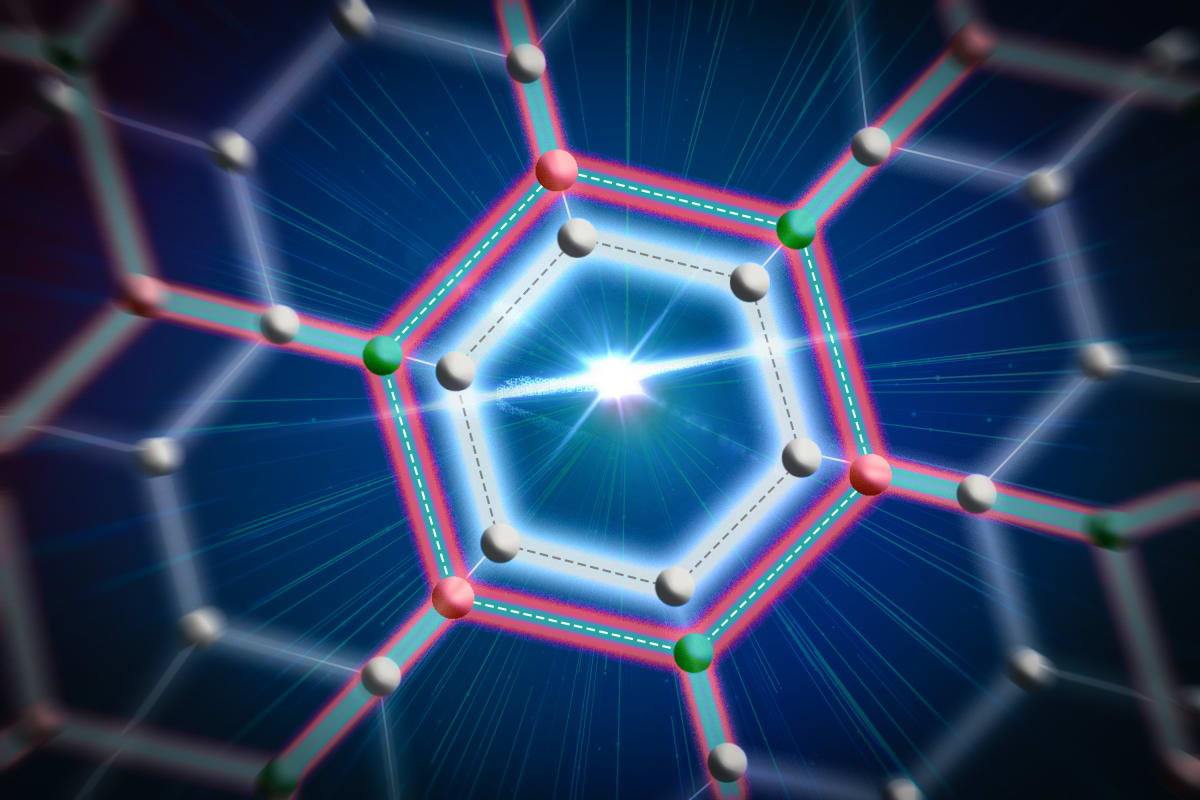
The team grew a superconducting material called niobium diselenide underneath a protective layer of graphene, just one atom thick. The graphene acts like a shield, protecting the delicate superconductor from oxygen while guiding it to grow smoothly across large areas.
The breakthrough matters because these materials could dramatically shrink quantum computers. Right now, quantum circuits require massive arrays of components called Josephson junctions to store energy. This new material has such high "kinetic inductance" that a tiny piece could replace an entire array, making circuits far more compact.
The researchers tested their air-stable superconductor in an actual quantum circuit, and it worked beautifully. The material maintained its superconducting properties and performed just as predicted.
"Emerging superconductors that are only a monolayer thick have a lot of potential," says Xudong Sheldon Zheng, a graduate student at MIT who co-led the research. "Thanks to our new process, they are no longer materials that can only be made at a very small scale."
The technique involves placing graphene on a silicon dioxide base, then introducing materials that form the superconductor in the tiny gap between the layers. The graphene protects the fragile material from oxidation while helping it grow as a smooth, continuous film.
The Ripple Effect
This discovery opens doors beyond just smaller quantum computers. The same materials could improve ultrasensitive quantum detectors used in telecommunications and cosmology research. Scientists who previously couldn't work with these materials because they degraded too quickly can now study them in regular lab conditions.
The team included researchers from MIT, Lincoln Laboratory, Rice University, Yale University, and Pohang University in South Korea. Their work represents years of collaboration across multiple institutions, all focused on making quantum technology more practical.
Manufacturing quantum devices has been expensive and difficult partly because the materials are so fragile. This new method could make production more scalable and reliable, bringing quantum technologies closer to everyday applications.
The research appears in the journal Nature, signaling that the scientific community recognizes this as a significant advance in the field.
For quantum computing to move from specialized labs into real-world use, breakthroughs like this one are essential. The future of ultra-powerful computing just became a little more stable.
Based on reporting by MIT News
This story was written by BrightWire based on verified news reports.
Spread the positivity!
Share this good news with someone who needs it