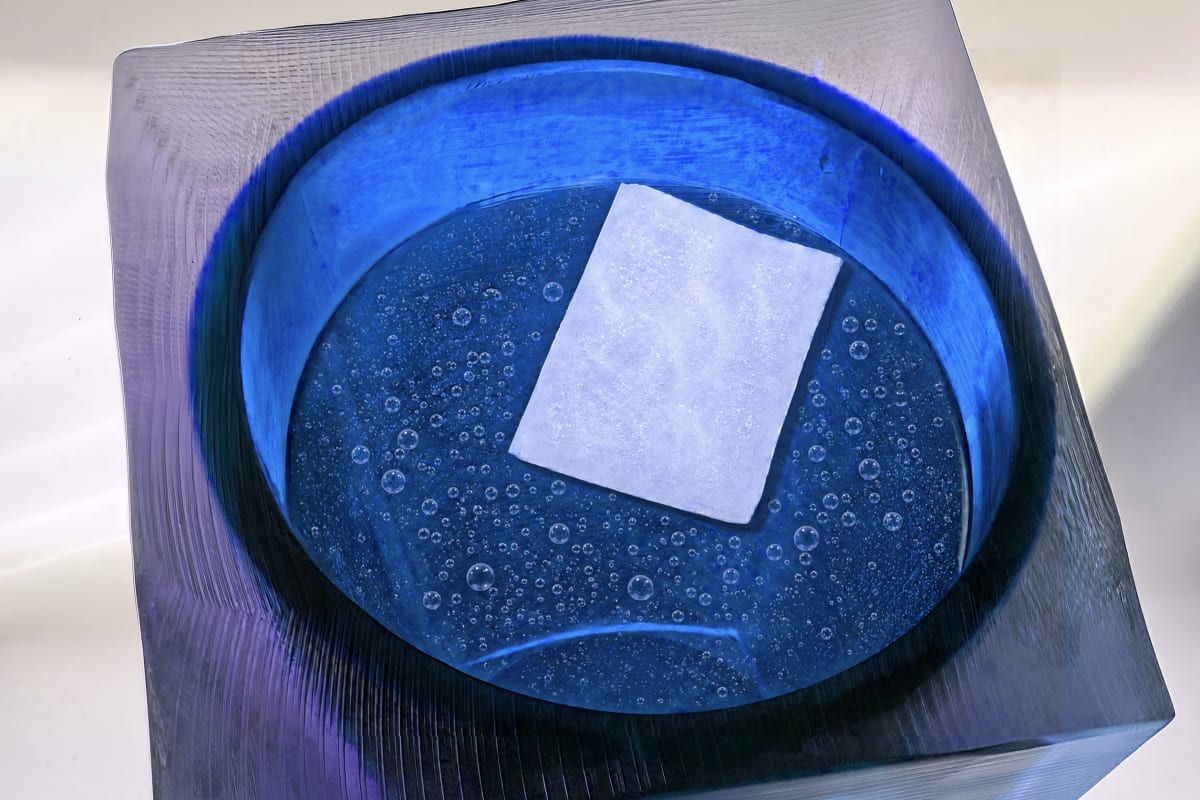
MIT Creates Breathable Hydrogel for Better Medical Devices
MIT engineers solved a problem everyone thought was impossible: making hydrogels that let skin breathe. The breakthrough could mean bandages, heart monitors, and contact lenses that work better and last longer without irritation.
Your bandage might be protecting your wound, but it's also trapping moisture against your skin. MIT engineers just solved that problem with a hydrogel that finally lets your skin breathe.
Hydrogels are those squishy, mostly water materials used in medical patches, contact lenses, and devices that stick to your body. They're stretchy and protective, but they have one major flaw: they suffocate your skin. Wear them too long and you end up with irritated, sweaty tissue underneath.
Professor Xuanhe Zhao and his team at MIT figured out how to add tiny air tunnels throughout the gel without losing what makes hydrogels work. The result is a material that's just as soft and stretchy as regular hydrogels, but now air can pass right through.
The trick was something called "phase separation," the same reason oil and water don't mix. The team used this natural tendency to create microscopic highways for air throughout the gel. Think of it like a sponge with channels running through it, except this sponge is 90 percent water and still lets oxygen flow.
The real test came when volunteers wore wireless heart monitors attached with the new breathable hydrogel. After 10 days of regular workouts, their skin showed zero irritation. The monitors stayed put and kept delivering clear readings, even through all that sweat.
The Ripple Effect
This breakthrough opens doors far beyond better bandages. Face masks that actually let your skin breathe. Contact lenses that keep eyes healthier. Medical implants that work better with your body because oxygen can reach the surrounding tissue.
The applications extend to anyone who needs to wear medical devices for extended periods. Athletes can use better performing health monitors. Patients with chronic wounds can wear dressings longer without changing them. People who need continuous glucose monitors or other wearable sensors get devices that stay comfortable day after day.
"Water and oxygen are both essential for life," Zhao explains. "Now that we've added air to hydrogels, people can find broad applications."
Other researchers had tried punching holes in hydrogels or mixing in special polymers, but those approaches either clogged up in liquid or required so much polymer that the gel lost its water content. Zhao's team cracked the code by maintaining that crucial water balance while creating permanent air channels.
The study, published in Nature, represents years of work on what many considered an impossible challenge. Making something breathable that's 90 percent water goes against basic physics, yet the MIT team found a way.
Soon, the simple act of wearing a bandage or health monitor might finally work with your body instead of against it.
Based on reporting by MIT News
This story was written by BrightWire based on verified news reports.
Spread the positivity!
Share this good news with someone who needs it