MIT Makes Quantum Tech Smaller With Air-Stable Superconductor
Scientists at MIT just solved a major roadblock in quantum computing by creating ultrathin superconducting materials that don't degrade in air. This breakthrough could make quantum devices much smaller and easier to manufacture.
Scientists just cracked a problem that's been holding back quantum technology for years, and it could make these powerful devices small enough to fit anywhere.
Researchers at MIT discovered a way to create wafer-scale superconducting materials that are only a few atoms thick and actually survive in normal air. These delicate materials usually break down in minutes when exposed to oxygen, making them nearly impossible to study or use in real devices.
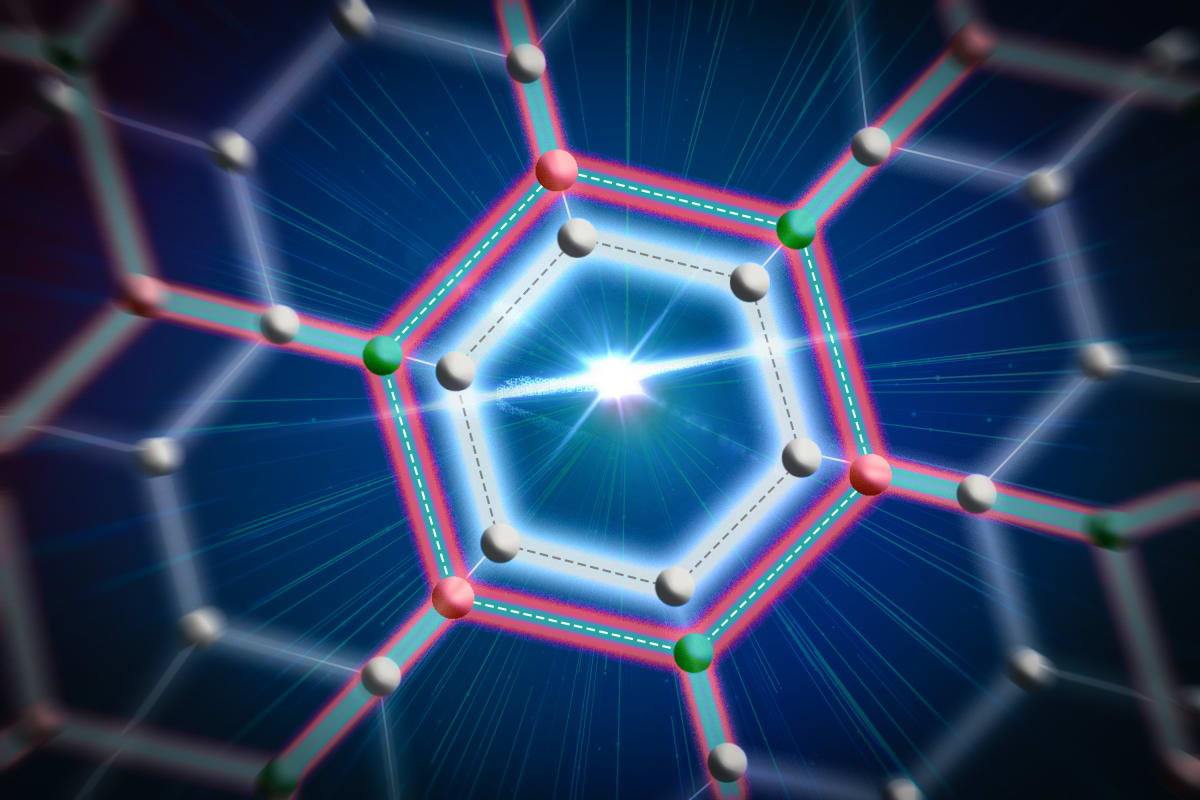
The team found a clever solution by growing the superconductor, called niobium diselenide, underneath a protective layer of graphene. Think of it like growing a fragile plant inside a greenhouse. The graphene shields the superconductor from oxygen while guiding it to spread evenly across a large surface.
Graduate student Xudong Sheldon Zheng and his colleagues didn't stop at just creating the material. They built it into an actual working quantum circuit and tested it. The superconductor performed beautifully, maintaining all its special properties.
Here's why this matters for everyday life. Superconductors carry electricity without any energy loss, making them essential for quantum computers and ultra-sensitive detectors. But current quantum devices need massive arrays of components called Josephson junctions to work properly, taking up tons of space.
This new material has something called high kinetic inductance, which means it can do the job of those giant junction arrays in a tiny fraction of the space. One small piece of this film could replace equipment that currently fills entire rooms.
Why This Inspires
Quantum technology has always seemed like something trapped in specialized labs, requiring extreme conditions and enormous equipment. This breakthrough brings it closer to the real world.
The applications stretch far beyond just making computers faster. These materials could revolutionize medical imaging, create ultra-secure communication networks, and build detectors sensitive enough to unlock mysteries of the universe. Scientists studying distant galaxies or searching for the faintest cosmic signals could use sensors made from this material.
What started as a fundamental materials science challenge turned into a manufacturing breakthrough. The technique works at wafer scale, meaning factories could produce these materials in quantity. That's the difference between a laboratory curiosity and something that can actually change the world.
Professor William Oliver, who led the research team, emphasized that materials once confined to tiny experimental samples can now be studied, integrated into circuits, and explored for practical applications. The doors just opened wide for researchers everywhere.
The team published their findings in Nature this week, and labs around the world can now use this technique to explore applications nobody has thought of yet.
Sometimes the biggest leaps forward come from solving problems that seemed unsolvable, and this quantum breakthrough proves that persistence pays off.
Based on reporting by MIT News
This story was written by BrightWire based on verified news reports.
Spread the positivity!
Share this good news with someone who needs it