MIT Startup Cuts AI Data Center Energy Use by 35%
Two MIT researchers adapted nuclear reactor cooling technology to slash data center energy waste, eliminating water use entirely. Their bubble-based system is already being tested by major U.S. data centers.
Artificial intelligence is booming, but the data centers powering it are consuming electricity at an alarming rate. By 2030, they could gobble up 17 percent of all U.S. electricity, with a third of that just keeping the chips cool.
Two MIT researchers think they've cracked the code. Reza Azizian and Professor Matteo Bucci founded Ferveret to bring nuclear reactor cooling technology to the world of AI.
Their solution sounds almost too simple: dunk the servers in liquid. But it's what happens next that makes all the difference.
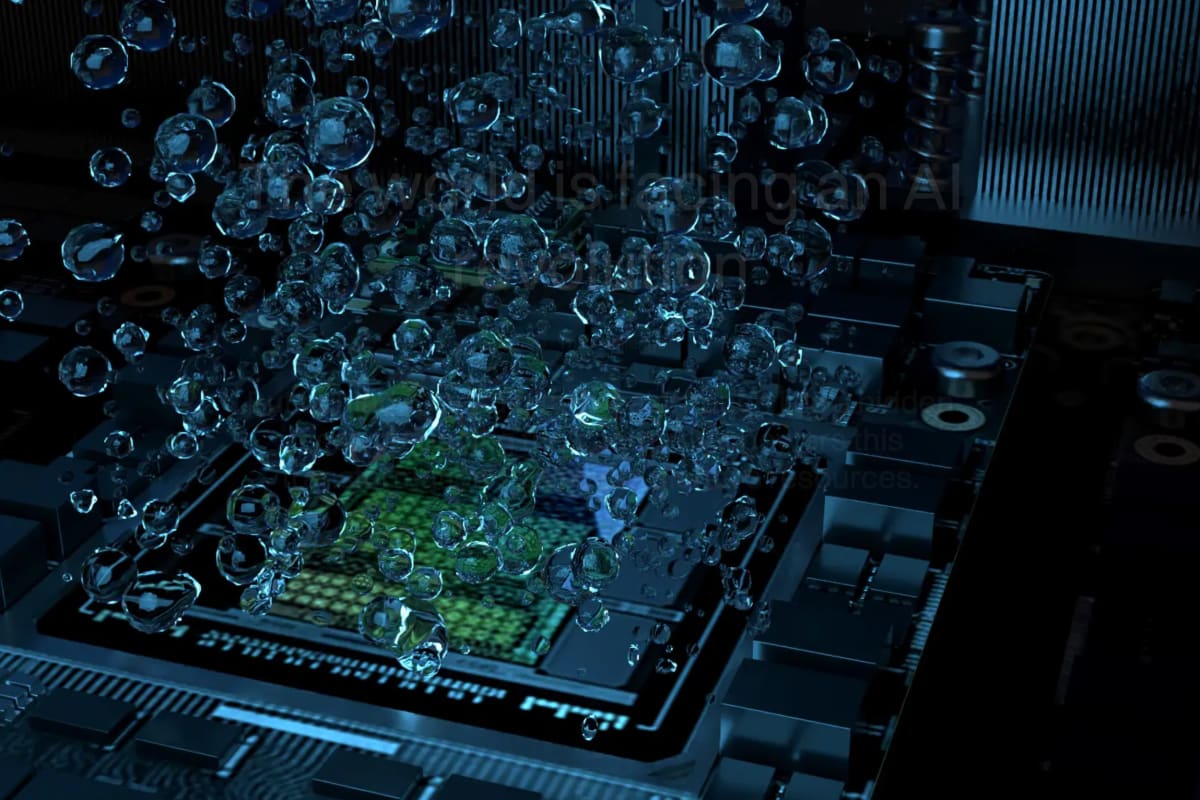
Ferveret's Adaptive Phase Cooling system creates tiny bubbles at the surface of computer servers. These smaller bubbles detach more frequently than in other liquid cooling systems, whisking heat away faster and more efficiently than any fan ever could.
The results speak for themselves. In a recent UCLA study, Ferveret's system delivered 15 percent better efficiency than state-of-the-art liquid cooling.
When combined with their power optimization controls, data centers can generate 35 percent more AI output using the same amount of electricity. And unlike traditional cooling, this approach uses zero water.
"Our goal is to make data centers as sustainable as possible and help them use every single watt of power to generate tokens," Azizian says. Those tokens are the building blocks of AI responses.
The journey started in 2013 when Azizian was working on heat transfer in nuclear reactors at MIT. Four years later, he walked into his first data center and couldn't believe what he saw: massive, outdated fans everywhere.
"I thought, 'Holy crap, this is not how you cool facilities,'" Azizian recalls. The cooling technology was 50 years old, but since it technically worked, nobody bothered to innovate.
He reconnected with Bucci to tackle the problem together. They launched Ferveret in 2021, right as AI was exploding and chip power demands were skyrocketing.
The Ripple Effect
Major players are already paying attention. CleanSpark, FuriosaAI, and Switch, one of America's largest data center operators, are testing Ferveret's systems.
As AI becomes more central to our lives, the environmental cost could be staggering. But innovations like this prove we don't have to choose between technological progress and planetary health.
Scientists spent decades perfecting heat transfer in nuclear reactors because better cooling meant more energy and more revenue. Now that same expertise is making AI more sustainable, one bubble at a time.
Based on reporting by MIT News
This story was written by BrightWire based on verified news reports.
Spread the positivity!
Share this good news with someone who needs it