MIT's Free Robot Software Could Save Lives in Disasters
MIT researchers created free robot navigation software that helps drones avoid obstacles in milliseconds, making search-and-rescue missions safer and more accessible worldwide. The breakthrough could help first responders reach disaster survivors faster without expensive proprietary technology.
When Kota Kondo watched rescuers navigate the Fukushima nuclear disaster as a child, he dreamed of creating robots that could go into dangerous places so humans wouldn't have to. Today, the MIT graduate student just made that dream more achievable for everyone.
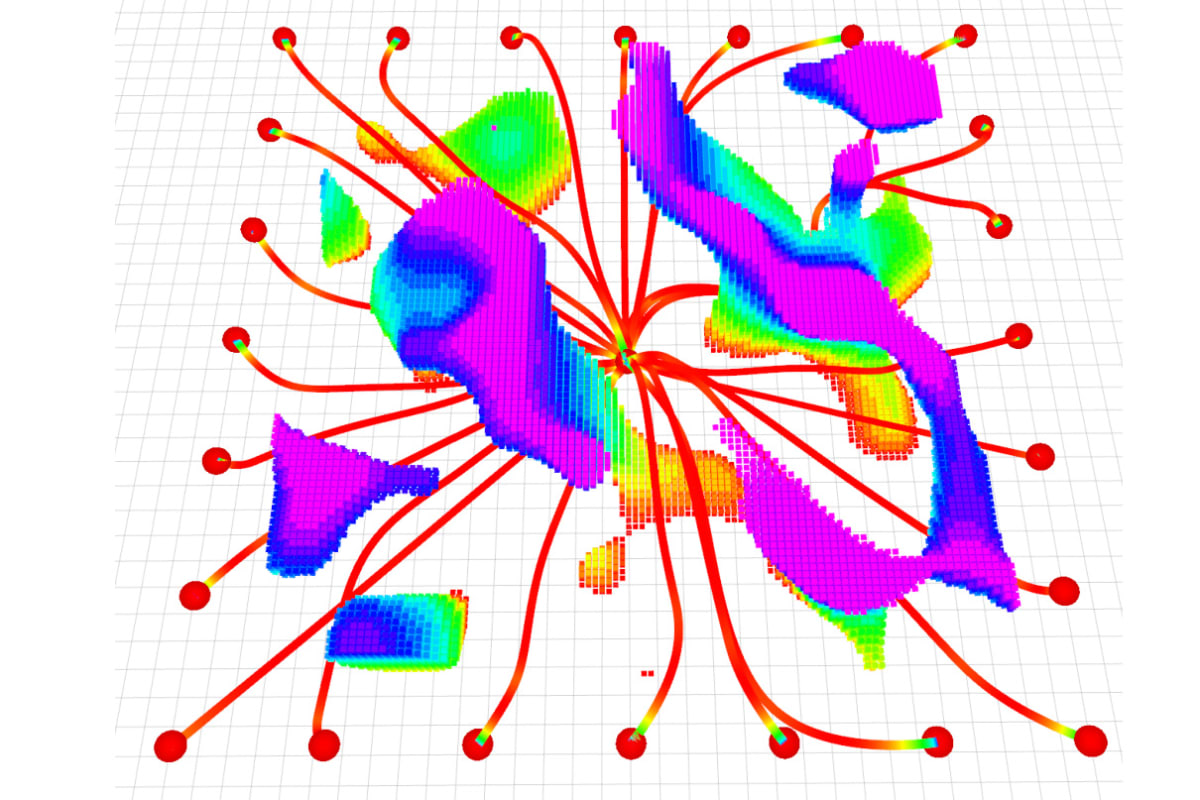
Kondo and his team developed MIGHTY, a free navigation system that helps drones fly through collapsed buildings and disaster zones while avoiding obstacles in real time. The software runs on the drone's onboard computer, making split-second decisions to dodge debris while staying on the fastest path to its destination.
The breakthrough solves a major problem that has held back rescue drones for years. Most existing systems force an uncomfortable choice: either plan a smooth path slowly, or react quickly but fly erratically. MIGHTY does both at once by using smart math that calculates the best route and travel time together in a single step.
In tests, drones using MIGHTY smoothly navigated through complex obstacle courses faster than current state-of-the-art systems. The software adjusts flight paths in milliseconds, meaning a rescue drone could zip through a collapsed building without crashing into suddenly visible hazards like dangling wires or unstable rubble.
The Ripple Effect
What makes this advancement truly special is that MIGHTY is completely free and open-source. Previous systems with similar capabilities cost hundreds of thousands of dollars, putting them out of reach for smaller rescue operations, researchers in developing countries, and students.
By removing the cost barrier, MIT is democratizing life-saving technology. Any fire department, humanitarian organization, or researcher anywhere in the world can now download and use professional-grade drone navigation software without spending a fortune.
The applications extend far beyond disaster response. Package delivery companies could use MIGHTY to navigate urban environments safely around buildings and people. Industrial inspectors could send drones through complex structures like wind turbines or bridges. Search teams could deploy drones in wilderness areas to find lost hikers.
The research team, which includes collaborators from the University of Pennsylvania, published their work in IEEE Robotics and Automation Letters. They designed MIGHTY specifically to work without proprietary software packages, making it truly accessible to a global community of developers who can now build on this foundation.
For Kondo, inspired by childhood memories of workers risking their lives at Fukushima, the goal was always clear: create autonomous robots that venture into dangerous situations and report back, keeping humans safely out of harm's way. With MIGHTY now freely available to anyone with an internet connection, that vision just became reality for rescuers and innovators everywhere.
Based on reporting by MIT News
This story was written by BrightWire based on verified news reports.
Spread the positivity!
Share this good news with someone who needs it