South Korea Unites Top Minds to Build AI Humanoid Robots by 2030
South Korea is bringing together its best tech companies, universities, and hospitals to create advanced humanoid robots that can work alongside people. The national team aims to compete with China and the US by building robots that think, move, and help in real-world settings.
South Korea just launched an ambitious plan to become a world leader in humanoid robots, and they're doing it by breaking down walls between competitors.
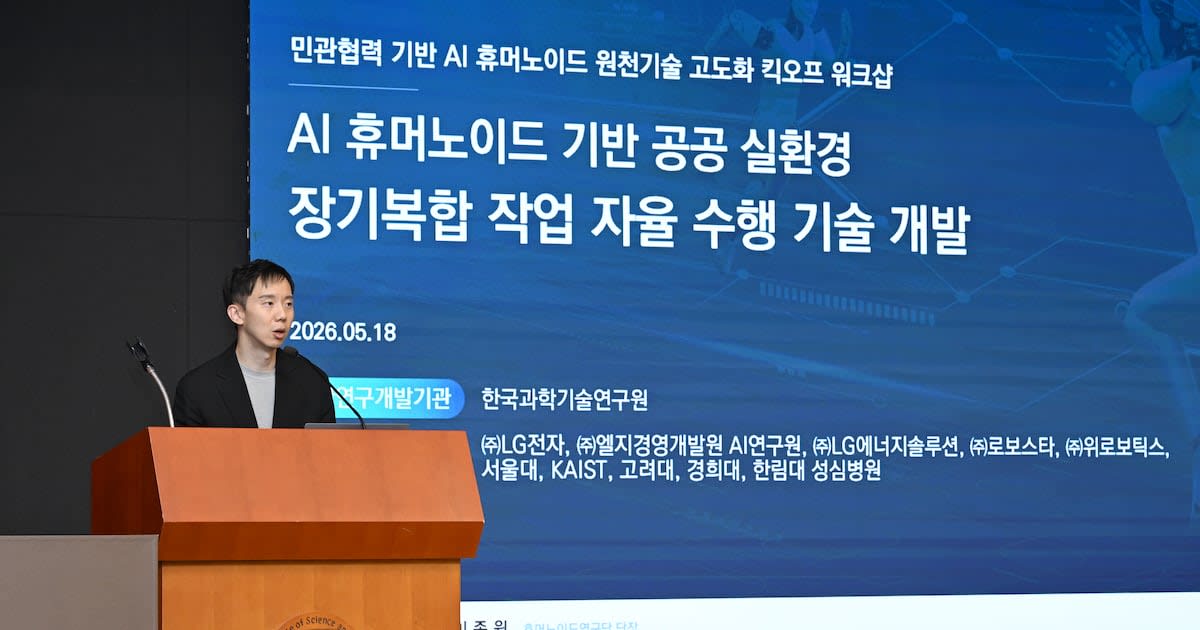
The Korea Institute of Science and Technology (KIST) announced a national project on May 18th that unites rivals like LG Electronics with top universities including Seoul National University, KAIST, and Korea University. Even Hallym University Sacred Heart Hospital is joining to test robots in medical settings.
"It has become difficult to stand out in the AI humanoid market by going it alone," explained Lee Jong-won, who leads KIST's Humanoid Research Center. The collaborative approach comes as China and the United States pour massive funding into robot development, leaving individual Korean companies struggling to keep pace.
The project aims to create robots that can truly work in human spaces. These humanoids will understand speech, recognize their surroundings through vision and touch, and perform complex tasks for extended periods. The team plans to develop over 20 humanoid robots based on KIST's existing KAPEX platform.
Three specialized teams will tackle different challenges. The physical AI division will help robots understand and judge situations like humans do. Behavior software engineers will perfect movement and balance so robots can walk naturally and handle objects smoothly. Hardware specialists will build next-generation robot bodies that look and move like people.
The Ripple Effect
This collaborative model could reshape how countries compete in advanced technology. KIST President Oh Sang-rok pointed to China's manufacturing success as proof that public-private partnerships work. By pooling resources instead of competing, South Korea's researchers can focus on innovation rather than duplication.
The robots won't just live in labs. Researchers will test them in hospitals and care facilities for at least a month at a time, performing real services like helping patients with daily living activities and complex tasks. Safety standards and certification systems will be developed alongside the technology to ensure robots can safely share space with people.
Unlike past research projects that ended with published papers, this initiative measures success by real-world performance. "The goal is to integrate the research achievements of each lab and institution into one and succeed in field demonstrations," Lee said.
By 2030, South Korea hopes to have a signature humanoid platform that represents the nation's capabilities. With factories, hospitals, and logistics centers all needing help with labor shortages, these robots could transform how work gets done while keeping humans at the center of the equation.
More Images
Based on reporting by Regional: south korea technology (KR)
This story was written by BrightWire based on verified news reports.
Spread the positivity!
Share this good news with someone who needs it