MIT's Single-Fuel Engine Could Send Tiny Satellites to Mars
Scientists at MIT have cracked a major space travel puzzle: one fuel that powers two completely different types of rocket engines. This breakthrough could let shoebox-sized satellites explore Mars and beyond at a fraction of today's cost.
Tiny satellites might soon explore the red planet thanks to a clever fuel innovation from MIT engineers.
Researchers have developed a propulsion system that uses a single tank of fuel to power both quick-burst chemical thrusters and slow, efficient electric engines. Until now, spacecraft needed separate fuel systems for each type of movement, making small satellites too heavy and complex for deep space missions.
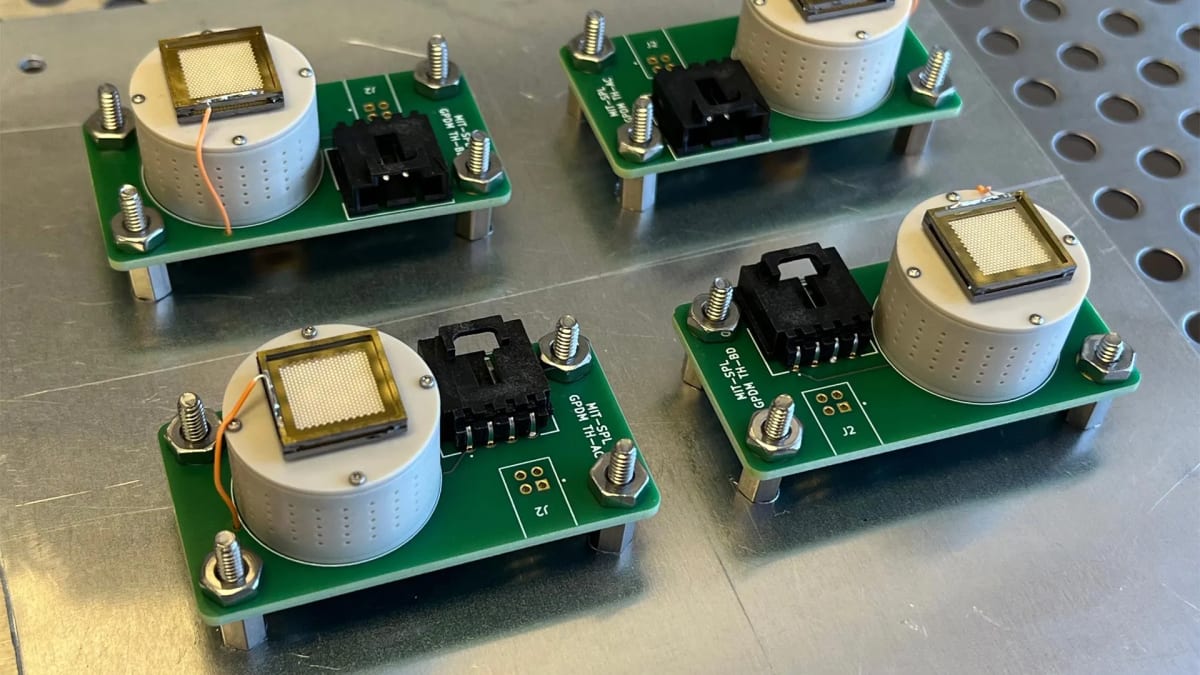
The breakthrough centers on a specialized ionic liquid called ASCENT, originally designed by the U.S. Air Force as a safer replacement for toxic hydrazine fuel. MIT scientists discovered this chemical propellant could also power electrospray thrusters, tiny engines about the size of a dime that use electric fields to shoot charged particles into space.
"If you can have chemical and electrical propulsion in one small package, it's the best of both worlds," says Amelia Bruno, lead researcher on the project. The team published their findings in the Journal of Propulsion and Power.
The dual-mode system gives small satellites unprecedented flexibility. Electric thrusters can slowly push a briefcase-sized spacecraft on a months-long journey to Mars while sipping fuel. Once there, chemical thrusters provide powerful bursts to quickly dodge asteroids, adjust position, or zoom toward interesting discoveries.
NASA is already planning to test the technology through the Green Propulsion Dual Mode mission, a CubeSat equipped with one chemical thruster and four electrospray thrusters sharing a single fuel tank. This will mark the first orbital test of dual-mode propulsion on a small spacecraft.
The implications reach beyond Mars. Small satellites cost far less to launch than traditional spacecraft, sometimes thousands of times cheaper. Adding deep-space capabilities to these compact explorers could democratize space science, letting more universities, countries, and organizations conduct missions that were previously impossible.
The Ripple Effect
This fuel innovation could reshape how we explore space. Right now, most CubeSats stay close to Earth because they lack the propulsion to venture farther. With dual-mode engines, these tiny satellites could visit asteroids, study comets, or investigate distant moons while remaining affordable enough for smaller research teams and developing nations to launch their own missions.
Professor Paulo Lozano, who co-authored the study, envisions CubeSats making the slow journey to the asteroid belt on electrospray power, then using chemical thrusters to dart between interesting rocks. "You could have a lot more flexibility to do a lot more things," he says.
The technology proves that sometimes the biggest leaps forward come from asking a simple question: what if we could use what we already have in a smarter way?
A single fuel tank might just unlock the solar system for exploration on a budget.
Based on reporting by Science Daily
This story was written by BrightWire based on verified news reports.
Spread the positivity!
Share this good news with someone who needs it