MIT's Tiny Sensor Tracks Body Temperature From Inside
Engineers created a blueberry-sized sensor you can swallow that monitors your core body temperature in real time. The breakthrough could help catch infections early and keep vulnerable patients safe.
Imagine swallowing something the size of a tiny blueberry that could continuously track your body's temperature from the inside, alerting doctors to infections before they become dangerous.
MIT engineers just made that possible. They've developed an ingestible sensor just 6 millimeters wide that sends temperature updates from inside your body to an external device nearby.
The breakthrough solves a real problem. Forehead and oral thermometers don't always capture your core body temperature accurately, which matters when you're trying to catch a fever early or monitor someone at serious risk.
Previous ingestible sensors existed, but they were as large as multivitamins. That size made them harder to swallow and raised concerns about potentially blocking the digestive tract.
The MIT team shrunk everything down. They built a custom circuit that fits on a chip smaller than your pinky fingernail and uses barely any power. The entire device runs on a tiny coin battery and uses a clever trick called backscattering to communicate with an antenna outside your body.
That external antenna does most of the heavy lifting. It sends out radio waves that the internal sensor modulates and bounces back, transmitting temperature readings once every second. The sensor measures temperature with incredible precision, accurate to within 0.01 degrees Celsius.
The Ripple Effect
This tiny technology could transform care for some of the most vulnerable patients. People undergoing chemotherapy have weakened immune systems, making early infection detection critical. The sensor could sound the alarm at the first sign of trouble.
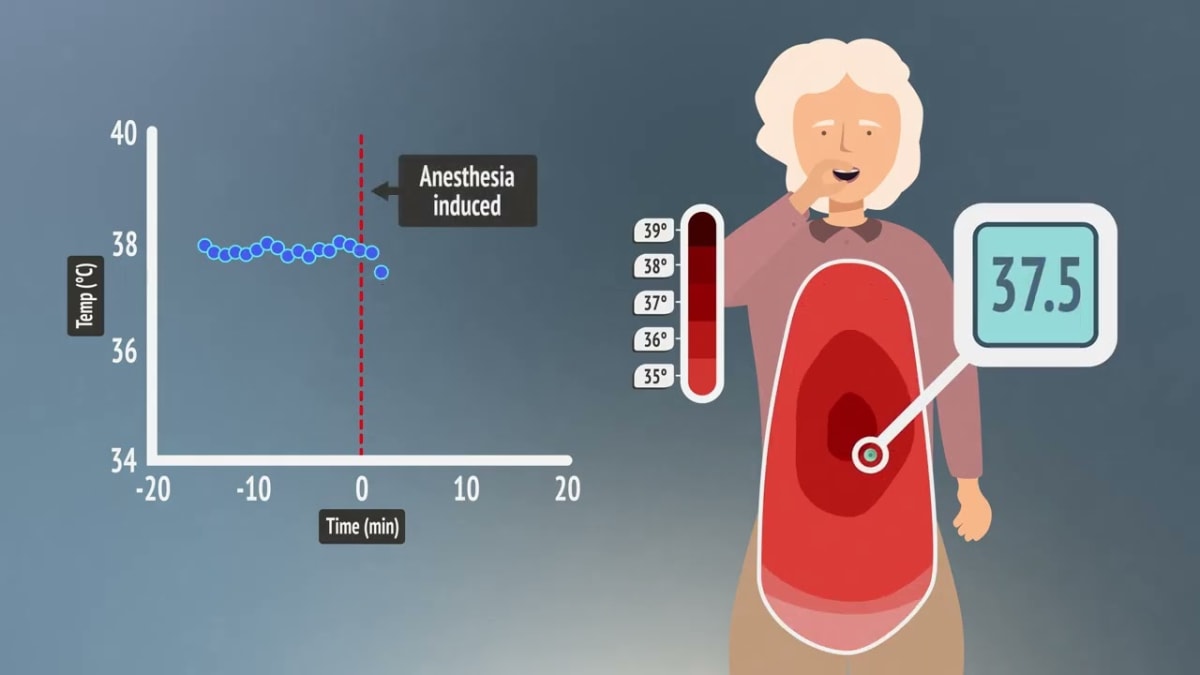
It has applications beyond hospital walls too. Fertility tracking requires precise temperature measurements over time. Surgery patients need monitoring during and after anesthesia, when their bodies struggle to regulate temperature normally.
The research team, led by postdoc Saransh Sharma and MIT professors Giovanni Traverso and Anantha Chandrakasan, published their findings in Nature Electronics. Traverso, who works as both an MIT engineer and a gastroenterologist at Brigham and Women's Hospital, sees the immediate clinical value.
The sensor's small size isn't just convenient. It's a safety feature that dramatically reduces any risk of complications while giving doctors continuous, accurate data they couldn't easily get before.
Sometimes the biggest medical breakthroughs come in the smallest packages.
More Images
Based on reporting by MIT News
This story was written by BrightWire based on verified news reports.
Spread the positivity!
Share this good news with someone who needs it