Moon Telescope to Launch in 2027 After 40-Year Quest
A radio telescope designed to observe the universe's earliest moments will launch to the moon's far side early next year, fulfilling a scientist's four-decade dream. The groundbreaking instrument could reveal secrets from 13 billion years ago that Earth-based telescopes simply cannot detect.
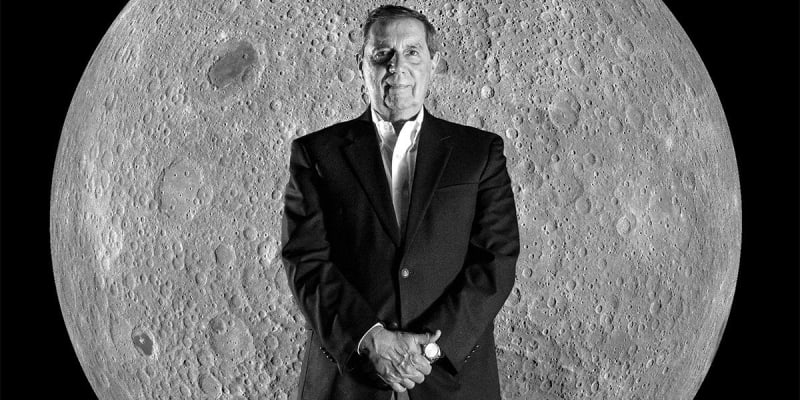
Jack Burns heard a wild idea in 1984 that changed his life: What if we built a radio telescope on the moon?
His first reaction was "hell, no." Burns was a young astronomer doing exciting work at New Mexico's Very Large Array, studying distant quasars and radio jets. Why complicate things with the bureaucratic nightmare of launching hardware into space?
But the idea stuck. Earth's atmosphere blocks many electromagnetic signals, and even in remote deserts, human interference never completely disappears. The moon's far side offered something no place on Earth could: total silence from human radio noise, protected by 2,000 miles of solid rock.
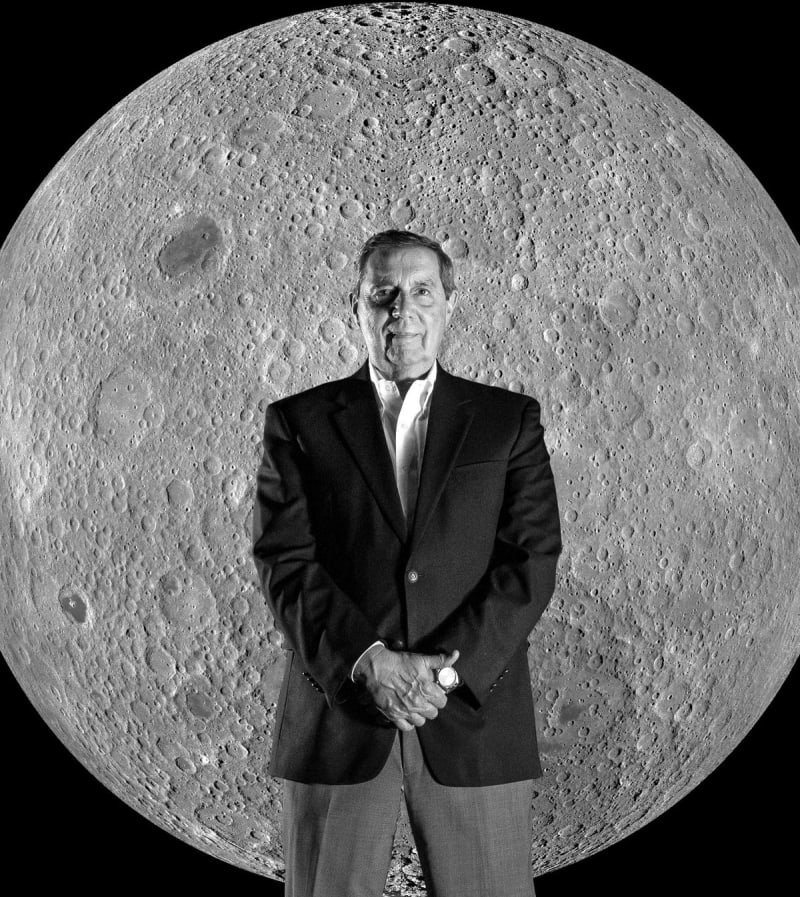
Now, 40 years later, Burns is about to see his persistence pay off. In early 2027, a radio telescope called LuSEE-Night will launch aboard a SpaceX rocket to the moon's far side. The 73-year-old professor emeritus at the University of Colorado Boulder has published over 500 papers, advised NASA and the White House, and never stopped pushing for this moment.
The telescope will listen for whispers from the cosmic dark ages, a mysterious period beginning just 380,000 years after the big bang. For 200 to 400 million years, neutral hydrogen atoms trapped the light of stars and galaxies, leaving scientists with zero data from this critical chapter in our universe's history.
These ancient signals are incredibly faint and dramatically stretched by the universe's expansion. They've been drowned out by our power grids, communications networks, and even the sun itself. Only the moon's far side is quiet enough to hear them.
LuSEE-Night will ride to the lunar surface aboard Blue Ghost Mission 2, built by Texas-based Firefly Aerospace. The landing will be risky since ground controllers cannot see the far side, but Firefly successfully landed their first mission in March 2025.
Burns already sent one experiment to the moon in 2024 aboard a lander called Odysseus. It was damaged on landing but still returned useful data. He says he would have been disappointed if there weren't so many more missions coming up.
Why This Inspires
What makes this story remarkable isn't just the science. It's the quiet determination of someone who heard an impossible idea and spent four decades making it real.
Burns navigated political disputes, technical delays, and even a battle with cancer. He balanced teaching, university administration, and government advising while never losing sight of that lunar radio telescope. His colleague Gregg Hallinan from Caltech plans to use moon-based observations to study whether distant exoplanets might support life.
The moon is becoming humanity's next observatory, and Burns is helping plant our first listening posts there. "We're getting our feet into the lunar soil," he says, "and understanding what is possible with these radio telescopes in a place where we've never observed before."
After 40 years of patience and persistence, we're about to hear the universe's oldest whispers.
More Images
Based on reporting by IEEE Spectrum
This story was written by BrightWire based on verified news reports.
Spread the positivity!
Share this good news with someone who needs it
%2Fhttps%3A%2F%2Ftf-cmsv2-smithsonianmag-media.s3.amazonaws.com%2Ffiler_public%2F31%2Feb%2F31ebdfc9-0df0-4f8b-9103-77d6dfdb4483%2Fsmithsonian_feature_images_15.png)