Mystery of Universe's Red Dots Solved After 3 Years
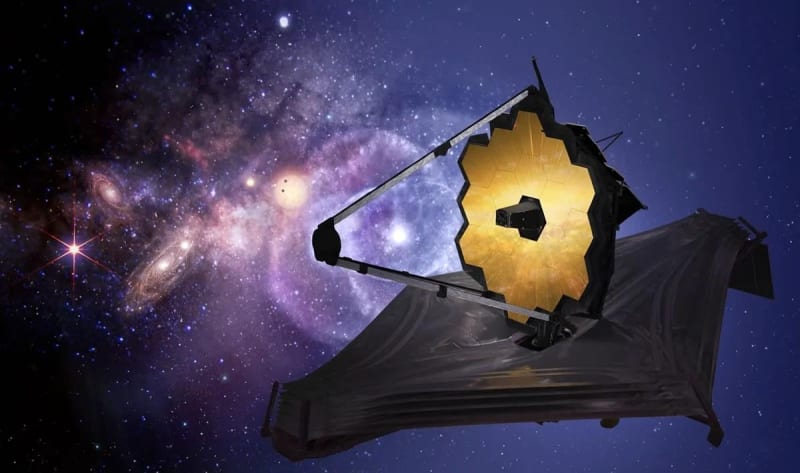
Scientists finally cracked the code on mysterious red dots captured by the James Webb Space Telescope. They're baby black holes caught in the act of eating and growing.
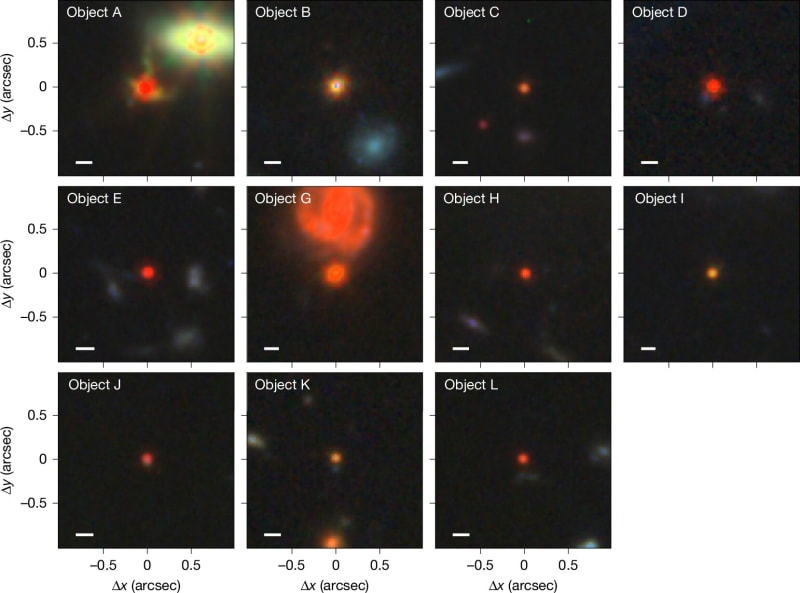
For three years, tiny red dots scattered across images from the James Webb Space Telescope have puzzled astronomers worldwide. Now researchers from the University of Copenhagen have solved the cosmic mystery, revealing something extraordinary happening in the early universe.
The enigmatic dots appear in images when the universe was just a few hundred million years old. Then, oddly, they vanish about a billion years later.
Scientists initially thought these might be massive galaxies powerful enough to shine across 13 billion years of space. But the timeline didn't add up with what we know about how long galaxies take to form after the Big Bang.
After two years of careful analysis, researchers at the Niels Bohr Institute's Cosmic Dawn Center discovered the truth. The little red dots are young black holes, wrapped in cocoons of glowing gas.
"The little red dots are young black holes, a hundred times less massive than previously believed, enshrouded in a cocoon of gas, which they are consuming in order to grow larger," explains Professor Darach Watson, one of the lead researchers. "This process generates enormous heat, which shines through the cocoon. This radiation through the cocoon is what gives little red dots their unique red color."
These baby black holes still weigh up to 10 million times more than our sun and stretch 10 million kilometers across. They're messy eaters too.
When gas spirals toward a black hole, it spins so fast and gets squeezed so tightly that it heats up to millions of degrees. The result is a brilliant glow. But most of the gas doesn't actually get swallowed. Instead, it gets blown back out from the poles as the black hole rotates.
The discovery, published in Nature, helps explain one of astronomy's biggest puzzles. How did supermassive black holes a billion times the mass of the sun exist just 700 million years after the Big Bang?
Why This Inspires
This breakthrough shows the power of patience and curiosity in science. Rather than accepting easy answers, these researchers spent years analyzing the same data until the truth revealed itself.
The finding also gives us a window into the universe's childhood. We're literally watching baby black holes grow up, caught in a stage of development never observed before. These snapshots from billions of years ago help us understand how the supermassive black hole at the center of our own Milky Way galaxy came to be.
Hundreds of these little red dots have now been identified, each one a young black hole in its growth spurt. The dense cocoons of gas surrounding them provide the fuel they need to expand rapidly into the cosmic giants we see today.
The universe just got a little less mysterious and a lot more fascinating.
More Images



Based on reporting by Google: James Webb telescope
This story was written by BrightWire based on verified news reports.
Spread the positivity! 🌟
Share this good news with someone who needs it