NASA Captures Crater From SpaceX Rocket's Moon Impact
Scientists turned an accidental rocket crash into a triumph of precision tracking, capturing stunning images of a new crater on the Moon. The international effort showcases how well we can predict space trajectories, even when things don't go as planned.
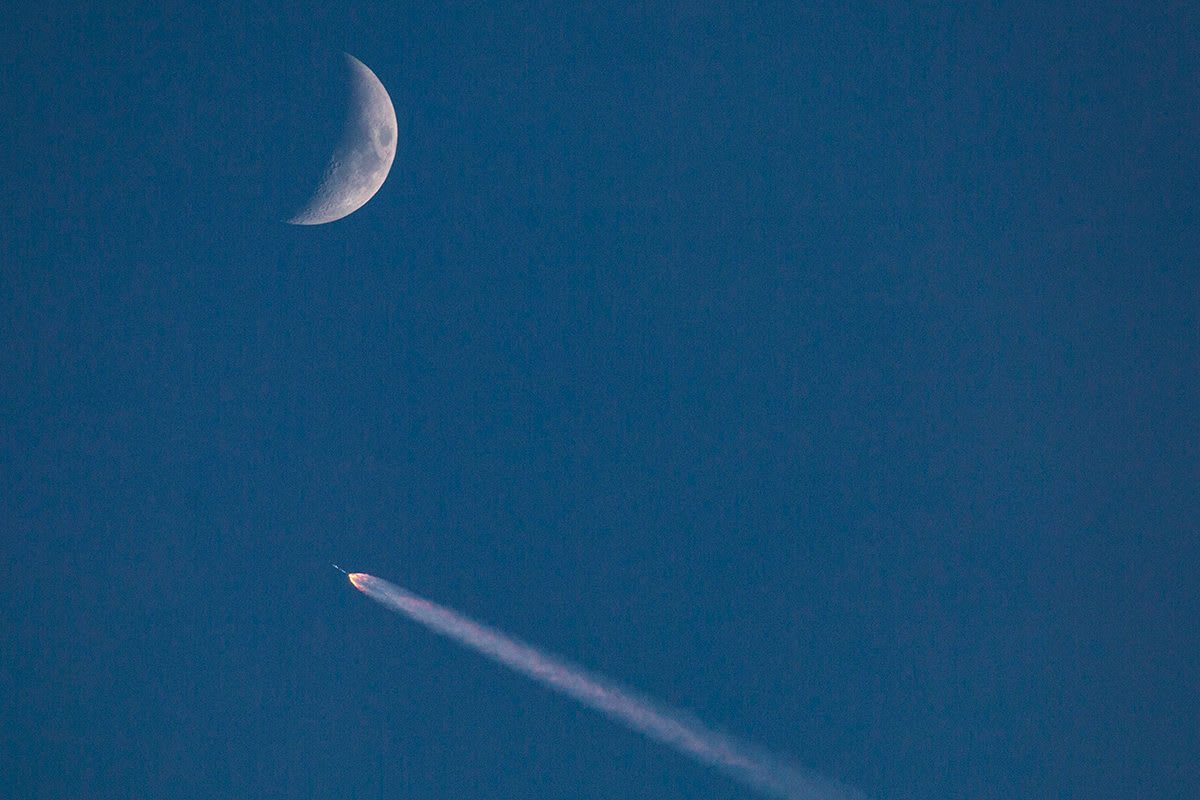
When a SpaceX Falcon 9 rocket stage accidentally crashed into the Moon in August 2026, scientists saw an opportunity to test their tracking skills and got something remarkable: proof they can predict space impacts with pinpoint accuracy.
The rocket had launched in January 2025 carrying two commercial lunar landers to the Moon. After successfully delivering its cargo (one landed safely), the rocket ran out of fuel and couldn't return to Earth as planned. Failed stabilization maneuvers left it drifting in orbit until the Moon's gravity eventually pulled it in.
NASA's Lunar Reconnaissance Orbiter, which has been circling the Moon since 2009, captured before and after images of the impact site. The spacecraft had to tilt its cameras at just the right moment, waiting six days for the Moon to rotate the crash site into view. Being just 10 seconds off would have meant missing the target by 10 miles.
The images reveal an 18-meter-wide crater with fascinating features. Dark streaks radiating outward show ancient lunar material that's been altered by billions of years of solar radiation and cosmic rays, now excavated by the impact. Brighter streaks near the rim are fresh material from deeper underground, never before exposed to space.
The Ripple Effect
What makes this story shine is the collaboration it sparked. Amateur astronomers using public data first identified the rocket's trajectory. NASA's Center for Near Earth Object Studies jumped in to test their impact prediction tools. Then South Korea's Danuri lunar orbiter confirmed the location. The predicted crash site? Accurate to within half a mile.
This wasn't just about finding a crater. It demonstrated how well international teams can work together to track objects in space, a skill that matters for protecting Earth from potential asteroid threats. The same techniques used to follow this wayward rocket stage help scientists monitor near-Earth objects that could someday pose real danger.
The Lunar Reconnaissance Orbiter captured the crater from multiple angles under different lighting conditions, giving scientists valuable data about what happens when human-made objects hit the Moon. Each shadow and streak tells a story about the lunar surface and impact physics.
Space agencies are already using lessons from this event to improve their prediction models, turning an unplanned collision into educational gold that strengthens our ability to navigate the growing traffic around Earth and the Moon.
More Images


Based on reporting by Google News - Science
This story was written by BrightWire based on verified news reports.
Spread the positivity!
Share this good news with someone who needs it