NASA Finds Exploded Stars Acting Like Nothing We've Seen
Scientists using NASA's Chandra telescope discovered supernova remnants behaving in ways they shouldn't, revealing what might be the largest collection of survivor stars ever found in one galaxy. These cosmic survivors are orbiting the very objects created by their partner's explosive death. #
Scientists just discovered stars doing something incredible: surviving their partner's violent death and continuing to dance with what's left behind.
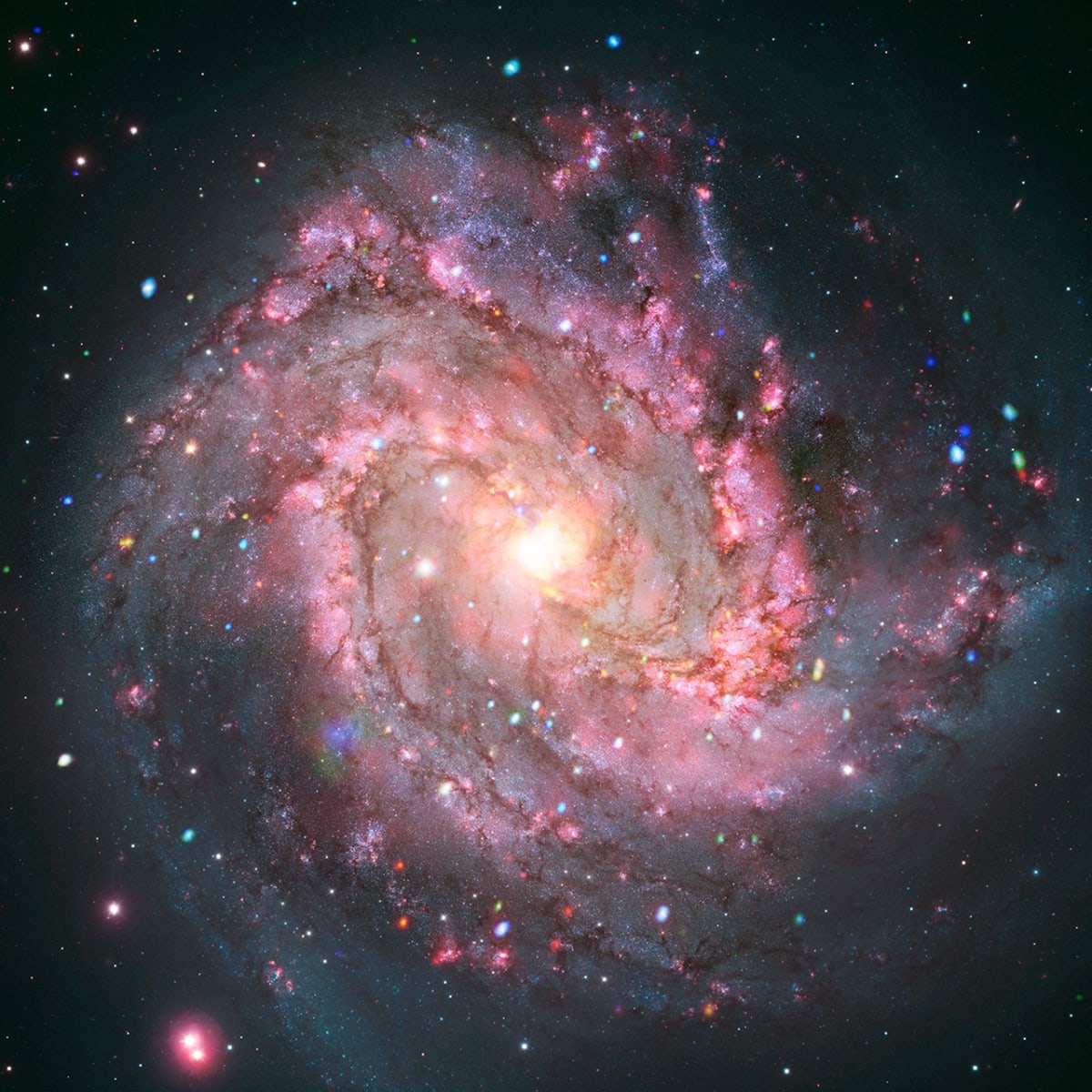
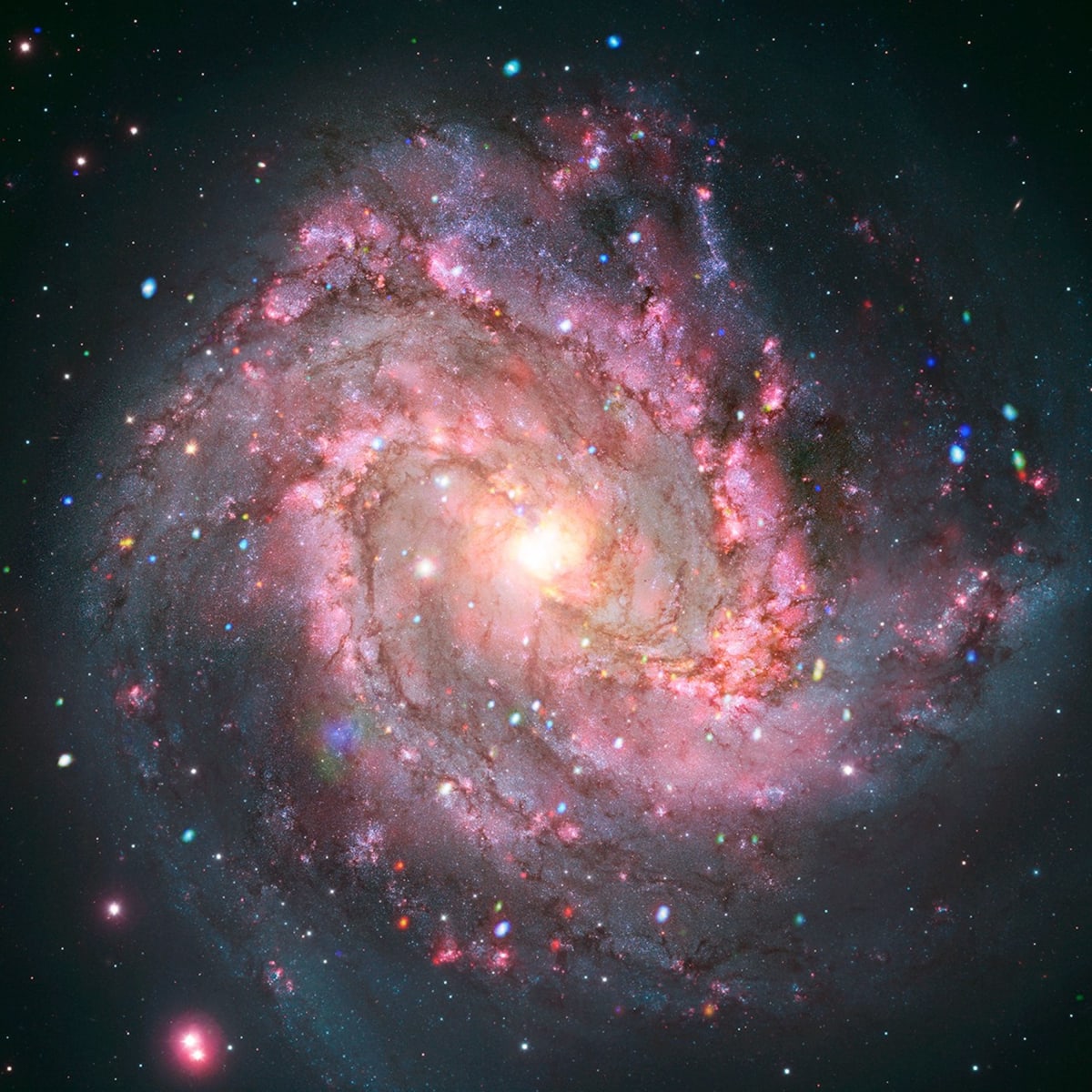
NASA's Chandra X-ray Observatory spotted something unexpected while studying galaxy Messier 83, located 15 million light-years from Earth. Astronomers found more than 20 supernova remnants that were changing brightness dramatically over 14 years of observations.
That shouldn't happen. These cosmic debris clouds from stellar explosions typically fade slowly and steadily, not flash like cosmic lighthouses.
"We knew individual X-ray sources could vary dramatically," said Andrea Prestwich from Catholic University of America, who led the study. "But finding that so many supernova remnants were behaving this way was a real surprise."
The team analyzed data spanning from 2000 to 2014 and found roughly half of the 22 remnants they studied showed unexpected brightness changes. One remnant, SN 1957D, could be explained by the debris cloud hitting surrounding material. But the others needed a different answer.
The most likely explanation turns out to be surprisingly hopeful. These remnants may contain stellar survivors, massive stars that lived through their partner's destruction.
Here's what researchers think is happening. Each of these systems started as a pair of massive stars orbiting each other. The larger star collapsed and exploded as a supernova, leaving behind either a black hole or an ultra-dense neutron star. Its companion somehow survived the blast.
Now those survivor stars orbit their partner's remnant, locked in a cosmic dance. The black holes or neutron stars pull material from the survivor's surface, superheating it through intense gravity and creating the X-ray flares Chandra detected.
"It may be that this galaxy contains a collection of supernova remnants where one massive star survives the supernova and becomes locked into an orbit with a black hole or neutron star," said co-author Michael McCollough from the Center for Astrophysics.
These systems, called high-mass X-ray binaries, are among the most variable X-ray sources in the universe. Astronomers have known about them for decades, but finding more than 20 candidates in just one galaxy is unprecedented.
Why This Inspires
This discovery transforms our understanding of what happens after the universe's most violent events. Death doesn't always mean the end. Sometimes survival creates something entirely new.
The variable supernova remnants cluster in regions packed with massive stars, supporting the survival theory. There's even another possibility: the black holes or neutron stars might be recapturing material from their own explosions, recycling cosmic debris in an endless loop.
Galaxy Messier 83 forms new stars at a high rate, giving astronomers a perfect laboratory to study these rare survivors. The findings were presented at the American Astronomical Society meeting and published in The Astrophysical Journal.
These stellar survivors remind us that even after catastrophic destruction, resilience finds a way.
#
More Images
Based on reporting by NASA
This story was written by BrightWire based on verified news reports.
Spread the positivity!
Share this good news with someone who needs it