NASA Rover Finds Vast Honeycomb Patterns on Ancient Mars Lake
NASA's Curiosity rover just discovered a breathtaking sea of honeycomb patterns stretching across an ancient Martian valley, offering stunning new evidence that water once flowed abundantly across the Red Planet. The discovery brings scientists one step closer to understanding whether Mars could have supported life billions of years ago.
After more than a decade climbing a 3-mile-tall mountain on Mars, NASA's Curiosity rover just sent back images that left scientists speechless.
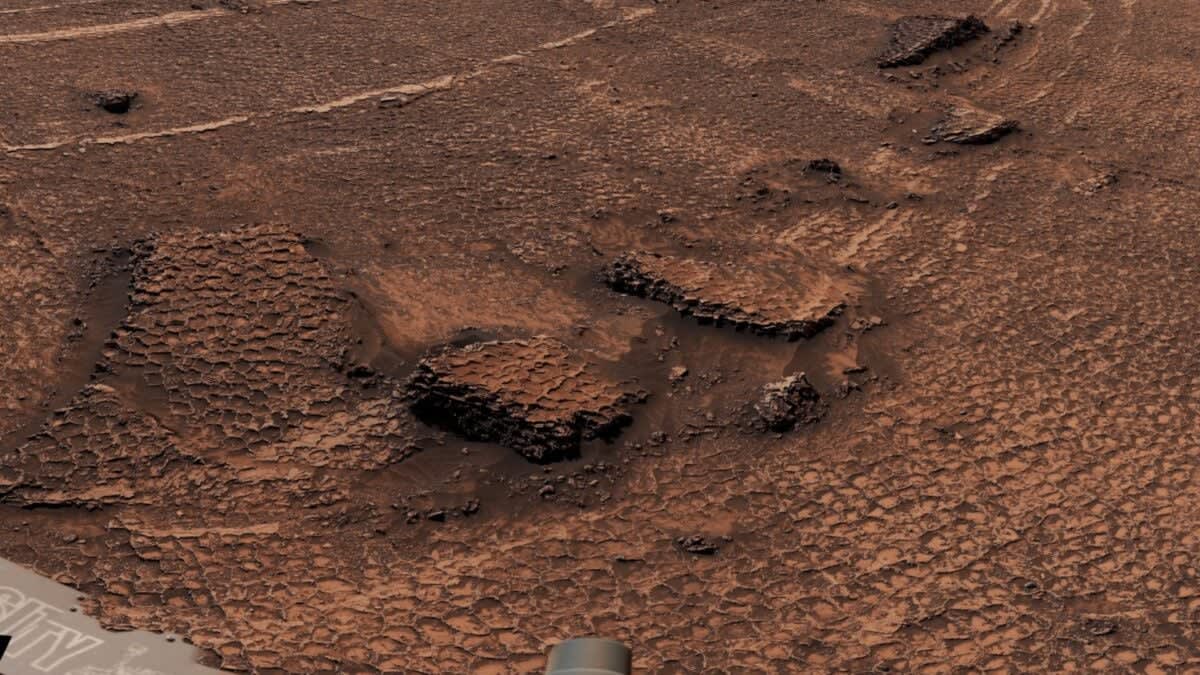
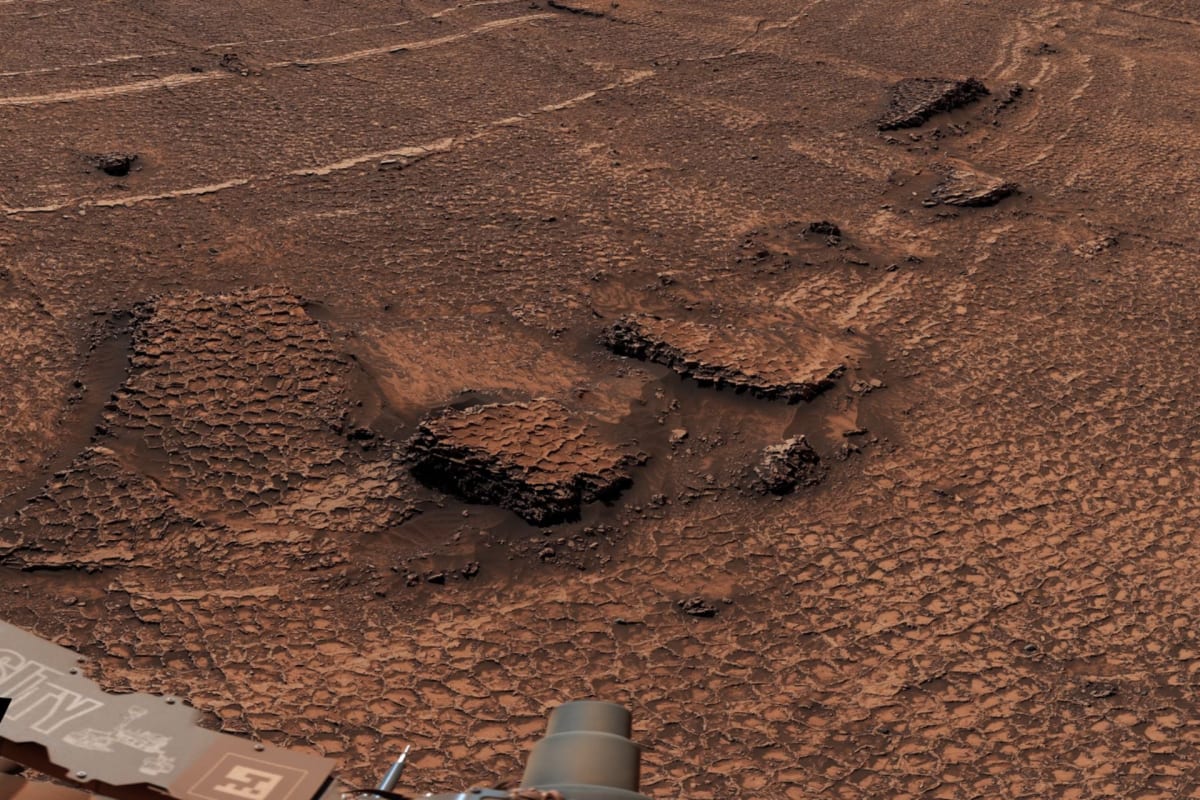
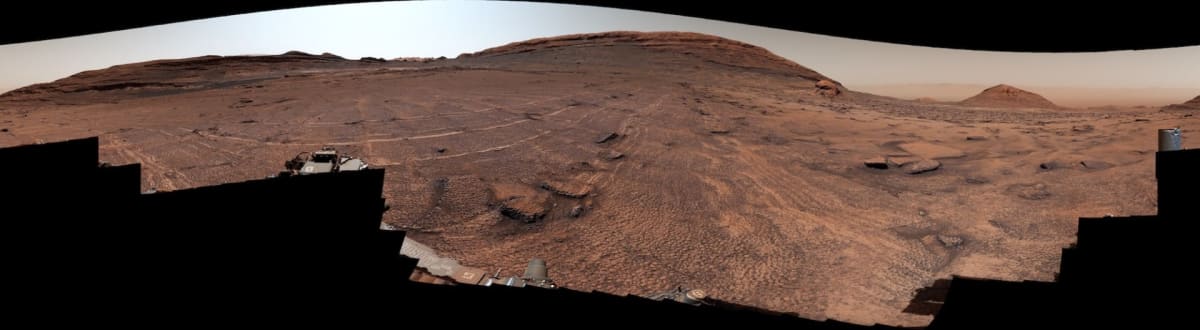
The rover captured a 360-degree view inside a valley called Valle Grande in June, revealing thousands of honeycomb-shaped patterns stretching as far as its camera could see. Scientists stitched together 340 individual snapshots to create the stunning panorama.
"We've seen a lot of fascinating landscapes through Curiosity's eyes, but this sea of polygons took our breath away," said Ashwin Vasavada, the mission's project scientist. While Curiosity has spotted these geometric patterns before, it has never found so many gathered in one place.
Each hexagonal crack measures about 1.5 to 3 inches wide and wraps around a 20-foot-tall hill crowned with sand. The patterns likely formed billions of years ago when lakes and streams covered this region of Mars.
Scientists believe these ancient mud cracks tell the story of water that once filled the valley. Cycles of warming and cooling may have caused wet mud to expand and contract, creating the geometric designs. Another possibility is that pressure squeezed water out of buried sediment, leaving these signature marks behind.
The discovery adds to a growing collection of clues about Mars's watery past. Earlier this year, Curiosity detected more than 20 organic molecules never before seen on the Red Planet in clay-rich sandstones. Some of those carbon-based molecules may be building blocks for RNA and DNA.
Why This Inspires
This discovery reminds us that exploration never stops revealing wonders. Every hill Curiosity climbs and every valley it photographs brings humanity closer to answering one of our most profound questions: Are we alone in the universe?
The rover has been working tirelessly since landing on Mars in August 2012, analyzing rocks and sending back data that reshapes our understanding of our planetary neighbor. Each new finding supports the hopeful possibility that Mars once had the right conditions to support life.
Scientists will now analyze the chemistry of these newly discovered polygons to learn more about the water that shaped them. The patterns frozen in Martian rock serve as a time capsule, preserving secrets from billions of years ago and waiting for us to decode their message.
With every image Curiosity sends home, we get a clearer picture of Mars as it once was: a world with flowing water, complex chemistry, and perhaps the ingredients for life itself.
More Images

Based on reporting by Google News - Science
This story was written by BrightWire based on verified news reports.
Spread the positivity!
Share this good news with someone who needs it