NASA Finds Star Explosion Near Milky Way's Black Hole
Astronomers discovered what could be a supernova remnant closer to our galaxy's central black hole than almost any other stellar explosion ever found. This cosmic discovery reveals how dying stars create the building blocks for future planets and life.
Scientists just spotted the remains of a massive stellar explosion in one of the most extreme neighborhoods in our galaxy, right near the supermassive black hole at the Milky Way's center.
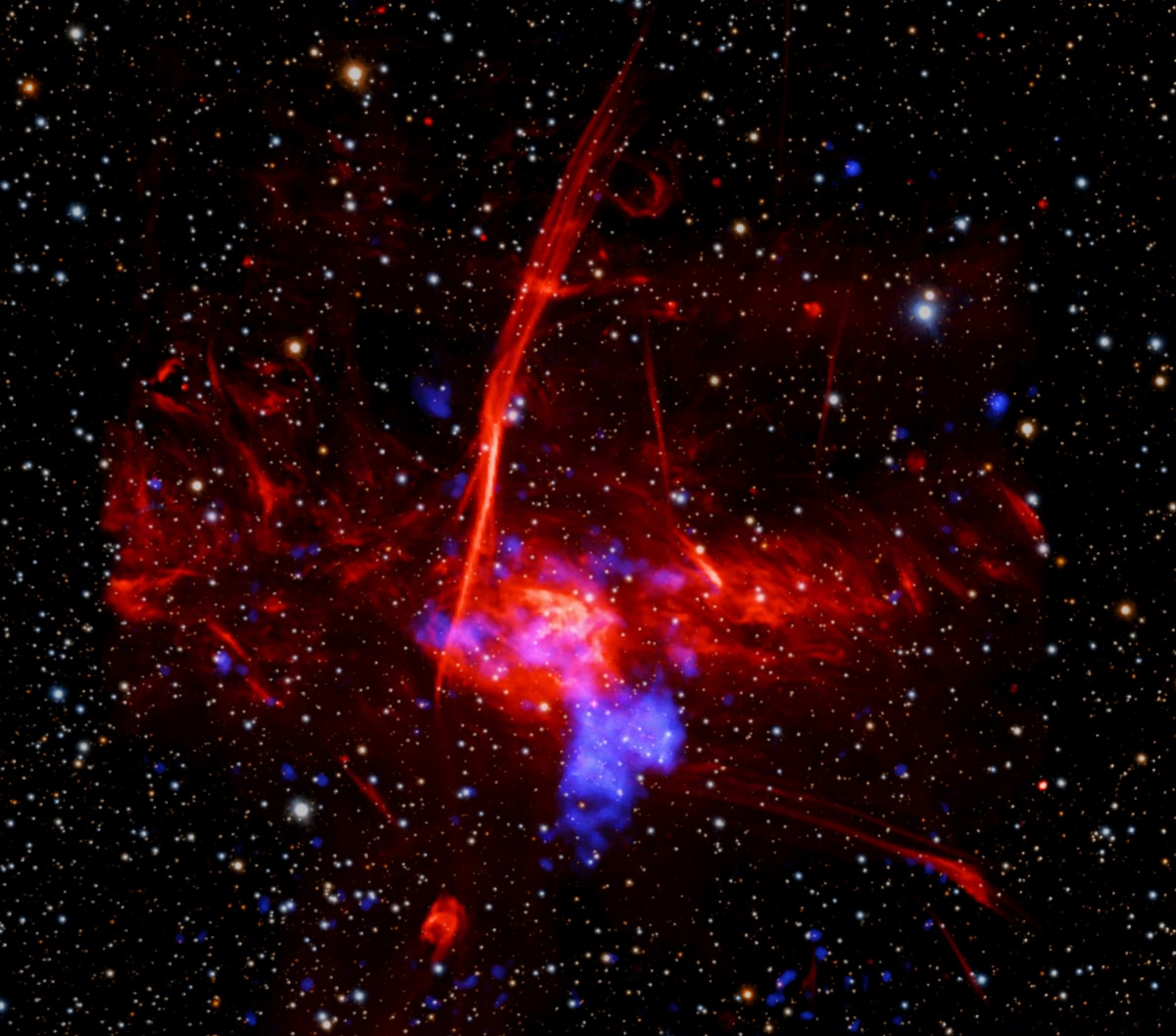
Using NASA's Chandra X-ray Observatory, astronomers found what appears to be a supernova remnant about 26,000 light-years from Earth. If confirmed, this would be one of the closest stellar explosions ever discovered to the giant black hole that anchors our galaxy.
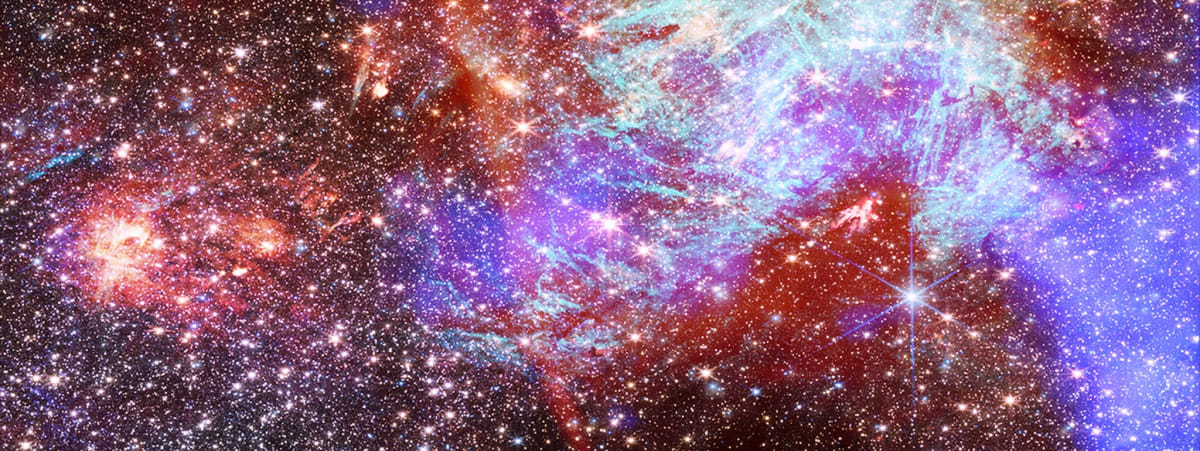
The discovery happened in a region called Sagittarius C, a bubble of glowing gas surrounding a young, massive star. Chandra's X-ray vision revealed a bright blob of energy that researchers believe comes from a star that exploded at least 1,700 years ago. The remnant is still expanding outward at roughly two million miles per hour.
This finding matters because supernova remnants are cosmic recycling centers. When massive stars explode, they scatter elements like iron, oxygen, and silicon across space. These are the exact building blocks needed to form planets and eventually support life as we know it.
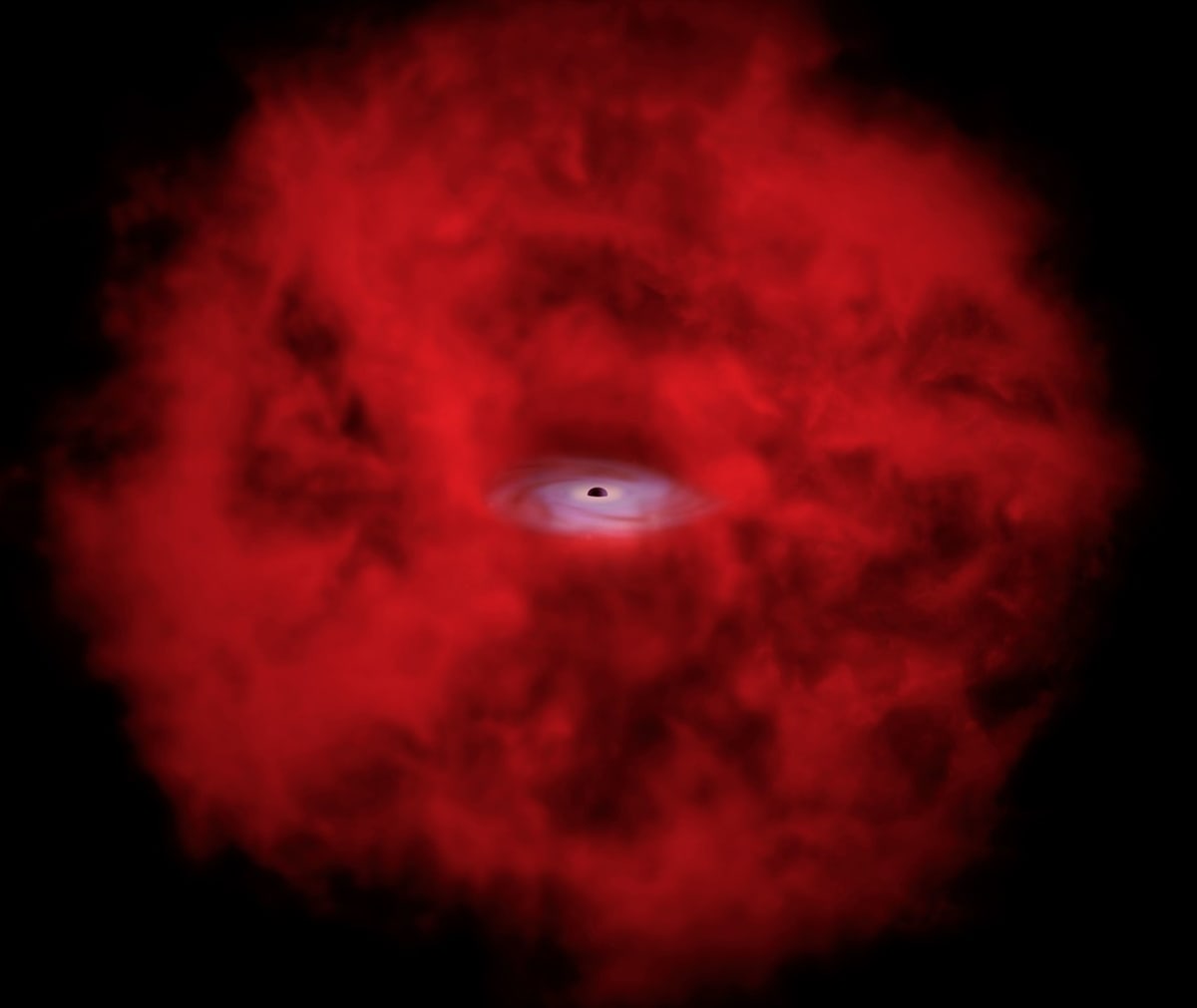
The galactic center where this remnant sits is an extraordinary place. Massive stars pack together in dense clusters, powerful magnetic fields snake through space in long filaments, and clouds of gas orbit rapidly around the central black hole. Finding evidence of a supernova in this chaotic environment shows that stellar explosions can happen even in the most extreme cosmic neighborhoods.
Researchers pieced together this discovery using data from multiple telescopes. The X-ray observations from Chandra and Europe's XMM-Newton mission revealed the hot, expanding gas. Radio data from South Africa's MeerKAT telescope showed the region's magnetic field structure. NASA's James Webb Space Telescope added infrared details of the surrounding gas cloud.
The Ripple Effect
This discovery does more than add one supernova remnant to the cosmic catalog. It helps scientists understand how elements essential for life spread through the galaxy's most crowded and energetic region. Every star that explodes near the galactic center enriches the surrounding gas with heavy elements, providing raw materials for future generations of stars and planets.
The team searched for enhanced amounts of key elements in the remnant, which would confirm the supernova origin. While they haven't detected this signature yet, it likely means the stellar debris has already mixed thoroughly with surrounding gas, spreading its elemental gifts far and wide.
Scientists continue studying this region to confirm whether they've truly found a supernova remnant or if the X-ray glow comes from a cluster of hot, massive stars instead. But the evidence strongly points toward a stellar explosion, especially given previous observations showing an expanding shell of gas in the same location.
Every supernova remnant discovered near the galactic center teaches astronomers about how life's building blocks travel through the most dynamic environments in our galaxy.
More Images
Based on reporting by NASA
This story was written by BrightWire based on verified news reports.
Spread the positivity!
Share this good news with someone who needs it