NASA's Viking 1 Gave Us Mars 50 Years Ago This Week
Fifty years ago, humanity saw the surface of another planet for the first time when NASA's Viking 1 landed on Mars and sent back images that changed our understanding of the universe forever. The July 20, 1976 landing gave us our first real glimpse of the Red Planet's rocky, dusty surface.
For thousands of years, humans gazed at Mars and wondered what secrets lay on its mysterious surface. On July 20, 1976, exactly seven years after Apollo 11 touched down on the moon, we finally got our answer.
NASA's Viking 1 became the first spacecraft to land on Mars and transmit images from another planet's surface. The landing at Chryse Planitia, north of the Martian equator, marked a giant leap in human exploration.
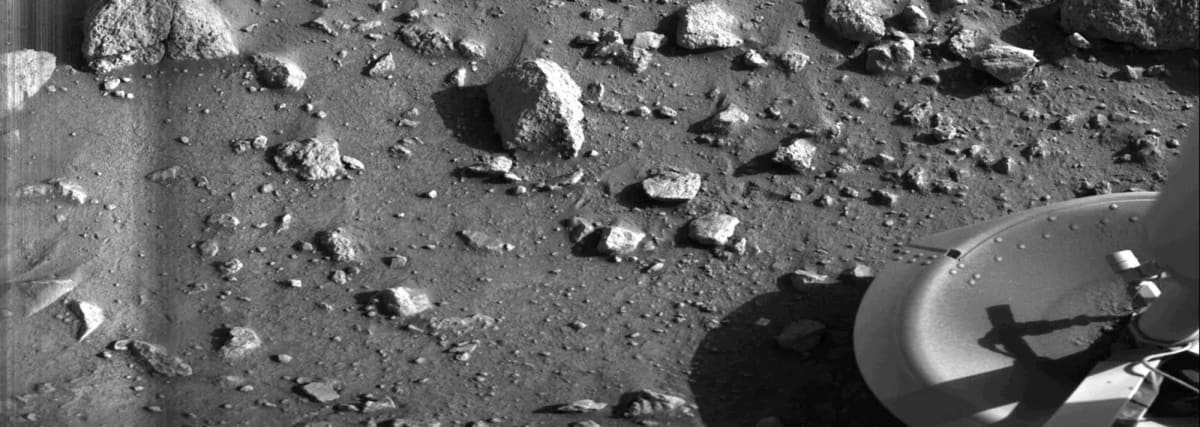
The spacecraft snapped its first photo just 25 seconds after touchdown at 7:53 a.m. EDT. Mission controllers at NASA's Jet Propulsion Laboratory then waited a nerve-wracking 19 minutes for the radio signal to travel 212 million miles back to Earth.
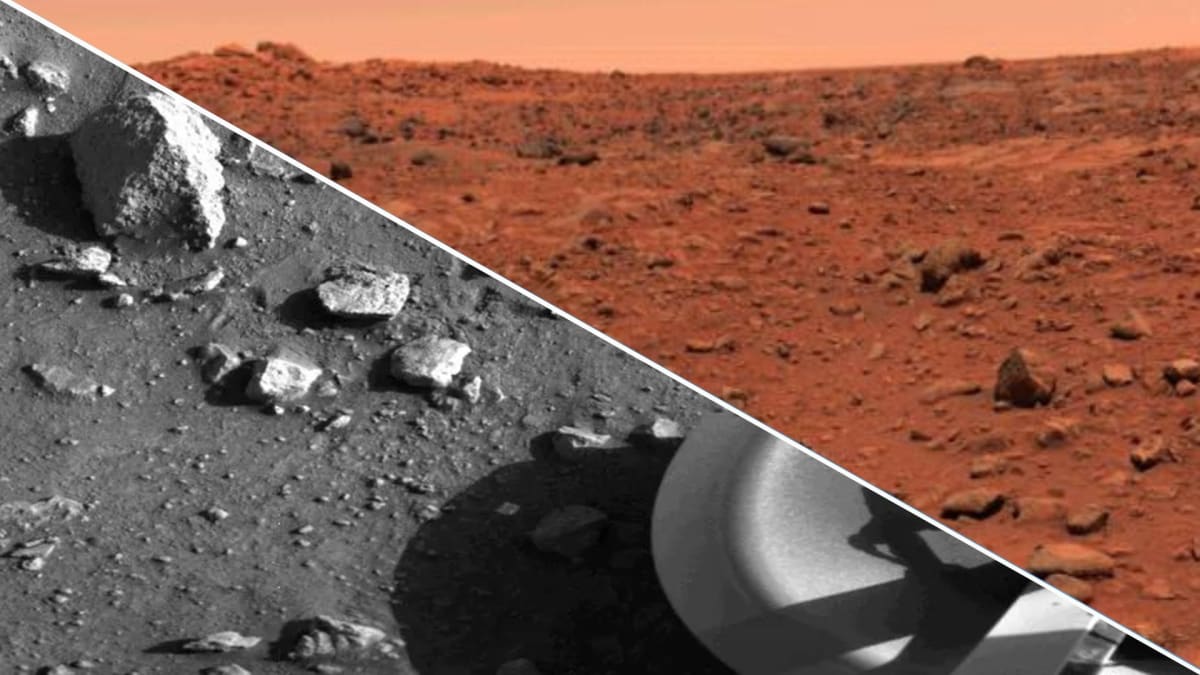
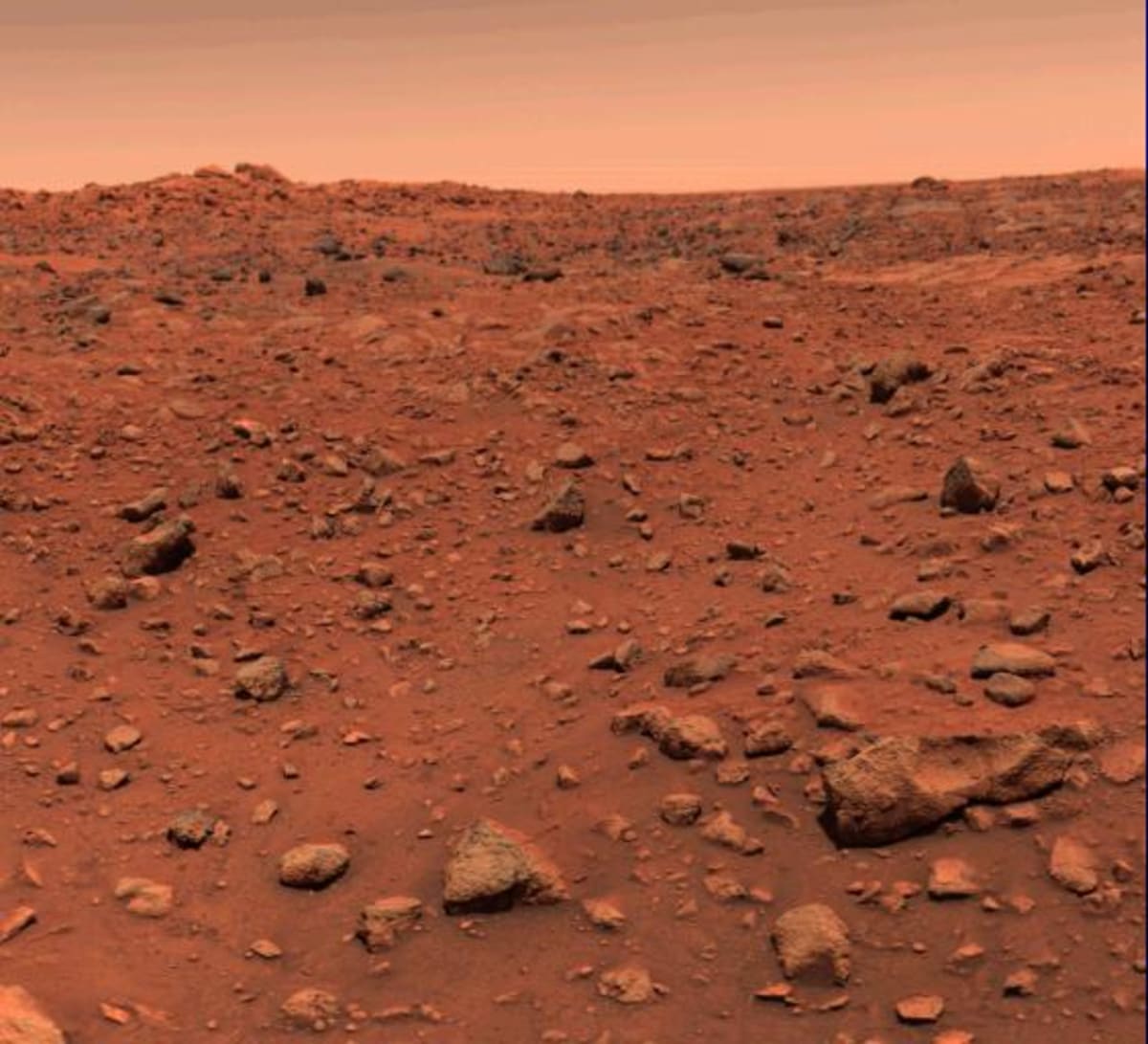
When the image finally appeared on their monitors, building line by line from left to right, it revealed a solid, slightly rocky surface with dust and pebbles. Dr. Thomas Mutch, leader of the Viking lander imaging team, watched in awe as the first strips appeared on the black screen.
"Rocks and sand are visible," he said, his excitement barely contained. "Time and time again I repeat, 'It's incredible.'"
The next day brought Viking's first color image, followed by a stunning panorama. Six weeks later, Viking 2 joined its twin on the Martian surface in Utopia Planitia, also in the northern hemisphere.
Together, the Viking mission's four spacecraft (two orbiters and two landers) transformed our understanding of Mars. They mapped the planet and sent back more than 52,000 orbital images and 4,500 photographs from the surface.
Why This Inspires
Viking 1 didn't just show us Mars. It showed us what's possible when humans dare to reach beyond our own world.
The mission carried the first experiments designed to detect life directly in Martian soil. While scientists didn't find conclusive evidence, recent discoveries by later missions have prompted researchers to revisit Viking's data with fresh eyes.
Viking 1 operated for six years before falling silent in 1982 following a software error during an update. But its legacy lives on in every Mars mission that followed, from Spirit and Opportunity to Curiosity and Perseverance.
That first grainy image of rocks, sand, and a spacecraft footpad wasn't just a picture. It was proof that the impossible becomes possible when we combine human curiosity with determination and ingenuity.
More Images

Based on reporting by Live Science
This story was written by BrightWire based on verified news reports.
Spread the positivity!
Share this good news with someone who needs it