NASA Finds Wandering Black Hole 30,000 Light-Years From Home
Scientists discovered a massive black hole far from its galaxy's center, proving a new method for detecting these cosmic wanderers. The find opens the door to discovering more hidden giants drifting through space.
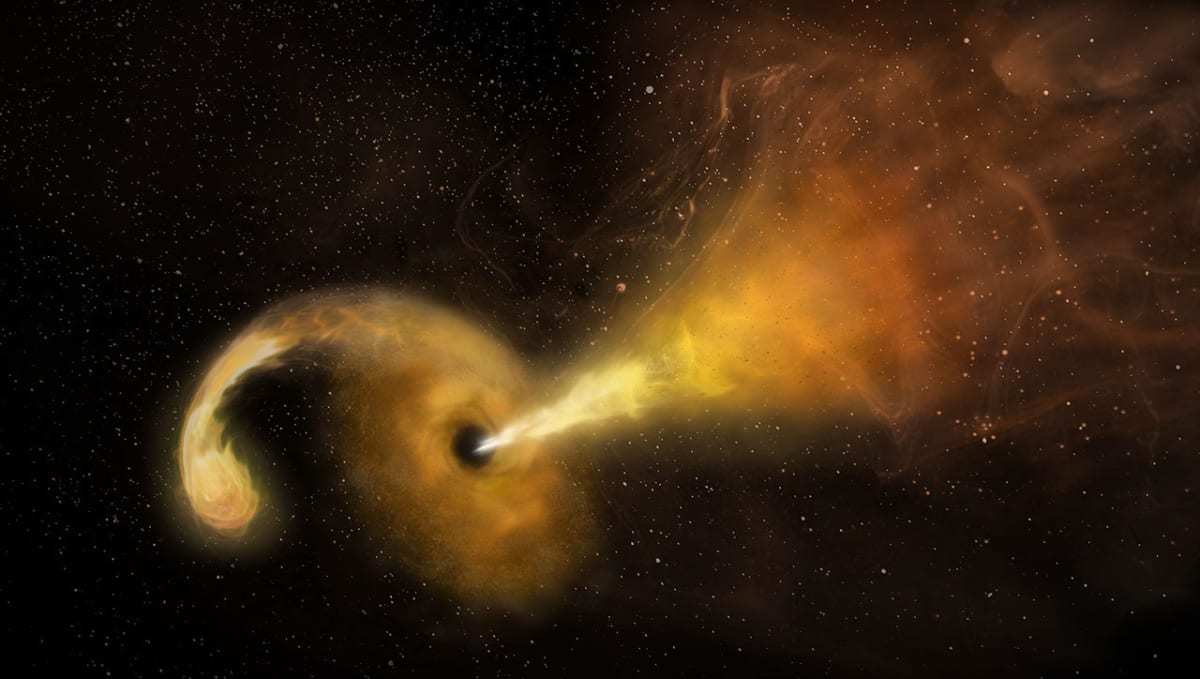
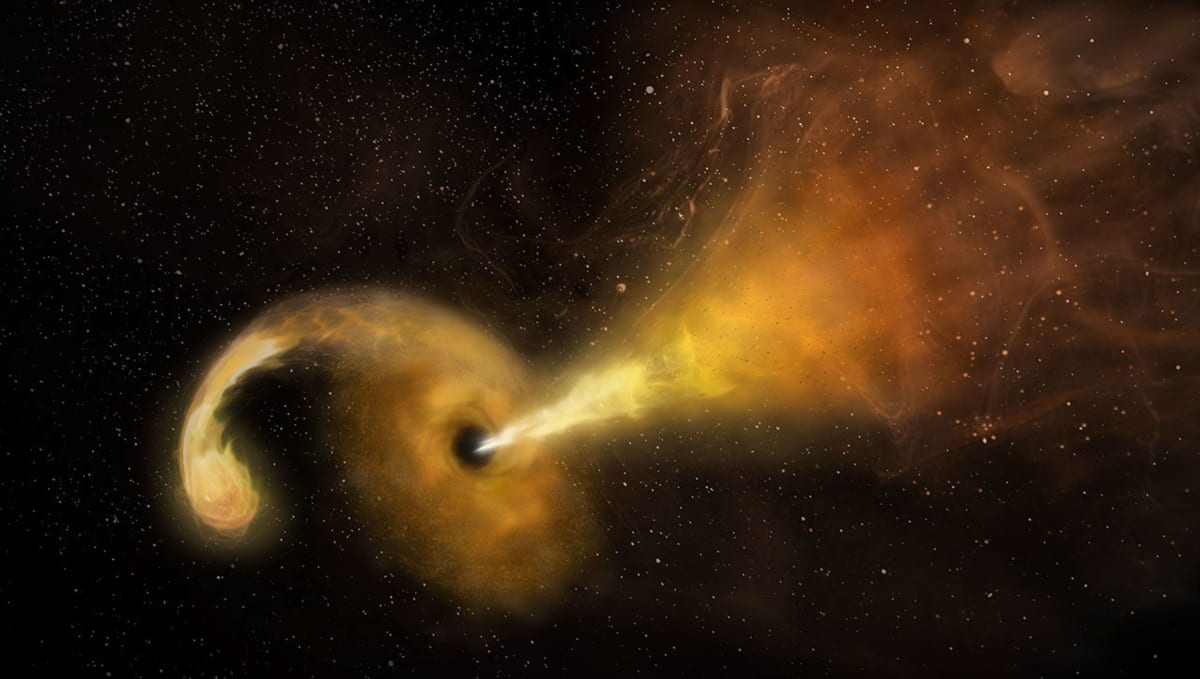
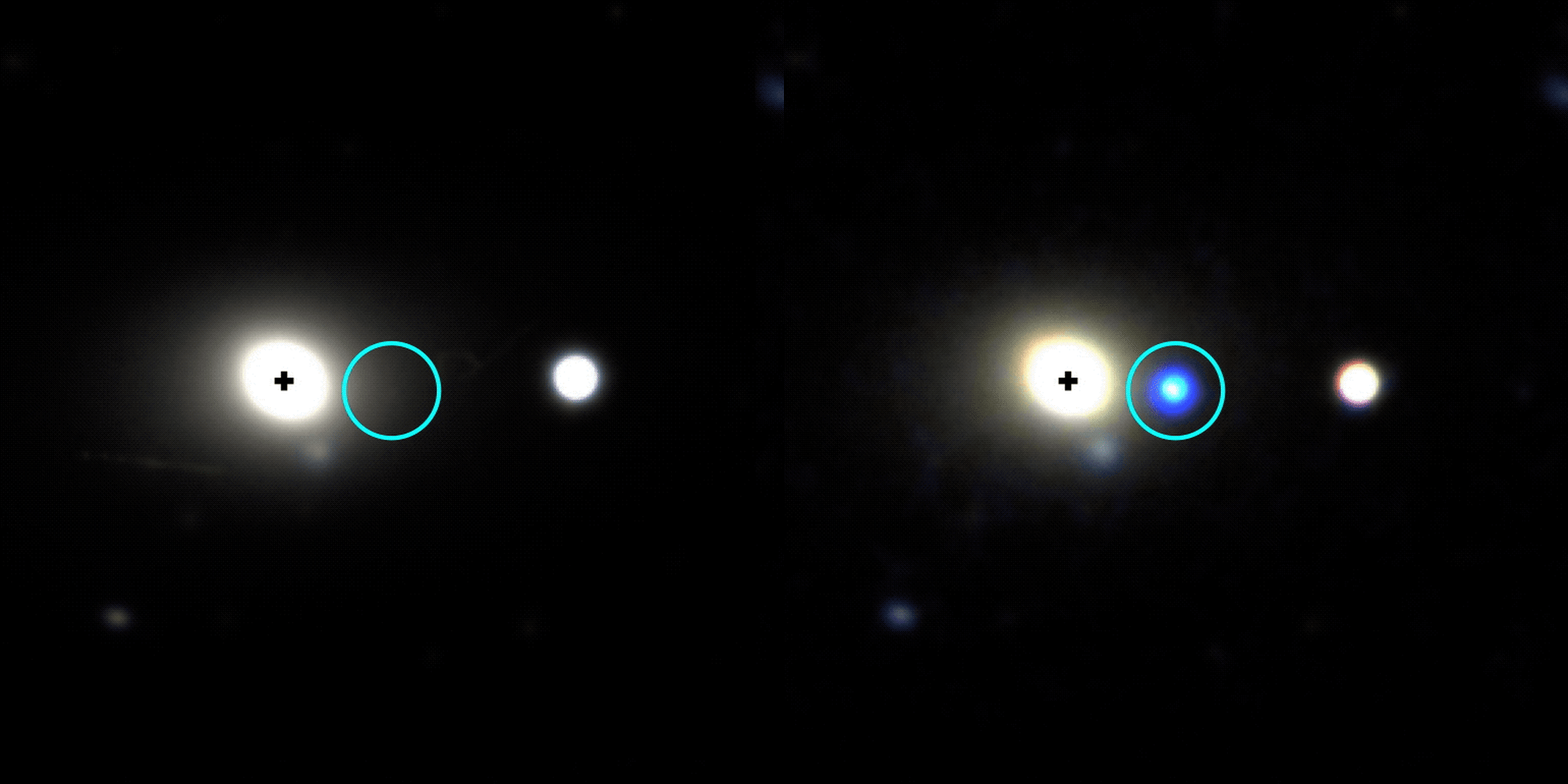
Astronomers just spotted something extraordinary: a supermassive black hole caught in the act of devouring a star, not in the heart of a galaxy where it belongs, but wandering 30,000 light-years away on the outskirts.
NASA's Swift Observatory captured the cosmic feast in November 2025, about 750 million light-years from Earth. For months, the event blazed brighter than its entire host galaxy, radiating with the power of 10 billion suns in ultraviolet light.
"We were looking for these star-shredding events as a way to find otherwise invisible supermassive black holes wandering away from the galactic cores where they usually reside," said Robert Stein, a research fellow at the University of Maryland and NASA's Goddard Space Flight Center. His team's findings were published in The Astrophysical Journal Letters.
The discovery started with artificial intelligence. ZTF, a survey telescope in California, scans the sky each night and detects half a million cosmic flashes. An AI algorithm automatically flagged this particular flare as unusual because of its strange location.
Ground telescopes in Chile confirmed what they were seeing: a tidal disruption event, which happens when a star drifts too close to a supermassive black hole and gets torn apart by extreme gravitational forces. Swift's instruments measured the temperature at a scorching 54,000 degrees Fahrenheit.
These cosmic shredding events are already rare, happening about once every 100,000 years in any given galaxy. Before 2024, astronomers had only seen them in galaxy centers because that's where all known supermassive black holes lived.
This black hole weighs about a million times more than our sun. Finding it so far from home validates a technique scientists can now use to hunt for more wandering giants that would otherwise remain invisible.
Why This Inspires
This discovery represents a genuine breakthrough in astronomical detective work. By finding one of these wandering black holes, scientists proved they can locate cosmic heavyweights that were previously impossible to detect.
The success opens up an entirely new field of research. Astronomers can now search for more of these drifting giants, helping us understand how galaxies evolve and what happens when cosmic titans wander from their usual homes.
The combination of AI detection, ground telescope confirmation, and space-based observation shows how modern astronomy works at its best. Different tools and teams across the world came together to unlock a cosmic mystery that rewrites what we thought we knew about where black holes can exist.
More Images
Based on reporting by NASA
This story was written by BrightWire based on verified news reports.
Spread the positivity!
Share this good news with someone who needs it