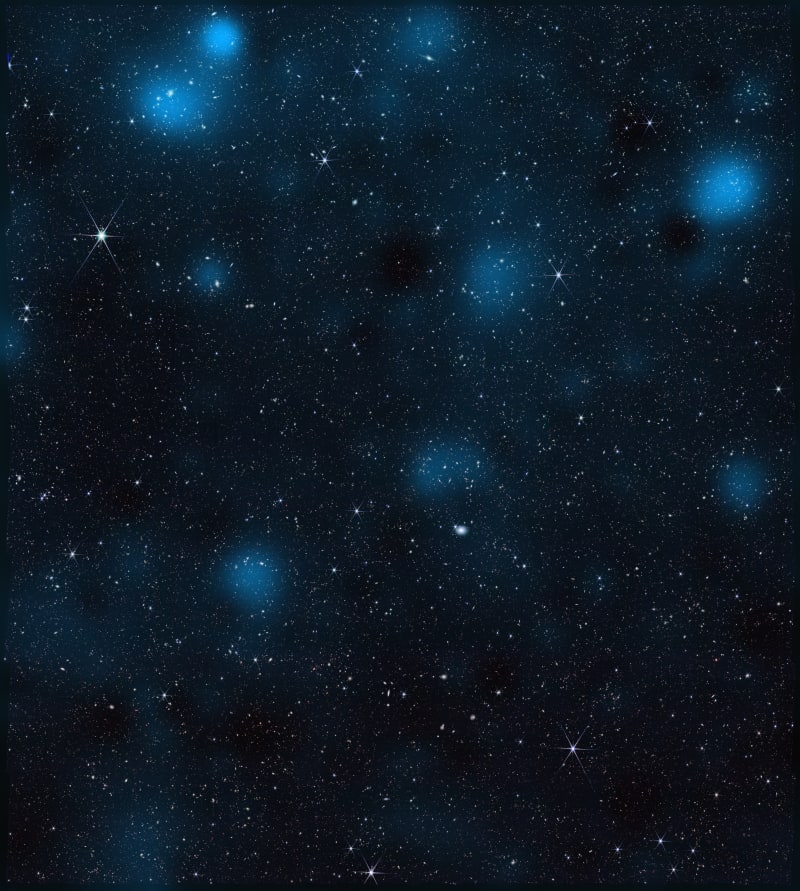
NASA Maps Dark Matter's Role in Creating Life on Earth
Scientists using the James Webb Space Telescope created the sharpest map ever of dark matter, revealing how this invisible cosmic scaffolding helped make planets like Earth possible. The discovery shows dark matter pulled regular matter together to form stars that created the elements needed for life.
Scientists just created the clearest picture yet of the invisible force that may have made life on Earth possible.
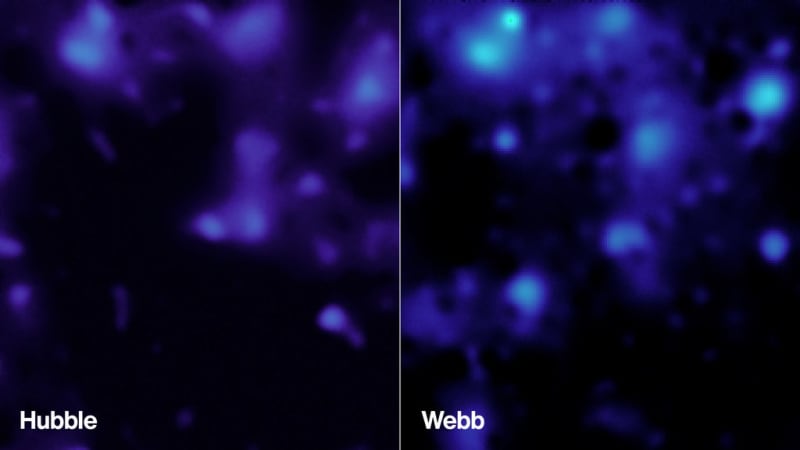
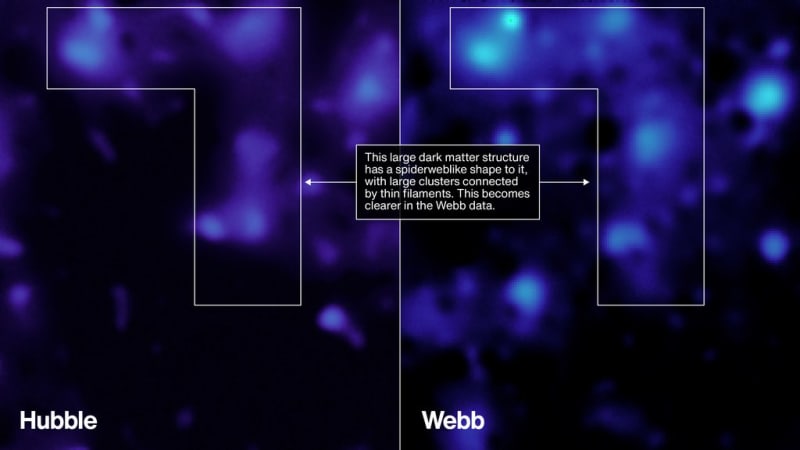
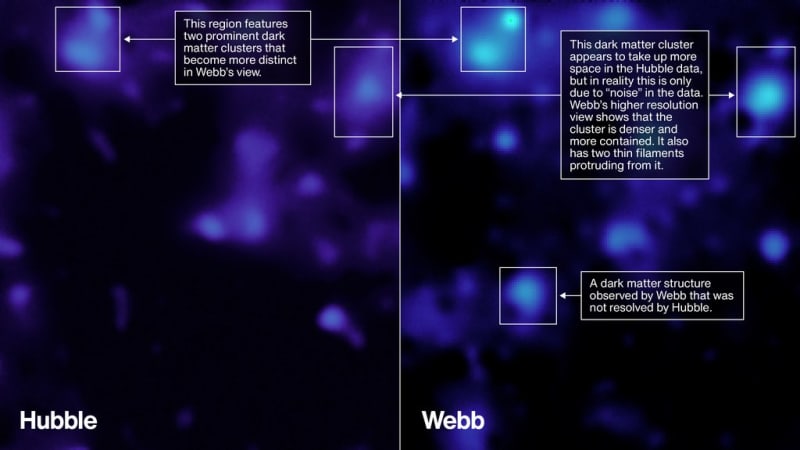
Using NASA's James Webb Space Telescope, researchers mapped dark matter across a massive section of space with twice the sharpness of any previous attempt. The breakthrough reveals how this mysterious, invisible material shaped the entire universe into the cosmic neighborhood we call home.
"Previously, we were looking at a blurry picture of dark matter," said Diana Scognamiglio, lead astrophysicist at NASA's Jet Propulsion Laboratory. "Now we're seeing the invisible scaffolding of the universe in stunning detail."
Dark matter doesn't emit light, and it passes through regular matter like a ghost. But its gravity pulls everything together, and this new map published in Nature Astronomy shows exactly how it works.
The team spotted nearly 800,000 galaxies across a region 2.5 times larger than the full moon. By measuring how dark matter's gravity bends light from distant galaxies, they created the most detailed cosmic web ever seen.
The map reveals something profound: dark matter and regular matter have always existed in the same places, growing up together throughout cosmic history. Wherever thousands of galaxies cluster together, an equally massive amount of dark matter sits in the exact same spot.
Here's where it gets exciting for us. When the universe began, dark matter clumped together first, then pulled regular matter toward it. This jumpstarted galaxy and star formation much earlier than would have happened otherwise.
Those first generations of stars turned simple hydrogen and helium into the rich variety of elements that now make up planets like Earth. Without dark matter speeding things along, complex planets might never have formed.
Why This Inspires
This discovery connects the largest structures in the universe to the smallest details of our existence. The same invisible force that shapes galaxy clusters millions of light years across also created the conditions for your morning coffee to exist.
The Webb telescope spent 255 hours staring at this cosmic canvas, and the patience paid off. Scientists can now see dark matter structures that were completely invisible before, coming into sharper focus like adjusting a microscope.
This isn't just abstract science. Understanding how dark matter influenced the early universe helps explain why we're here at all. Every atom in your body heavier than helium was forged in stars that formed because dark matter pulled the universe together.
The cosmic scaffolding that holds galaxies in place also gave life enough time to emerge.
More Images
Based on reporting by Google News - Science
This story was written by BrightWire based on verified news reports.
Spread the positivity!
Share this good news with someone who needs it
%2Fhttps%3A%2F%2Ftf-cmsv2-smithsonianmag-media.s3.amazonaws.com%2Ffiler_public%2F3f%2F55%2F3f5579c8-c4a7-43a5-bb54-6498478792fd%2Fhelix1940__fitmaxwzk3mcw2ntbd.jpg)