NASA Names 4 Astronauts for Historic 2027 Moon Mission
Four astronauts will test crucial technology in Earth orbit next year that will make landing humans on the Moon possible in 2028. The Artemis III mission represents one of the most complex space operations ever attempted.
NASA just announced the crew for a groundbreaking 2027 mission that will bring humanity one giant leap closer to returning to the Moon.
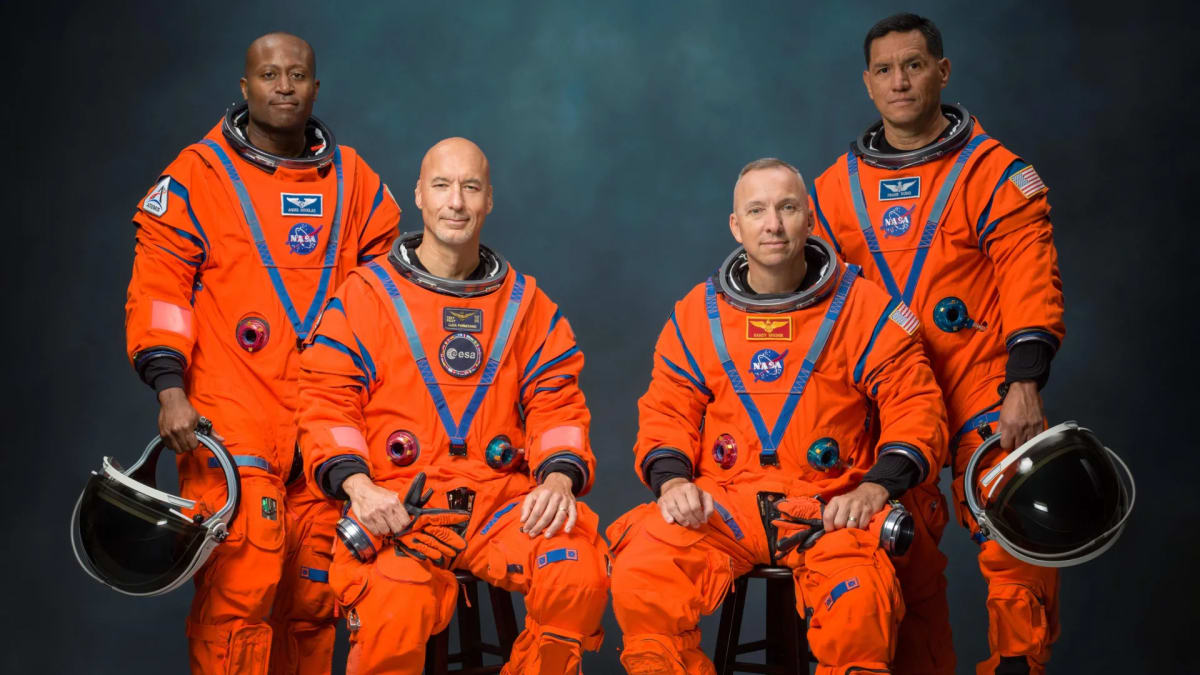
Randy Bresnik will command Artemis III alongside pilot Luca Parmitano from the European Space Agency, plus mission specialists Andre Douglas and Frank Rubio. The four astronauts will launch aboard NASA's Orion spacecraft to test the lunar landers that will eventually carry humans to the Moon's South Pole in 2028.
The mission involves something never done before: docking with test versions of two different lunar landers in Earth orbit. Orion will rendezvous with prototypes from both Blue Origin and SpaceX to evaluate how the spacecraft work together, testing everything from software to communications to propulsion systems.
Parmitano's selection marks a historic first for European astronauts in the Artemis program. His assignment as pilot reflects years of operational experience and the critical role Europe plays in powering Orion through its European Service Module.
The mission follows the successful Artemis II flight completed just two months ago in April. That crew reignited global excitement for space exploration, and now they're passing the torch to this next generation of Moon explorers.
Engineers are already hard at work preparing the hardware. This summer, they'll join Orion's crew module with its service module and install the spacecraft's new docking system. Meanwhile, technicians are installing the four massive RS-25 engines on the Space Launch System rocket, with launch stacking expected to begin soon.
Why This Inspires
Artemis III represents more than just a test flight. It demonstrates how international partnerships and private companies can work together on challenges that once seemed impossible for any single nation.
The mission requires coordinating multiple launches of the most powerful rockets ever built, each precisely timed to put test landers in orbit for Orion to find. Tens of thousands of engineers, scientists, and specialists across government and private industry are making it happen.
Douglas, one of the mission specialists, brings fresh perspective to a crew that combines NASA veterans with international expertise. Their training begins immediately, supporting the development of the very landers they'll test in orbit next year.
Every successful docking, every system check, every maneuver brings humanity closer to establishing a lasting presence on the Moon and eventually reaching Mars.
The four astronauts carry forward the hopes and dreams that Apollo inspired in previous generations, proving that our greatest achievements still lie ahead.
Based on reporting by Science Daily
This story was written by BrightWire based on verified news reports.
Spread the positivity!
Share this good news with someone who needs it