NASA Returns to Moon After 50 Years with Historic Crew
Four astronauts just became the first humans to journey to the Moon in over 50 years, including the first woman and first person of color on a lunar mission. The Artemis II launch marks a new chapter in space exploration with humanity reaching further into space than ever before. #
After more than five decades, humans are heading back to the Moon, and this time they're making history in more ways than one.
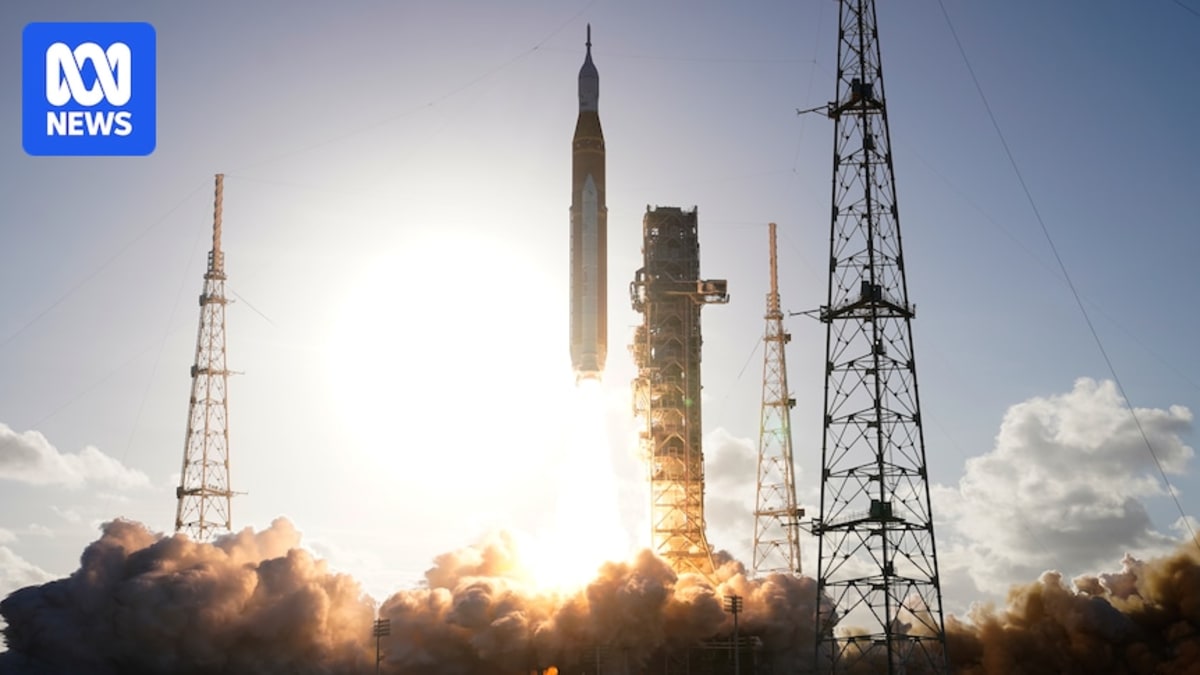
Four astronauts launched aboard NASA's Artemis II mission Thursday, becoming the first people to travel to the Moon since Apollo 17 in 1972. Commander Reid Wiseman, pilot Victor Glover, and mission specialists Christina Koch and Jeremy Hansen are now soaring toward our closest celestial neighbor.
The mission breaks multiple barriers at once. Christina Koch is the first woman ever on a Moon flight, while Victor Glover is the first person of color to make the journey.
Jeremy Hansen, flying with the Canadian Space Agency, became the first Canadian in deep space. Only nine other crewed missions to the Moon have ever happened before this one.
Crowds gathered at viewing sites from Florida to New York to Canada, bundling up in the early morning chill to witness the historic moment. Street vendors sold commemorative shirts while coffee brewers kept spectators warm as the countdown ticked away.
Minutes before liftoff, NASA's launch director Charlie Blackwell-Thompson polled her team for final approval. "We are going for all humanity," one member responded.
Commander Wiseman gave the crew's status as ready to "full send." Blackwell-Thompson's response captured the moment perfectly: "Good luck, Godspeed Artemis II. Let's go."
The Ripple Effect
This mission serves as the critical testing ground for NASA's bigger dream of establishing a lasting human presence on the Moon. The Orion spacecraft will test its life support systems with humans aboard for the first time, along with docking procedures needed for future missions.
The crew is on track to travel further from Earth than any humans in history, breaking the distance record set by Apollo 13 in 1970. These tests and records aren't just about nostalgia or competition, they're about building the foundation for longer Moon stays and eventually missions to Mars.
The launch timing had to align perfectly with the positions of Earth, Moon, and Sun to achieve what's called a trans-lunar injection, the final burn that places the spacecraft into lunar orbit. NASA had only a two-hour window in early April when everything lined up just right.
Young Bruno in Mexico watched the broadcast dressed as an astronaut, while employees at the Canadian Space Agency cheered and embraced as their astronaut made history. These reactions hint at something bigger: renewed excitement about humanity's potential when we work together toward ambitious goals.
The world is watching as these four pioneers pave the way for a new generation of exploration, proving that the next chapter of space travel includes everyone.
#
More Images

Based on reporting by ABC Australia
This story was written by BrightWire based on verified news reports.
Spread the positivity!
Share this good news with someone who needs it