NASA Reveals Plan for Permanent Moon Base by 2030s
NASA just unveiled its roadmap to build humanity's first lunar base at the moon's south pole, starting with 25 robotic missions in the next three years. The ambitious plan trades complexity for speed, focusing resources directly on the lunar surface instead of orbital stations.
Humanity is going back to the moon to stay. NASA just released detailed plans for a permanent lunar base at the south pole, with construction beginning as early as next year and the first astronauts living there by the early 2030s.
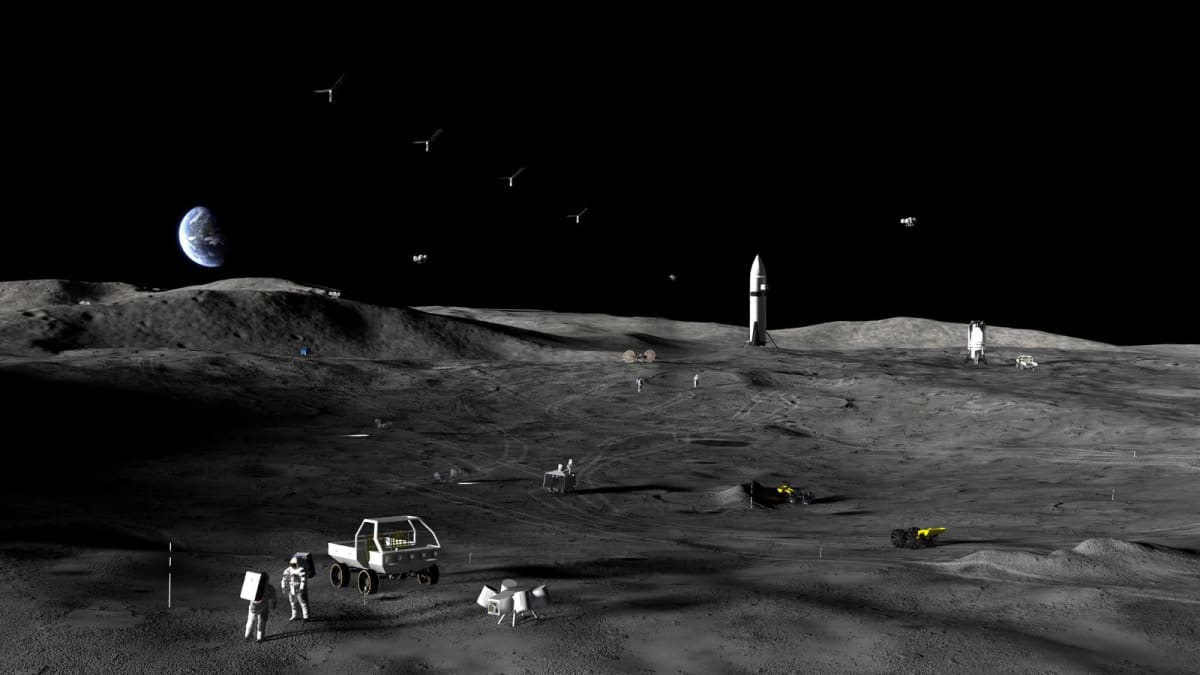
The three-phase plan starts strong. Between 2026 and 2029, NASA and its partners will launch at least 25 missions and land 21 times on the lunar surface. Robots will test everything from power systems to navigation technology, laying the groundwork for human habitation.
Blue Origin's Blue Moon Mark 1 Endurance lander kicks things off in fall 2026. The uncrewed test will validate landing systems and positioning technology in one of the moon's most challenging environments. If successful, a crewed version could follow by 2028.
Rovers will scout the terrain. Drones will map from above. Surface reactors will generate power. New satellites will enable communication. NASA is essentially building a lunar city block by block, testing each component before astronauts arrive.
Phase two begins in 2029 with serious construction. NASA plans to deliver 60 tons of cargo across 24 missions, installing advanced energy systems, initial habitat modules, and robust communication networks. The moon is getting its first neighborhood.
The final phase scales everything up. Permanent habitats with rotating crews, reliable power grids, established roads, and regular cargo deliveries of about 38 tons annually will transform the south pole into a thriving outpost. What starts as a research station becomes humanity's first home beyond Earth.
This streamlined approach replaced the more complex Gateway program, an orbital station that would have served as a stepping stone. NASA decided to skip the middleman and go straight to the surface, cutting costs and accelerating timelines. Sometimes the direct path is the fastest.
The Ripple Effect
This lunar base isn't just about planting flags. The technologies developed for surviving the moon's extreme conditions will solve problems here on Earth. Advanced energy systems, closed-loop life support, and resource management in harsh environments all have terrestrial applications.
The economic impact reaches further. Private companies like Blue Origin are integral partners, spurring innovation in aerospace manufacturing and creating thousands of jobs. The knowledge gained from operating in lunar conditions prepares humanity for even more ambitious destinations.
NASA Administrator Jared Isaacman captured the vision perfectly. Every mission teaches lessons about living and working in one of the most demanding environments imaginable, preparing us for Mars and beyond while making life better on Earth.
The moon is about to become our second home, one rover and habitat at a time.
More Images



Based on reporting by Wired
This story was written by BrightWire based on verified news reports.
Spread the positivity!
Share this good news with someone who needs it